Biotechnology: Principles and Processes has 118 questions in this archive of official NEET and AIPMT papers, asked between 2006 and 2026. It appeared in 30 of the 33 papers held here (AIPMT 2006 to Re-NEET 2026); the most recent paper with a question from it is Re-NEET 2026. The most-asked topics by tag are Restriction Enzymes - Main Enzymes (22), Separation and Isolation of DNA fragments (21) and Tools (19). In the last 10 main papers (2017 to 2026) it had 43 questions.
Biotechnology: Principles and Processes practice hub Take the chapter test
Biotechnology: Principles and Processes PYQs year by year
| Year | Papers in archive | Questions | By paper |
|---|---|---|---|
| 2026 | 2 | 9 | NEET 2026: 5, Re-NEET 2026: 4 |
| 2025 | 1 | 6 | NEET 2025: 6 |
| 2024 | 3 | 14 | NEET 2024: 5, NEET 2024 Re-exam (1,563 candidates): 6, NEET 2024 (Jhajjar): 3 |
| 2023 | 2 | 9 | NEET 2023: 4, NEET 2023 (Manipur): 5 |
| 2022 | 3 | 17 | NEET 2022: 5, NEET 2022 (Abroad): 5, NEET 2022 (Ganganagar): 7 |
| 2021 | 1 | 6 | NEET 2021: 6 |
| 2020 | 2 | 10 | NEET 2020: 4, NEET 2020 (Covid Re-exam): 6 |
| 2019 | 2 | 8 | NEET 2019: 3, NEET 2019 (Odisha): 5 |
| 2018 | 1 | 1 | NEET 2018: 1 |
| 2017 | 1 | 5 | NEET 2017: 5 |
| 2016 | 2 | 7 | NEET 2016 Phase 1: 3, NEET 2016 Phase 2: 4 |
| 2015 | 2 | 3 | AIPMT 2015 Re-exam: 3 |
| 2014 | 1 | 1 | AIPMT 2014: 1 |
| 2013 | 2 | 4 | NEET 2013: 3, NEET 2013 (Karnataka): 1 |
| 2012 | 2 | 8 | AIPMT 2012: 4, AIPMT 2012 Mains: 4 |
| 2011 | 1 | 4 | AIPMT 2011: 4 |
| 2010 | 1 | 3 | AIPMT 2010: 3 |
| 2009 | 1 | 0 | — |
| 2008 | 1 | 2 | AIPMT 2008: 2 |
| 2007 | 1 | 0 | — |
| 2006 | 1 | 1 | AIPMT 2006: 1 |
Most-asked topics (top 15 of 18)
| Topic | PYQs |
|---|---|
| Restriction Enzymes - Main Enzymes | 22 |
| Separation and Isolation of DNA fragments | 21 |
| Tools | 19 |
| Cloning Vector | 16 |
| Polymerase Chain Reaction: PCR | 14 |
| Tools: Enzymes | 9 |
| Tools: Vectors | 9 |
| Bioreactors/Downstream Processing | 7 |
| Transforming Plant & Animal Cell | 6 |
| Process of Biotech | 5 |
| Selectable Markers | 5 |
| Principles of Biotechnology | 4 |
| General Design of an rDNA experiment | 4 |
| Selection of Recombinant Transformants | 3 |
| Large Scale Production | 3 |
Biotechnology: Principles and Processes NEET PYQ 2026 (9 questions)
Q1 Re-NEET 2026 Separation and Isolation of DNA fragments
| Assertion (A): | In recombinant DNA technology, lysozyme is used for disrupting bacterial cells while cellulase is for plant cells. |
| Reason (R): | Isolation of genetic material needs disruption of cells. |
In the light of the above statements, choose the most appropriate answer from the options given below:
- (A) is not correct but (R) is correct
- Both (A) and (R) are correct and (R) is the correct explanation of (A)
- Both (A) and (R) are correct but (R) is not the correct explanation of (A)
- (A) is correct but (R) is not correct
Show answer
Answer: (2) Both (A) and (R) are correct and (R) is the correct explanation of (A)
Why: Lysozyme breaks down bacterial cell walls and cellulase breaks down plant cell walls, so both enzymes are correctly described in the assertion. Isolating genetic material requires disrupting cells first, which is exactly why these enzymes are used, so the reason correctly explains the assertion.
Q2 Re-NEET 2026 Cloning Vector
| List-I | List-II | ||
| A. | Transformation | I. | Restriction enzyme |
| B. | Cloning site | II. | Transfer DNA to host bacteria |
| C. | Selection | III. | Replication |
| D. | Ori | IV. | Antibiotic |
- A-IV, B-I, C-III, D-II
- A-II, B-I, C-IV, D-III
- A-I, B-II, C-IV, D-III
- A-III, B-IV, C-II, D-I
Show answer
Answer: (2) A-II, B-I, C-IV, D-III
Why: Transformation is the transfer of foreign DNA into host bacteria (A-II), the cloning site is where a restriction enzyme cuts the vector (B-I), selection uses an antibiotic resistance marker (C-IV), and the ori is the origin of replication that allows DNA to replicate (D-III).
Q3 Re-NEET 2026 Cloning Vector
| Statement I: | Plasmids are autonomously replicating DNA. |
| Statement II: | Plasmids are extrachromosomal DNA. |
In the light of the above statements, choose the most appropriate answer from the options given below:
- Statement I is incorrect but Statement II is correct
- Both Statement I and Statement II are correct
- Both Statement I and Statement II are incorrect
- Statement I is correct but Statement II is incorrect
Show answer
Answer: (2) Both Statement I and Statement II are correct
Why: Plasmids are small circular DNA molecules that replicate autonomously using their own origin of replication, and they exist outside the chromosomal DNA as extrachromosomal DNA. Both statements are therefore correct.
Q4 Re-NEET 2026 Polymerase Chain Reaction: PCR
- ligation
- denaturation
- extension
- annealing
Show answer
Answer: (4) annealing
Why: In PCR, the primers are short single-stranded DNA sequences that bind complementary regions of the template strands during the annealing step, which follows denaturation of the double helix. DNA polymerase then extends the primers in the extension step.
Q5 NEET 2026 (3 May, cancelled) Restriction Enzymes - Main Enzymes
| A. | They are called molecular scissors. |
| B. | These are the enzymes responsible for restricting the growth of bacteriophages in E. coli. |
| C. | They cut the DNA only at the centre of the palindromic sites. |
| D. | They remove nucleotides only from the ends of DNA fragments. |
| E. | They recognise specific palindromic base-pair sequences. |
Choose the answer from the options given below:
- A and B only
- D and E only
- C and D only
- A and E only
Show answer
Answer: (3) C and D only
Why: The false statements are that restriction endonucleases always cut DNA exactly at the centre of the palindromic site, and that they only remove nucleotides from the ends of DNA fragments. In fact they cleave the phosphodiester bonds at specific positions within the recognition sequence, which can be central or offset, and they cut internal bonds rather than trimming ends. The statements about molecular scissors, bacterial defence against phages, and recognising palindromic sequences are true.
Q6 NEET 2026 (3 May, cancelled) Process of Biotech
| List-I | List-II | ||
| A. | Genetically modified organism | I. | Agrobacterium tumefaciens |
| B. | Thermostable DNA Polymerase | II. | Bt cotton |
| C. | Ti plasmid | III. | Thermus aquaticus |
| D. | pBR322 | IV. | Escherichia coli |
- A-II, B-I, C-IV, D-III
- A-I, B-IV, C-III, D-II
- A-II, B-III, C-I, D-IV
- A-I, B-II, C-IV, D-III
Show answer
Answer: (3) A-II, B-III, C-I, D-IV
Why: Bt cotton is the classic genetically modified organism, Thermus aquaticus is the source of the thermostable DNA polymerase used in PCR, the Ti plasmid comes from Agrobacterium tumefaciens and is used as a vector, and pBR322 is a cloning vector originally derived from Escherichia coli.
Q7 NEET 2026 (3 May, cancelled) Polymerase Chain Reaction: PCR
- Denaturation → Annealing → Extension
- Denaturation → Extension → Annealing
- Extension → Annealing → Denaturation
- Annealing → Denaturation → Extension
Show answer
Answer: (1) Denaturation → Annealing → Extension
Why: Each PCR cycle begins with denaturation, where heating separates the double-stranded DNA into single strands. The temperature is then lowered so that primers anneal to the complementary sites on the single strands. Finally, DNA polymerase extends the primers along the template during the extension step.
Q8 NEET 2026 (3 May, cancelled) Separation and Isolation of DNA fragments
| A. | The cutting of DNA is done by molecular scissors. |
| B. | The DNA fragments separate according to their size in an agarose gel, upon electrophoresis. |
| C. | The separated DNA fragments can be seen without staining when exposed to UV light. |
| D. | The separated DNA fragments, when stained with ethidium bromide, can be seen in visible light. |
- A and D only
- B and D only
- B and C only
- A and B only
Show answer
Answer: (4) A and B only
Why: DNA is cut into specific fragments by molecular scissors, which are restriction enzymes, so statement A is correct. On electrophoresis in an agarose gel, DNA fragments migrate and separate according to their size, so statement B is correct. Statement C is wrong because the DNA is not visible without staining, and statement D is wrong because ethidium bromide-stained DNA is seen under UV light rather than visible light.
Q9 NEET 2026 (3 May, cancelled) Cloning Vector
- Gentamycin
- Ampicillin and tetracycline
- Tetracycline
- Ampicillin
Show answer
Answer: (3) Tetracycline
Why: The BamHI site in pBR322 lies within the tetracycline resistance gene, so inserting foreign DNA there inactivates that gene. The ampicillin resistance gene is unaffected, which means the recombinant bacteria lose tetracycline resistance but keep ampicillin resistance.
Biotechnology: Principles and Processes NEET PYQ 2025 (6 questions)
Q10 NEET 2025 Cloning Vector
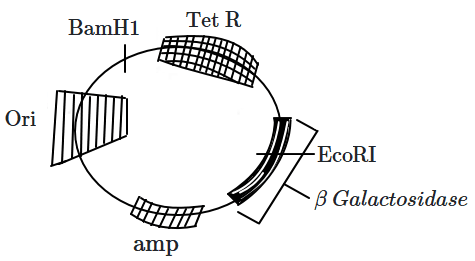
In the above-represented plasmid, an alien piece of DNA is inserted at EcoRI site. Which of the following strategies will be chosen to select the recombinant colonies?
- White color colonies will be selected.
- Blue color colonies grown on ampicillin plates can be selected.
- Using an ampicillin- & tetracycline-containing medium plate.
- Blue color colonies will be selected.
Show answer
Answer: (1) White color colonies will be selected.
Q11 NEET 2025 Polymerase Chain Reaction: PCR
Show answer
Answer: (4)
Q12 NEET 2025 Bioreactors/Downstream Processing
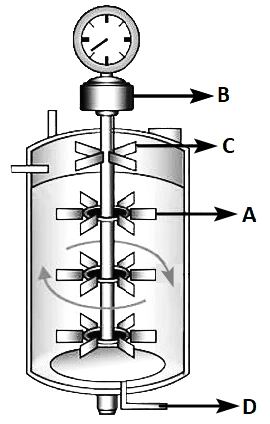
- D
- C
- A
- B
Show answer
Answer: (2) C
Q13 NEET 2025 Selection of Recombinant Transformants
Given below are two statements about this method:
| Statement I: | The blue coloured colonies have DNA insert in the plasmid and they are identified as recombinant colonies. |
| Statement II: | The colonies without blue colour have DNA insert in the plasmid and are identified as recombinant colonies. |
- Statement I is correct; Statement II is incorrect
- Statement I is incorrect; Statement II is correct
- Both Statement I and Statement II are correct
- Both Statement I and Statement II are incorrect
Show answer
Answer: (2) Statement I is incorrect; Statement II is correct
Why: Colonies without blue colour are the recombinant ones. The foreign DNA insert disrupts the lacZ gene, so beta-galactosidase is not produced and the chromogenic substrate is not converted to a blue product, whereas blue colonies carry the intact vector and are non-recombinant.
Q14 NEET 2025 Tools
A. Restriction enzymes
B. DNA ligase
C. DNA mutase
D. DNA recombinase
E. DNA polymerase
Choose the correct answer from the options given below:
- D and E only
- B and C only
- C and D only
- A and B only
Show answer
Answer: (3) C and D only
Q15 NEET 2025 Restriction Enzymes - Main Enzymes
| Statement I : | The DNA fragments extracted from gel electrophoresis can be used in construction of recombinant DNA. |
| Statement II : | Smaller size DNA fragments are observed near anode while larger fragments are found near the wells in an agarose gel. |
- Statement I is correct but statement II is incorrect
- Statement I is incorrect but statement II is correct
- Both statement I and statement II are correct
- Both statement I and statement II are incorrect
Show answer
Answer: (3) Both statement I and statement II are correct
Why: DNA fragments separated and recovered from an agarose gel can be cut out and used as vector or insert material to build recombinant DNA, so Statement I is correct. In gel electrophoresis, smaller DNA fragments move faster and lie farther toward the anode, while larger fragments stay closer to the wells, so Statement II is also correct.
Biotechnology: Principles and Processes NEET PYQ 2024 (14 questions)
Q16 NEET 2024 (Jhajjar) Cloning Vector
- Ampicillin
- Metformin
- Chloramphenicol
- Tetracycline
Show answer
Answer: (2) Metformin
Q17 NEET 2024 (Jhajjar) Restriction Enzymes - Main Enzymes
| Statement I: | Restriction Endonuclease finds its specific recognition sequence and binds to the DNA. |
| Statement II: | Restriction Endonuclease cuts each of the two strands of the double helix at specific points in their sugar phosphate backbones. |
- Both Statement I and Statement II are True
- Both Statement I and Statement II are False
- Statement I is True but Statement II is False
- Statement I is False but Statement II is True
Show answer
Answer: (1) Both Statement I and Statement II are True
Why: Restriction endonucleases scan the DNA until they find their specific palindromic recognition sequence and bind there. They then cut both strands of the double helix at specific points in the sugar-phosphate backbone, so both statements are true.
Q18 NEET 2024 (Jhajjar) Cloning Vector
| List-I | List-II | ||
| A. | Ampicillin | I. | Restriction sites |
| B. | Ori | II. | Blue/White screening |
| C. | Multiple cloning sites | III. | Selectable marker |
| D. | galactosidase gene | IV. | Sequence from where replication starts |
- A-III, B-IV, C-I , D-II
- A-III, B-I, C-IV, D-II
- A-IV, B-III, C-II , D-I
- A-II, B-IV, C-I, D-III
Show answer
Answer: (1) A-III, B-IV, C-I , D-II
Why: Ampicillin resistance gene serves as a selectable marker that lets only transformed bacteria grow on the antibiotic medium. The origin of replication is the sequence where DNA replication starts, the multiple cloning site contains restriction sites for inserting DNA, and the beta-galactosidase gene allows blue/white screening to identify recombinant colonies.
Q19 NEET 2024 Re-exam (1,563 candidates) Principles of Biotechnology
- recognition sequence
- cloning site
- restriction site
- ori site
Show answer
Answer: (4) ori site
Why: The origin of replication, or ori site, is the specific DNA sequence where replication begins, and it is the sequence that allows a vector or chromosome to be copied within the cell. Recognition sequences and restriction sites are used for enzyme cutting, and a cloning site is where foreign DNA is inserted, so the ori site option is correct.
Q20 NEET 2024 Re-exam (1,563 candidates) Separation and Isolation of DNA fragments
- Separated DNA fragments can be directly seen under UV radiation
- Separated DNA can be extracted from gel piece.
- Fragments of DNA move toward anode.
- Sieving effect of agarose gel helps in separation of DNA fragments.
Show answer
Answer: (1) Separated DNA fragments can be directly seen under UV radiation
Why: The incorrect statement is that separated DNA fragments can be seen directly under UV radiation. DNA is colourless, so the fragments must first be stained, typically with ethidium bromide, before they become visible under UV light. The other three statements are correct: DNA is negatively charged so it moves toward the anode, the agarose gel acts as a sieve that separates fragments by size, and separated DNA can be recovered from the gel piece.
Q21 NEET 2024 Re-exam (1,563 candidates) Tools: Enzymes
- Hind II, Hind II
- Hind II, Alu I
- Hind II, EcoR I
- Hind II, Bam HI
Show answer
Answer: (1) Hind II, Hind II
Why: Cutting both the vector DNA and the source DNA with the same restriction enzyme, Hind II, produces matching ends that can be joined together by DNA ligase to form a recombinant DNA molecule. Using the same enzyme on both is what makes the fragments compatible for joining.
Q22 NEET 2024 Re-exam (1,563 candidates) Cloning Vector
- Bam HI and Sal I
- Sal I and Pst I
- Pst I and Pvu I
- Pvu I and Bam HI
Show answer
Answer: (1) Bam HI and Sal I
Why: In pBR322, the BamHI and SalI restriction sites lie within the tetracycline resistance gene, so inserting foreign DNA at these sites inactivates tetracycline resistance and allows recombinant selection. The correct option names these two enzymes.
Q23 NEET 2024 Re-exam (1,563 candidates) Restriction Enzymes - Main Enzymes
| A. | Cut the DNA with blunt end |
| B. | Cut the DNA with sticky end |
| C. | Recognises a specific palindromic sequence. |
| D. | Cut the DNA between the base G and A where it encounters the DNA sequence 'GAATTC' |
| E. | Exonuclease |
- B,C,E only
- A,D,E only
- A,C,D only
- B,C,D only
Show answer
Answer: (4) B,C,D only
Why: EcoRI is a restriction endonuclease that recognises the palindromic sequence GAATTC and cuts the DNA between the bases G and A on each strand, producing sticky ends. It is not a blunt-end cutter and it is not an exonuclease, which removes nucleotides from the ends of DNA.
Q24 NEET 2024 Re-exam (1,563 candidates) Polymerase Chain Reaction: PCR
A. Annealing
B. Amplification (~1 billion times)
C. Denaturation
D. Treatment with Taq polymerase and deoxynucleotides
E. Extension
Choose the correct sequence of steps of PCR from the options given below :
- C → A → D → E → B
- A → B → E → D → C
- A → C → E → D → B
- D → B → E → C → A
Show answer
Answer: (1) C → A → D → E → B
Why: PCR begins with denaturation, where heat separates the double-stranded DNA into single strands. The temperature is then lowered so primers can anneal to the single strands, and treatment with Taq polymerase and deoxynucleotides allows extension of the new strands, which is followed by repeated cycles of amplification.
Q25 NEET 2024 Principles of Biotechnology
| A: | The piece of DNA would be able to multiply itself independently in the progeny cells of the organism. |
| B: | It may get integrated into the genome of the recipient. |
| C: | It may multiply and be inherited along with the host DNA. |
| D: | The alien piece of DNA is not an integral part of chromosome. |
| E: | It shows ability to replicate. |
- D and E only
- B and C only
- A and E only
- A and B only
Show answer
Answer: (2) B and C only
Why: A DNA fragment carrying only the gene of interest lacks its own origin of replication, so it cannot replicate independently; instead it may integrate into the recipient's genome and then be replicated and inherited along with the host DNA. This matches statements B and C, giving option (2).
Q26 NEET 2024 Restriction Enzymes - Main Enzymes
- 6 bp
- 4 bp
- 10 bp
- 8 bp
Show answer
Answer: (1) 6 bp
Why: Hind II is a restriction enzyme that recognises a palindromic sequence of 6 bp and cuts DNA at a specific point within it. So the recognition sequence is the 6 bp option.
Q27 NEET 2024 Tools: Vectors
- Tumor independent plasmid
- Tumor inducing plasmid
- Temperature independent plasmid
- Tumour inhibiting plasmid
Show answer
Answer: (2) Tumor inducing plasmid
Why: The Ti plasmid is the tumor inducing plasmid, which carries a segment called T-DNA that Agrobacterium transfers into plant cells and integrates into the host genome, causing crown gall tumours.
Q28 NEET 2024 Bioreactors/Downstream Processing
- Most commonly used bio-reactors are of stirring type.
- Bio-reactors are used to produce small scale bacterial cultures.
- Bio-reactors have an agitator system, an oxygen delivery system and foam control system.
- A bio-reactor provides optimal growth conditions for achieving the desired product.
Show answer
Answer: (2) Bio-reactors are used to produce small scale bacterial cultures.
Why: The statement that bio-reactors are used to produce small scale bacterial cultures is incorrect, because bio-reactors are designed for large scale production of cultures with controlled growth conditions, while the other statements about stirring type reactors, their components and optimal conditions are accurate.
Q29 NEET 2024 Cloning Vector
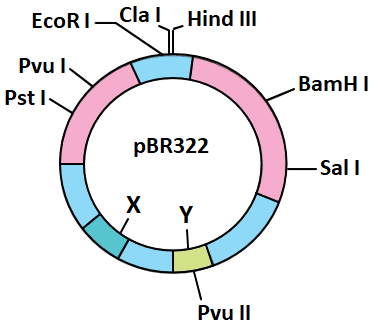
- The gene 'X' is responsible for controlling the copy number of the linked DNA and 'Y' for protein involved in the replication of Plasmid.
- The gene 'X' is 'for protein involved in replication of Plasmid and 'Y' for resistance to antibiotics.
- Gene 'X' is responsible for recognition sites and 'Y' is responsible for antibiotic resistance.
- The gene 'X' is responsible for resistance to antibiotics and 'Y' for protein involved in the replication of Plasmid.
Show answer
Answer: (1) The gene 'X' is responsible for controlling the copy number of the linked DNA and 'Y' for protein involved in the replication of Plasmid.
Biotechnology: Principles and Processes NEET PYQ 2023 (9 questions)
Q30 NEET 2023 (Manipur) Polymerase Chain Reaction: PCR
- Thermus aquaticus
- Escherichia coli
- Agrobacterium tumefaciens
- Bacillus thuringiensis
Show answer
Answer: (1) Thermus aquaticus
Why: The thermostable DNA polymerase used in PCR is Taq polymerase, which was isolated from the thermophilic bacterium Thermus aquaticus. Its heat tolerance allows it to survive the repeated high-temperature denaturation steps of PCR.
Q31 NEET 2023 (Manipur) Cloning Vector
- PsT I
- Pvu I
- EcoR I
- BamH I
Show answer
Answer: (4) BamH I
Q32 NEET 2023 (Manipur) Transforming Plant & Animal Cell
| 1. | It is used to deliver gene of interest in both prokaryotic as well as eukaryotic host cells. |
| 2. | 'Ti' plasmid from Agrobacterium tumefaciens used for gene transfer is not pathogenic to plant cells. |
| 3. | It transforms normal plant cells into tumor cells. |
| 4.. | It delivers 'T-DNA' into plant cell. |
Show answer
Answer: option (1)
Q33 NEET 2023 (Manipur) Cloning Vector
| List-I | List-II | ||
| (A) | Kanamycin | (I) | Delivers genes into animal cells |
| (B) | ClaI | (II) | Selectable marker |
| (C) | Disarmed retroviruses | (III) | Restriction site |
| (D) | Kanamycin Rgene | (IV) | Antibiotic resistance |
Choose the correct answer from the options given below:
- A-(II), B-(III), C-(I), D-(IV)
- A-(III), B-(I), C-(IV), D-(II)
- A-(IV), B-(III), C-(I), D-(II)
- A-(II), B-(IV), C-(I), D-(III)
Show answer
Answer: (1) A-(II), B-(III), C-(I), D-(IV)
Q34 NEET 2023 (Manipur) Restriction Enzymes - Main Enzymes
- Restriction enzymes
- DNA ligase
- RNA polymerase
- DNA polymerase
Show answer
Answer: (1) Restriction enzymes
Why: Restriction enzymes act as molecular scissors because they recognise specific palindromic nucleotide sequences in DNA and cut the double helix at those sites. DNA ligase joins fragments, while RNA polymerase and DNA polymerase synthesise nucleic acid chains and do not cut DNA.
Q35 NEET 2023 Separation and Isolation of DNA fragments
- Bright orange colour
- Bright red colour
- Bright Blue colour
- Bright yellow colour
Show answer
Answer: (1) Bright orange colour
Why: Ethidium bromide intercalates between the base pairs of DNA, and when the complex is exposed to UV light it fluoresces with a bright orange colour, which is why it is used to visualise DNA bands in gel electrophoresis.
Q36 NEET 2023 General Design of an rDNA experiment
- Polysaccharides
- RNA
- DNA
- Histones
Show answer
Answer: (3) DNA
Why: DNA is insoluble in chilled ethanol, so after cell lysis and separation of other cell components, adding cold ethanol causes the DNA to precipitate out as visible white threads. Polysaccharides, RNA and histones are not precipitated in the same way under this step.
Q37 NEET 2023 Transforming Plant & Animal Cell
- Silver
- Copper
- Zinc
- Tungsten or gold
Show answer
Answer: (4) Tungsten or gold
Why: In the gene gun (biolistic) method, DNA is coated onto very fine microparticles of tungsten or gold, which are then fired at high velocity into host cells. These heavy metal particles are inert and carry the DNA into the cell and its nucleus.
Q38 NEET 2023 Process of Biotech
| A. | Insertion of recombinant DNA into the host cell. |
| B. | Cutting of DNA at specific location by restriction enzyme. |
| C. | Isolation of desired DNA fragment. |
| D. | Amplification of gene of interest using PCR. |
- B, D, A, C
- B, C, D, A
- C, A, B, D
- C, B, D, A
Show answer
Answer: (2) B, C, D, A
Biotechnology: Principles and Processes NEET PYQ 2022 (17 questions)
Q39 NEET 2022 (Ganganagar) Restriction Enzymes - Main Enzymes
| Assertion (A): | When a particular restriction enzyme cuts strands of DNA, overhanging stretches or sticky ends are formed. |
| Reason (R): | Some restriction enzymes cut the strand of DNA a little away from the centre of palindromic site. |
- Both (A) and (R) are True and (R) correctly explains (A).
- Both (A) and (R) are True and (R) does not correctly explain (A).
- (A) is True, (R) is False.
- (A) is False, (R) is True.
Show answer
Answer: (1) Both (A) and (R) are True and (R) correctly explains (A).
Why: Both the assertion and the reason are true, and the reason explains the assertion. Restriction enzymes that cut the two strands asymmetrically, away from the centre of a palindromic site, leave single-stranded overhangs called sticky ends.
Q40 NEET 2022 (Ganganagar) Separation and Isolation of DNA fragments
- Polymerase Chain Reaction
- Recombinant technology
- Southern blotting
- Gel electrophoresis
Show answer
Answer: (4) Gel electrophoresis
Why: DNA fragments are separated by size using gel electrophoresis, in which the fragments are driven through an agarose gel by an electric field and smaller fragments move faster. The other techniques either amplify DNA, combine DNA, or detect specific sequences rather than separating fragments.
Q41 NEET 2022 (Ganganagar) Transforming Plant & Animal Cell
| List-I | List-II | ||
| (a) | Gene gun | (i) | Replacement of a faulty gene by a normal healthy gene |
| (b) | Gene therapy | (ii) | Used for transfer of gene |
| (c) | Gene cloning | (iii) | Total DNA in the cells of an organism |
| (d) | Genome | (iv) | To obtain identical copies of a particular DNA molecule |
Choose the correct answer from the options given below:
- a-(ii), b-(i), c-(iv), d-(iii)
- a-(i), b-(iii), c-(ii), d-(iv)
- a-(iv), b-(i), c-(iii), d-(ii)
- a-(ii), b-(iii), c-(iv), d-(i)
Show answer
Answer: (1) a-(ii), b-(i), c-(iv), d-(iii)
Why: A gene gun is a device used to transfer genes into cells by firing DNA-coated particles, so it is a tool for gene transfer. Gene therapy replaces a faulty gene with a normal one, gene cloning produces identical copies of a particular DNA molecule, and the genome is the total DNA present in an organism's cells.
Q42 NEET 2022 (Ganganagar) General Design of an rDNA experiment
- (a) Cellulase (b) Protease
- (a) Cellulase (b) Chitinase
- (a) Chitinase (b) Lipase
- (a) Cellulase (b) Lipase
Show answer
Answer: (2) (a) Cellulase (b) Chitinase
Why: Cellulase is used to digest the cellulose cell wall of plant cells, while chitinase is used to break down the chitin cell wall of fungi, so releasing their genetic material requires these enzymes. The pair cellulase and chitinase is therefore the correct choice.
Q43 NEET 2022 (Ganganagar) Cloning Vector
- Cosmids
- Plasmids
- Nucleus
- Nucleoid
Show answer
Answer: (2) Plasmids
Why: Antibiotic resistance in pathogenic bacteria is most often carried on plasmids, small extrachromosomal circular DNA molecules that can carry resistance genes and be transferred between bacteria. Plasmids, not the cosmids, nucleus or nucleoid, are the usual site of these changes.
Q44 NEET 2022 (Ganganagar) Transforming Plant & Animal Cell
- Agrobacterium mediated transformation
- Gene gun
- 'Disarmed pathogen' vectors
- Bacteriophages
Show answer
Answer: (4) Bacteriophages
Why: Agrobacterium-mediated transformation, gene gun (particle bombardment) and disarmed pathogen vectors are standard methods for introducing foreign DNA into plant cells. Bacteriophages are generally used as vectors for bacterial cells, not commonly for plant cells, so option (4) is the exception.
Q45 NEET 2022 (Ganganagar) Separation and Isolation of DNA fragments
| (a) | Agarose is a natural polymer obtained from sea-weed. |
| (b) | The separation of DNA molecules in agarose-gel electrophoresis depends on the size of DNA. |
| (c) | The DNA migrates from negatively-charged electrode to the positively-charged electrode. |
| (d) | The DNA migrates from positively-charged electrode to the negatively-charged electrode. |
- (a) and (b) only
- (a), (b) and (c) only
- (a), (b) and (d) only
- (b), (c) and (d) only
Show answer
Answer: (2) (a), (b) and (c) only
Why: Agarose is a polysaccharide obtained from seaweed, and DNA fragments separate in the gel according to their size, with smaller fragments moving faster. Because DNA is negatively charged, it migrates from the negative electrode towards the positive electrode, not the reverse.
Q46 NEET 2022 (Abroad) Restriction Enzymes - Main Enzymes
Given below are two statements: One is labelled as Assertion (A) and the other is labelled as Reason (R)
| Assertion (A): | Restriction enzyme is a type of endonuclease |
| Reason (R): | Restriction enzyme cuts the two stands of DNA at specific positions within the DNA |
In the light of the above statements, choose the correct answer from the options given below:
- (A) is True but (R) is False.
- (A) is False but (R) is True.
- Both (A) and (R) are True and (R) is the correct explanation of (A).
- Both (A) and (R) are True but (R) is not the correct explanation of (A).
Show answer
Answer: (3) Both (A) and (R) are True and (R) is the correct explanation of (A).
Why: Restriction enzymes are endonucleases because they cut within the DNA strand rather than at its ends. They cut both strands of DNA at specific recognition sequences, which is why the reason correctly explains the assertion.
Q47 NEET 2022 (Abroad) Tools
Given below are two statements: One is labelled as Assertion (A) and the other is labelled as Reason (R).
| Assertion (A): | In rDNA technology, non-recombinants transformed bacteria grow on the medium containing ampicillin as well as the medium containing tetracycline. |
| Reason (R): | Recombinant plasmids contain the foreign gene of interest. |
In the light of the above statements, choose the correct answer from the options given below:
- (A) is True but (R) is False.
- (A) is False but (R) is True.
- Both (A) and (R) are True and (R) is the correct explanation of (A).
- Both (A) and (R) are True but (R) is not the correct explanation of (A).
Show answer
Answer: (4) Both (A) and (R) are True but (R) is not the correct explanation of (A).
Why: Both statements are true: non-recombinant bacteria carrying the original plasmid retain ampicillin resistance and also tetracycline resistance, so they grow on both media. Recombinant plasmids do carry the foreign gene, but this is not the reason non-recombinants grow on both media, so the reason does not explain the assertion.
Q48 NEET 2022 (Abroad) Principles of Biotechnology
The construction of the first recombinant DNA emerged from the possibility of linking a gene encoding antibiotic resistance with a native plasmid of which of the following organism?
- Escherichia coli
- Bacillus thuringiensis
- Salmonella typhimurium
- Agrobacterium tumefaciens
Show answer
Answer: (3) Salmonella typhimurium
Why: The first recombinant DNA molecule was made by joining a gene for antibiotic resistance to a native plasmid of Salmonella typhimurium, which was then introduced into Escherichia coli. This plasmid-based cloning approach was the basis of the first successful recombinant DNA construction.
Q49 NEET 2022 (Abroad) Polymerase Chain Reaction: PCR
In a cell, the separation of DNA strands is brought about by the enzyme DNA helicase, whereas in PCR, the separation of DNA strands is due to:
- High temperature
- Two sets of Primers
- Taq DNA polymerase
- Deoxynucleotides
Show answer
Answer: (1) High temperature
Why: In PCR the double-stranded DNA is separated into single strands by heating the reaction to a high temperature, which breaks the hydrogen bonds between base pairs, whereas in the cell helicase does this job. Primers, Taq polymerase and deoxynucleotides play roles in annealing and synthesis rather than in strand separation.
Q50 NEET 2022 (Abroad) Cloning Vector
Identify the properties of a good vector used in rDNA technology:
| (a) | It should have origin of replication supporting a high copy number |
| (b) | It should have preferably more than '2' recognition sites |
| (c) | The restriction sites in vector should be in the antibiotic- resistant genes |
| (d) | It should have suitable marker genes |
| (e) | It should be easy to isolate and purify |
Choose the most appropriate answer from the options given below:
- (a), (c) and (e) only
- (c), (d) and (e) only
- (a), (b) and (c) only
- (a), (c), (d) and (e) only
Show answer
Answer: (4) (a), (c), (d) and (e) only
Why: A good cloning vector needs an origin of replication that supports a high copy number, suitable marker genes for identifying transformants, and an ease of isolation and purification. Its restriction sites should lie within antibiotic resistance genes so that insertion of foreign DNA inactivates the gene, which allows recombinants to be selected. A vector with many recognition sites is undesirable, since it would be cut at multiple places and the desired fragment could be lost.
Q51 NEET 2022 Selectable Markers
| Assertion (A): | Polymerase chain reaction is used in DNA amplification. |
| Reason (R): | The ampicillin resistant gene is used as a selectable marker to check transformation. |
- (A) is False but (R) is True.
- Both (A) and (R) are True and (R) is the correct explanation of (A).
- Both (A) and (R) are True but (R) is not the correct explanation of (A).
- (A) is True but (R) is False.
Show answer
Answer: (3) Both (A) and (R) are True but (R) is not the correct explanation of (A).
Why: PCR is indeed used to amplify DNA, and the ampicillin resistance gene is a valid selectable marker for identifying transformed bacteria, so both statements are true. However, the ampicillin resistance gene does not explain the PCR amplification process, so the reason is true but not the explanation of the assertion.
Q52 NEET 2022 Separation and Isolation of DNA fragments
- Bright orange coloured bands of DNA can be observed in the gel when exposed to UV light.
- The process of extraction of separated DNA strands from gel is called elution.
- The separated DNA fragments are stained by using ethidium bromide.
- The presence of chromogenic substrate gives blue coloured DNA bands on the gel.
Show answer
Answer: (4) The presence of chromogenic substrate gives blue coloured DNA bands on the gel.
Why: The false statement is the one saying a chromogenic substrate gives blue DNA bands on the gel. DNA bands are visualised by staining with ethidium bromide and viewing under UV light, where they appear orange, whereas chromogenic substrates are used in enzyme-based detection such as blotting assays, not to colour DNA bands in the gel.
Q53 NEET 2022 Restriction Enzymes - Main Enzymes
- 5'GTATTC3' ; 3'CATAAG5'
- 5'GATACT3' ; 3'CTATGA5'
- 5'GAATTC3' ; 3'CTTAAG5'
- 5'CTCAGT3' ; 3'GAGTCA5'
Show answer
Answer: (3) 5'GAATTC3' ; 3'CTTAAG5'
Why: The sequence 5'GAATTC3' pairs with 3'CTTAAG5', and each strand reads the same in the 5' to 3' direction, so it is palindromic and is recognised and cut by restriction enzymes such as EcoRI. The other three sequences are not palindromic because their complementary strands do not read identically in the 5' to 3' direction.
Q54 NEET 2022 Restriction Enzymes - Main Enzymes
| Statement I: | Restriction endonucleases recognise specific sequence to cut DNA known as palindromic nucleotide sequence. |
| Statement II: | Restriction endonucleases cut the DNA strand a little away from the centre of the Palindromic site. |
In the light of the above statements, choose the most appropriate answer from the options given below:
- Statement I is incorrect but Statement II is correct.
- Both Statement I and Statement II are correct.
- Both Statement I and Statement II are incorrect.
- Statement I is correct but Statement II is incorrect.
Show answer
Answer: (2) Both Statement I and Statement II are correct.
Q55 NEET 2022 Cloning Vector
- Presence of two or more recognition sites
- Presence of origin of replication
- Presence of a marker gene
- Presence of single restriction enzyme site
Show answer
Answer: (1) Presence of two or more recognition sites
Why: A cloning vector should have a single recognition site for each restriction enzyme so that the enzyme cuts it at one place and the foreign DNA can be inserted cleanly. Having two or more recognition sites is undesirable because the enzyme would cut the vector at multiple points, while the origin of replication, a marker gene, and a single restriction site are all desirable features.
Biotechnology: Principles and Processes NEET PYQ 2021 (6 questions)
Q56 NEET 2021 Separation and Isolation of DNA fragments
DNA strands on a gel, stained with ethidium bromide, when viewed under UV radiation, appear as:
- Dark red bands
- Bright blue bands
- Yellow bands
- Bright orange bands
Show answer
Answer: (4) Bright orange bands
Why: Ethidium bromide intercalates between the stacked base pairs of DNA and fluoresces when exposed to UV light, so the DNA bands appear as bright orange bands. This matches the option describing bright orange bands.
Q57 NEET 2021 Polymerase Chain Reaction: PCR
- Extension, Denaturation, Annealing
- Annealing, Denaturation, Extension
- Denaturation, Annealing, Extension
- Denaturation, Extension, Annealing
Show answer
Answer: (3) Denaturation, Annealing, Extension
Why: A PCR cycle begins with denaturation, where double-stranded DNA is separated by heat, followed by annealing of primers to the single strands, and then extension, where DNA polymerase synthesises new strands. This is the correct order of steps.
Q58 NEET 2021 Separation and Isolation of DNA fragments
During the purification process for recombinant DNA technology, addition of chilled ethanol precipitates out:
- Histones
- Polysaccharides
- RNA
- DNA
Show answer
Answer: (4) DNA
Why: Adding chilled ethanol to the aqueous lysate causes purified DNA to precipitate out as visible threads, because DNA is insoluble in alcohol. Histones, polysaccharides and RNA do not precipitate in the same way under these conditions.
Q59 NEET 2021 Cloning Vector
Plasmid pBR322 has a PstI restriction enzyme site within gene ampR that confers ampicillin resistance. If this enzyme is used for inserting a gene for -galactoside production and the recombinant plasmid is inserted in an E.coli strain,
- it will lead to the lysis of host cells.
- it will be able to produce a novel protein with dual abilities.
- it will not be able to confer ampicillin resistance to the host cell.
- the transformed cells will have the ability to resist ampicillin as well as produce β -galactoside.
Show answer
Answer: (3) it will not be able to confer ampicillin resistance to the host cell.
Why: The PstI site lies inside the amp^R gene, so inserting the foreign gene there disrupts the gene and the recombinant plasmid can no longer confer ampicillin resistance on the host cell. This loss of resistance is what is used to identify transformants.
Q60 NEET 2021 Restriction Enzymes - Main Enzymes
A specific recognition sequence identified by endonucleases to make cuts at specific positions within the DNA is:
- Palindromic Nucleotide sequences
- Poly(A) tail sequences
- Degenerate primer sequence
- Okazaki sequences
Show answer
Answer: (1) Palindromic Nucleotide sequences
Q61 NEET 2021 Polymerase Chain Reaction: PCR
During the process of gene amplification using PCR, if a very high temperature is not maintained in the beginning, then which of the following PCR will be affected first?
- Denaturation
- Ligation
- Annealing
- Extension
Show answer
Answer: (1) Denaturation
Biotechnology: Principles and Processes NEET PYQ 2020 (10 questions)
Q62 NEET 2020 (Covid Re-exam) Restriction Enzymes: Historical Background
- EcoRI
- Adenosine deaminase
- Thermostable DNA polymerase
- Hind II
Show answer
Answer: (4) Hind II
Why: Hind II is the first restriction endonuclease discovered that recognises a specific six base pair sequence and cuts DNA at a fixed point within it. Option (4) names this enzyme, while EcoRI is a later enzyme and the other options are not restriction endonucleases.
Q63 NEET 2020 (Covid Re-exam) Selection of Recombinant Transformants
- to keep medium bacteria-free
- to detect alien DNA
- to impart disease-resistance to the host plant
- as selectable markers
Show answer
Answer: (4) as selectable markers
Why: Antibiotic resistance genes are inserted into vectors as selectable markers, so that only bacteria that have taken up the recombinant plasmid can grow on a medium containing the antibiotic. This makes option (4) the correct use of antibiotics in recombinant DNA technology.
Q64 NEET 2020 (Covid Re-exam) Polymerase Chain Reaction: PCR
Match the following techniques or instruments with their usage:
| (a) | Bioreactor | (i) | Separation of DNA fragments |
| (b) | Electrophoresis | (ii) | Production of large quantities of products |
| (c) | PCR | (iii) | Detection of pathogen, based on antigen-antibody reaction |
| (d) | ELISA | (iv) | Amplification of nucleic acids |
Select the correct option from the following:
- (a)-(iii), (b)-(ii), (c)-(iv), (d)-(i)
- (a)-(ii), (b)-(i), (c)-(iv), (d)-(iii)
- (a)-(iv), (b)-(iii), (c)-(ii), (d)-(i)
- (a)-(ii), (b)-(i), (c)-(iii), (d)-(iv)
Show answer
Answer: (2) (a)-(ii), (b)-(i), (c)-(iv), (d)-(iii)
Why: Bioreactors are vessels used for producing large quantities of products, electrophoresis separates DNA fragments by size through a gel under an electric field, PCR amplifies nucleic acids, and ELISA detects a pathogen through an antigen-antibody reaction. Together these match the option pairing bioreactor with mass production, electrophoresis with separation of DNA fragments, PCR with amplification of nucleic acids, and ELISA with pathogen detection.
Q65 NEET 2020 (Covid Re-exam) Separation and Isolation of DNA fragments
- Bioprocess engineering
- Restriction digestion
- Electrophoresis
- Polymerase chain reaction
Show answer
Answer: (3) Electrophoresis
Why: Electrophoresis is the technique in which charged DNA fragments migrate through a gel under an electric field, so smaller fragments move farther and fragments are separated by size. Restriction digestion cuts DNA but does not separate it, and PCR amplifies DNA rather than separating it.
Q66 NEET 2020 (Covid Re-exam) Process of Biotech
Spooling is:
- Amplification of DNA
- Cutting of separated DNA bands from the agarose gel
- Transfer of separated DNA fragments to synthetic membranes
- Collection of isolated DNA
Show answer
Answer: (4) Collection of isolated DNA
Q67 NEET 2020 (Covid Re-exam) Process of Biotech
Select the correct statement from the following:
- Gel electrophoresis is used for the amplification of a DNA segment.
- The polymerase enzyme joins the gene of interest and the vector DNA.
- Restriction enzyme digestions are performed by incubating purified DNA molecules with the restriction enzymes of optimum conditions.
- PCR is used for the isolation and separation of genes of interest.
Show answer
Answer: (3) Restriction enzyme digestions are performed by incubating purified DNA molecules with the restriction enzymes of optimum conditions.
Why: The correct statement is that restriction enzyme digestion is carried out by incubating purified DNA with the restriction enzymes under their optimum conditions. Gel electrophoresis separates DNA rather than amplifying it, DNA ligase (not polymerase) joins the gene of interest to the vector, and PCR amplifies DNA rather than isolating genes.
Q68 NEET 2020 Tools: Vectors
- Ori site
- Palindromic sequence
- Recognition site
- Selectable marker
Show answer
Answer: (1) Ori site
Why: The origin of replication, or ori site, is the sequence that determines how many copies of the linked DNA are maintained in the host cell. Recognition sites, palindromic sequences and selectable markers have different roles in cloning vectors.
Q69 NEET 2020 Separation and Isolation of DNA fragments
- Ethidium bromide in UV radiation
- Acetocarmine in UV radiation
- Ethidium bromide in infrared radiation
- Acetocarmine in bright blue light
Show answer
Answer: (1) Ethidium bromide in UV radiation
Why: Separated DNA fragments in an agarose gel are stained with ethidium bromide, which intercalates between base pairs and fluoresces orange under UV radiation. The option pairing ethidium bromide with UV radiation is therefore the correct visualisation method.
Q70 NEET 2020 Restriction Enzymes - Main Enzymes
Identify the wrong statement with regards to restriction enzyme:
- They cut the strand at palindromic sites.
- They are useful in genetic engineering.
- Sticky ends can be joined by using DNA ligases.
- Each restriction enzyme functions by inspecting the length of a DNA sequence.
Show answer
Answer: (3) Sticky ends can be joined by using DNA ligases.
Q71 NEET 2020 Tools: Enzymes
The specific palindromic sequence which is recognized by EcoRI is:
- 5' -GGAACC-3'
3'-CCTTGG-5' - 5'-CTTAAG-3'
3'-GAATTC-5' - 5'-GGATCC-3'
3'-CCTAGG-5' - 5'-GAATTC-3'
3'-CTTAAG-5'
Show answer
Answer: (4) 5'-GAATTC-3'
3'-CTTAAG-5'
Why: EcoRI recognises the palindromic sequence 5'-GAATTC-3' on one strand, which pairs with 3'-CTTAAG-5' on the complementary strand, and cuts within it. This is the option showing GAATTC paired with its complement.
Biotechnology: Principles and Processes NEET PYQ 2019 (8 questions)
Q72 NEET 2019 (Odisha) Tools: Enzymes
Match the following enzymes with their functions:
|
Column-I |
Column-II |
||
|
(a) |
Restriction endonuclease |
(i) |
joins the DNA fragments |
|
(b) |
Exonuclease |
(ii) |
extends primers on genomic DNA template |
|
(c) |
DNA ligase |
(iii) |
cuts DNA at a specific position |
|
(d) |
Tag polymerase |
(iv) |
removes nucleotides from the ends of DNA |
Select the correct option from the following:
- a-(iii), b-(i), c-(iv), d-(ii)
- a-(iii), b-(iv), c-(i), d-(ii)
- a-(iv), b-(iii), c-(i), d-(ii)
- a-(ii), b-(iv), c-(i), d-(iii)
Show answer
Answer: (2) a-(iii), b-(iv), c-(i), d-(ii)
Why: Restriction endonuclease cuts DNA at specific recognition sites, DNA ligase joins DNA fragments by forming phosphodiester bonds, exonuclease removes nucleotides from the ends of a DNA strand, and Taq polymerase extends primers on a DNA template during PCR. The correct matching is restriction endonuclease with cutting at a specific site, exonuclease with removing end nucleotides, DNA ligase with joining fragments, and Taq polymerase with extending primers, which is option (2).
Q73 NEET 2019 (Odisha) Cloning Vector
- Ampicillin and Tetracycline
- Ampicillin and Chloramphenicol
- Chloramphenicol and Tetracycline
- Tetracycline and Kanamycin
Show answer
Answer: (1) Ampicillin and Tetracycline
Why: The plasmid pBR322 carries two antibiotic resistance genes, one for ampicillin and one for tetracycline, which are used as selectable markers in cloning. These are the genes that let host bacteria survive on media containing these antibiotics. The option naming ampicillin and tetracycline is correct.
Q74 NEET 2019 (Odisha) Tools: Vectors
A selectable marker is used to:
- help in eliminating the non-transformants so that the transformants can be regenerated.
- identify the gene for the desired trait in an alien organism.
- select a suitable vector for transformation in a specific crop.
- mark a gene on a chromosome for isolation using a restriction enzyme.
Show answer
Answer: (1) help in eliminating the non-transformants so that the transformants can be regenerated.
Why: A selectable marker, such as a gene conferring resistance to an antibiotic or herbicide, is used to kill or prevent growth of the non-transformed cells. This allows only the successfully transformed cells to survive and be regenerated into plants.
Q75 NEET 2019 (Odisha) Tools
Given below are four statements pertaining to the separation of DNA fragments using gel electrophoresis. Identify the incorrect statements:
| (a) | DNA is a negatively charged molecule and so it is loaded on gel towards the anode terminal. |
| (b) | DNA fragments travel along the surface of the gel, whose concentration does not affect the movement of DNA. |
| (c) | The smaller the DNA fragment, the greater the distance it travels through it. |
| (d) | Pure DNA can be visualized directly by exposing it to UV radiation. |
Choose the correct answer from the options given below:
- (a), (c) and (d)
- (a), (b) and (c)
- (b), (c) and (d)
- (a), (b) and (d)
Show answer
Answer: (4) (a), (b) and (d)
Why: DNA is negatively charged because of its phosphate backbone, so it moves toward the anode, which is correct, but statement (a) as worded is incorrect only if it misstates the direction, so it must be checked against the paired statements. Statement (b) is incorrect because the gel matrix acts as a molecular sieve and its concentration strongly affects DNA movement. Statement (d) is incorrect because pure DNA is not visible under UV without a staining dye such as ethidium bromide, which binds DNA and fluoresces under UV. Statement (c) is correct because smaller fragments move faster and travel farther through the gel.
Q76 NEET 2019 (Odisha) Tools: Enzymes
An enzyme catalysing the removal of nucleotides from ends of DNA is:
- DNA ligase
- Endonuclease
- Exonuclease
- Protease
Show answer
Answer: (3) Exonuclease
Q77 NEET 2019 Large Scale Production
Which of the following equipment is essentially required for growing microbes on a large scale for the industrial production of enzymes?
- Bioreactor
- BOD incubator
- Sludge digester
- Industrial oven
Show answer
Answer: (1) Bioreactor
Why: A bioreactor is a closed vessel that provides controlled temperature, aeration, agitation and pH, which are needed to grow large microbial populations for producing enzymes at industrial scale. The other equipment listed, such as a BOD incubator, sludge digester or industrial oven, does not serve this purpose.
Q78 NEET 2019 Restriction Enzymes - Main Enzymes
Following statements describe the characteristics of the enzyme Restriction Endonuclease. Identify the incorrect statement:
- The enzyme recognizes a specific palindromic nucleotide sequence in the DNA
- The enzyme cuts DNA molecules at an identified position within the DNA
- The enzyme binds DNA at specific sites and cuts only one of the two strands
- The enzyme cuts the sugar-phosphate backbone at specific sites on each strand
Show answer
Answer: (3) The enzyme binds DNA at specific sites and cuts only one of the two strands
Why: Restriction endonucleases recognise specific palindromic sequences, cut at defined positions, and cleave the sugar-phosphate backbone on each strand. The incorrect statement is the one saying the enzyme cuts only one of the two strands, since these enzymes cut both strands of the DNA double helix.
Q79 NEET 2019 Host & Desired DNA
- Chilled chloroform
- Isopropanol
- Chilled ethanol
- Methanol at room temperature
Show answer
Answer: (3) Chilled ethanol
Why: DNA is insoluble in cold ethanol, so adding chilled ethanol to a cell extract causes the DNA to precipitate out as a fibrous, whitish mass that can be separated from other biomolecules. Chloroform, isopropanol at this stage, and room-temperature methanol are not the standard precipitating agent described for this purpose.
Biotechnology: Principles and Processes NEET PYQ 2018 (1 question)
Q80 NEET 2018 Polymerase Chain Reaction: PCR
- Extension, Denaturation, Annealing
- Annealing, Extension, Denaturation
- Denaturation, Extension, Annealing
- Denaturation, Annealing, Extension
Show answer
Answer: (4) Denaturation, Annealing, Extension
Why: In PCR each cycle begins with denaturation, where double-stranded DNA is heated to separate the strands. The temperature is then lowered so primers anneal to the template, followed by extension, where DNA polymerase synthesises the new strand.
Biotechnology: Principles and Processes NEET PYQ 2017 (5 questions)
Q81 NEET 2017 Separation and Isolation of DNA fragments
What is the criterion for the movement of DNA fragments on agarose gel during gel electrophoresis?
- The smaller the fragment size, the farther it moves
- Positively charged fragments move to farther end
- Negatively charged fragments do not move
- The larger the fragment size, the farther it moves
Show answer
Answer: (1) The smaller the fragment size, the farther it moves
Why: On an agarose gel, DNA fragments move toward the positive electrode because the phosphate backbone is negatively charged, and the agarose matrix acts as a sieve. Smaller fragments pass through the pores more easily and therefore travel farther, which matches the option stating that the smaller the fragment size, the farther it moves.
Q82 NEET 2017 Selectable Markers
- Vector
- Plasmid
- Structural gene
- Selectable marker
Show answer
Answer: (4) Selectable marker
Why: A selectable marker is a gene whose expression lets the host cell survive a selective agent, such as an antibiotic, so that cells which have taken up the recombinant DNA can be identified. Common examples are antibiotic resistance genes like ampicillin resistance carried on cloning vectors.
Q83 NEET 2017 Separation and Isolation of DNA fragments
- Negatively charged
- Neutral
- Either positively charged depending on their size
- Positively charged
Show answer
Answer: (1) Negatively charged
Why: DNA fragments are negatively charged because their sugar-phosphate backbone carries phosphate groups with negative charges at neutral pH. This is why they migrate toward the positive electrode during gel electrophoresis.
Q84 NEET 2017 Bioreactors/Downstream Processing
- Downstream processing
- Bioprocessing
- Post-product processing
- Upstream processing
Show answer
Answer: (1) Downstream processing
Why: Downstream processing covers the steps after fermentation or expression, such as separating the product from the culture and purifying it to a marketable form. This stage follows upstream processing, which deals with preparing the culture and growing the organism.
Q85 NEET 2017 Separation and Isolation of DNA fragments
The DNA fragments separated on an agarose gel can be visualized after staining with:
- Acetocarmine
- Aniline blue
- Ethidium bromide
- Bromophenol blue
Show answer
Answer: (3) Ethidium bromide
Why: Ethidium bromide binds between the base pairs of DNA and fluoresces under ultraviolet light, which makes separated DNA bands visible on an agarose gel. The other stains listed are used for cells or proteins, not for visualising DNA bands.
Biotechnology: Principles and Processes NEET PYQ 2016 (7 questions)
Q86 NEET 2016 Phase 2 Large Scale Production
- purification of product
- addition of preservatives to the product
- availability of oxygen throughout the process
- ensuring anaerobic conditions in the culture vessel
Show answer
Answer: (3) availability of oxygen throughout the process
Why: Stirred-tank bioreactors are designed to ensure that oxygen is available throughout the culture, because continuous stirring and aeration keep the dissolved oxygen distributed evenly in the medium. They are not designed for product purification, adding preservatives, or creating anaerobic conditions.
Q87 NEET 2016 Phase 2 Tools: Enzymes
A foreign DNA and plasmid cut by the same restriction endonuclease can be joined to form a recombinant plasmid using?
- Eco Rl
- taq polymerase
- polymerase lll
- ligase
Show answer
Answer: (4) ligase
Why: A foreign DNA fragment and a plasmid cut with the same restriction endonuclease carry complementary sticky ends that can anneal, and the nicks are then sealed by DNA ligase to form a recombinant plasmid. Ligase is the enzyme that joins the DNA backbones, whereas Taq polymerase, DNA polymerase III and EcoRI do not perform this joining step.
Q88 NEET 2016 Phase 2 Bioreactors/Downstream Processing
Which of the following is not a component of downstream processing?
- Separation
- Purification
- Preservation
- Expression
Show answer
Answer: (4) Expression
Why: Downstream processing comprises the steps after the product is made, namely separation, purification and preservation (formulation) of the product. Expression refers to the production of the product in the upstream culture stage, so it is not part of downstream processing.
Q89 NEET 2016 Phase 2 Restriction Enzymes - Main Enzymes
- Sal l
- Eco RV
- Xho
- Hind lll
Show answer
Answer: (2) Eco RV
Why: EcoRV is the restriction enzyme that cuts double-stranded DNA at the same position on both strands, producing blunt ends. Sal I, Xho I and Hind III all generate sticky (cohesive) ends with overhanging nucleotides.
Q90 NEET 2016 Phase 1 Tools: Enzymes
2. DNase I
3. RNase
4. Hind II
Show answer
Answer: option (4)
Q91 NEET 2016 Phase 1 Tools: Vectors
- Circular structure
- Transferable
- Single-stranded
- Independent replication
Show answer
Answer: (3) Single-stranded
Why: Plasmids are small, circular, double-stranded DNA molecules that can be transferred between bacterial cells and replicate independently of the chromosome. Being single-stranded is therefore the option that is not a feature of plasmids.
Q92 NEET 2016 Phase 1 Polymerase Chain Reaction: PCR
- Thiobacillus ferrooxidans
- Bacillius subtilis
- Pseudomonas putida
- Thermus aquaticus
Show answer
Answer: (4) Thermus aquaticus
Why: Taq polymerase, a heat-stable DNA polymerase used in PCR, was isolated from Thermus aquaticus, a thermophilic bacterium found in hot springs. The other listed bacteria are not its source.
Biotechnology: Principles and Processes NEET PYQ 2015 (3 questions)
Q93 AIPMT 2015 Re-exam Tools: Enzymes
- Restriction enzymes
- Probes
- Selectable markets
- ligases
Show answer
Answer: (1) Restriction enzymes
Why: Restriction enzymes are bacterial endonucleases that recognise specific short palindromic nucleotide sequences and cut DNA at those sites. Their discovery made precise cutting of DNA possible and laid the foundation of recombinant DNA technology.
Q94 AIPMT 2015 Re-exam Tools: Vectors
- Infection of the plant by Agrobacterium tumefaciens
- Altering the pH of the soil, heat-shocking the plants
- Exposing the plants to Cold for a brief period
- Allowing the plant roots to stand in water
Show answer
Answer: (1) Infection of the plant by Agrobacterium tumefaciens
Why: T-DNA is transferred into plant cells when the soil bacterium Agrobacterium tumefaciens infects the plant, which transfers its Ti plasmid segment into the host genome. This natural gene-transfer process is the basis of its use in genetic engineering, so infection by Agrobacterium tumefaciens is the correct option.
Q95 AIPMT 2015 Re-exam Tools: Vectors
The DNA molecule to which the gene of interest is integrated for cloning is called:
- Transformer
- Vector
- Template
- Carrier
Show answer
Answer: (2) Vector
Why: A vector is a carrier DNA molecule, such as a plasmid or a viral genome, that takes the gene of interest into a host cell and allows it to replicate there. The gene is inserted into the vector to form a recombinant DNA molecule for cloning.
Biotechnology: Principles and Processes NEET PYQ 2014 (1 question)
Q96 AIPMT 2014 Tools: Vectors
- Bacterial artificial chromosome
- Yeast artificial chromosome
- Plasmid
- Cosmid
Show answer
Answer: (3) Plasmid
Why: A plasmid is a small circular extrachromosomal DNA molecule that can carry only a small insert, typically a few thousand base pairs. Bacterial artificial chromosomes, yeast artificial chromosomes and cosmids are designed to carry much larger DNA fragments.
Biotechnology: Principles and Processes NEET PYQ 2013 (4 questions)
Q97 NEET 2013 (Karnataka) General Design of an rDNA experiment
- Precipitate DNA
- Break open the cell to release DNA
- Facilitate action of restriction enzymes
- Remove proteins such as histones
Show answer
Answer: (1) Precipitate DNA
Why: In DNA isolation, the cell is lysed and the mixture is treated to remove proteins and other debris, after which chilled ethanol is layered on top of the aqueous extract. DNA is insoluble in cold ethanol, so it precipitates out and appears as a white, stringy mass that can be collected.
Q98 NEET 2013 Obtaining Copy of Gene from Donor DNA
- Plant cells- cellulase
- Algae - Methylase
- Fungi - Chitinase
- Bacteria - Lysozyme
Show answer
Answer: (2) Algae - Methylase
Why: Methylase is an enzyme that transfers methyl groups and does not degrade cell walls, so it is not the cell wall degrading enzyme for algae. Cellulase, chitinase and lysozyme are correctly matched to plant cells, fungi and bacteria respectively.
Q99 NEET 2013 Separation and Isolation of DNA fragments
- Polymerase chain reaction
- Electrophoresis
- Restriction mapping
- Centrifugation
Show answer
Answer: (2) Electrophoresis
Why: Gel electrophoresis separates DNA fragments by size as they migrate through an agarose gel under an electric field, with smaller fragments moving faster. This is the standard method for resolving restriction digest products, while PCR amplifies DNA, restriction mapping is an interpretation of the results, and centrifugation separates by density rather than size.
Q100 NEET 2013 Selectable Markers
The colonies of recombinant bacteria appear white because of:
- Insertional inactivation of alpha-galactosidase in non-recombinant bacteria
- Insertional inactivation of beta-galactosidase in recombinant bacteria
- Inactivation of glycosidase enzyme in recombinant bacteria
- Non-recombinant bacteria containing beta-galactosidase
Show answer
Answer: (2) Insertional inactivation of beta-galactosidase in recombinant bacteria
Why: The lacZ gene encoding beta-galactosidase is disrupted when a foreign DNA fragment is inserted into it, so the recombinant bacteria cannot cleave the X-gal substrate and do not turn blue. Non-recombinant bacteria retain active beta-galactosidase and form blue colonies, which is why recombinant colonies appear white.
Biotechnology: Principles and Processes NEET PYQ 2012 (8 questions)
Q101 AIPMT 2012 Mains Selectable Markers
- To select healthy vectors
- As sequences from where replication starts
- To keep the cultures free of infection
- As selectable markers
Show answer
Answer: (4) As selectable markers
Why: In genetic engineering, the antibiotic-resistance gene is carried on the vector so that cells which have taken up the recombinant plasmid can survive in the presence of the antibiotic, allowing those transformed cells to be selected. This makes it a selectable marker, not a replication origin or a tool for keeping cultures sterile.
Q102 AIPMT 2012 Mains Polymerase Chain Reaction: PCR
The figure below shows three steps (A, B, C) of Polymerase Chain Reaction (PCR). Select the option giving correct identification together with what it represents.
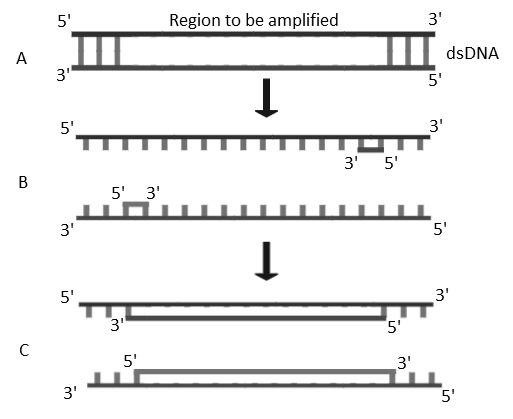
- A - Denaturation at a temperature of about 50ºC
- C - Extension in the presence of heat-stable DNA polymerase
- A - Annealing with two sets of primers
- B - Denaturation at a temperature of about 98ºC separating the two DNA strands
Show answer
Answer: (2) C - Extension in the presence of heat-stable DNA polymerase
Q103 AIPMT 2012 Mains Restriction Enzymes - Main Enzymes
Which one of the following represents a palindromic sequence in DNA?
- 5'-CCAATG-3'
3'-GAATCC-5' - 5'-CATTAG-3'
3'-GATAAC-5' - 5'-GATACC-3'
3'-CCTAAG-5' - 5'-GAATTC-3'
3'-CTTAAG-5'
Show answer
Answer: (4) 5'-GAATTC-3'
3'-CTTAAG-5'
Why: A palindromic sequence reads the same in the 5' to 3' direction on both strands. In 5'-GAATTC-3' the complementary strand 3'-CTTAAG-5' read 5' to 3' is again GAATTC, so this sequence is palindromic, which is typical of restriction enzyme recognition sites.
Q104 AIPMT 2012 Mains Transforming Plant & Animal Cell
Biolistics (gene-gun) is suitable for:
- Transformation of plant cells
- Constructing recombinant DNA by joining with vectors
- DNA fingerprinting
- Disarming pathogen vectors
Show answer
Answer: (1) Transformation of plant cells
Why: The gene gun (biolistics) fires DNA-coated microprojectiles into plant tissue, which makes it a method for transforming plant cells. It is not used for constructing recombinant DNA with vectors, DNA fingerprinting, or disarming pathogen vectors.
Q105 AIPMT 2012 Transforming Plant & Animal Cell
- Silver or platinum
- Platinum or zinc
- Silicon or platinum
- Gold or tungsten
Show answer
Answer: (4) Gold or tungsten
Why: In the gene gun (biolistic) method, DNA is coated onto tiny microparticles of gold or tungsten, which are then fired into the target cells at high speed.
Q106 AIPMT 2012 Tools: Vectors
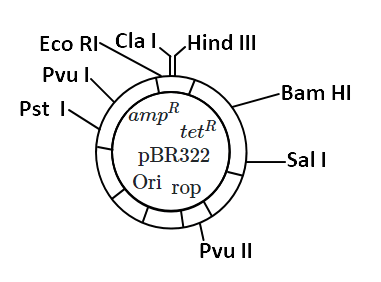
- Ori-original restriction enzyme
- Rop-reduced osmotic pressure
- Hind III, Eco RI-selectable markers
- AmpR, tetiR-antibiotic resistance genes
Show answer
Answer: (4) AmpR, tetiR-antibiotic resistance genes
Q107 AIPMT 2012 Polymerase Chain Reaction: PCR
Which one is a true statement regarding DNA polymerase used in PCR?
- It is used to ligate introduces DNA in recipient cells
- It serves as a selectable marker
- It is isolated from a virus
- It remains active at high temperatures
Show answer
Answer: (4) It remains active at high temperatures
Why: The DNA polymerase used in PCR is Taq polymerase, isolated from the thermophilic bacterium Thermus aquaticus, and it remains stable and active at the high temperatures used in the denaturation step. The correct option is that it remains active at high temperatures.
Q108 AIPMT 2012 Tools: Vectors
Which one of the following is a case of wrong matching?
- Somatic hybridization- Fusion of two diverse cells
- Vector DNA- Site for tRNA synthesis
- Micropropagation- In vitro production of plants in large numbers
- Callus - Unorganized mass of cells produced in tissue culture
Show answer
Answer: (2) Vector DNA- Site for tRNA synthesis
Why: Vector DNA is a carrier, such as a plasmid or viral DNA, used to carry foreign DNA into a host cell for cloning; it is not a site for tRNA synthesis. The other three pairings (somatic hybridization as fusion of two different cells, micropropagation as large-scale in vitro plant production, and callus as an unorganized mass of cells) are correct.
Biotechnology: Principles and Processes NEET PYQ 2011 (4 questions)
Q109 AIPMT 2011 Restriction Enzymes - Main Enzymes
- Coelom
- Coenzyme
- Coli
- Colon
Show answer
Answer: (3) Coli
Why: In the name EcoRI, the first letter E comes from the genus Escherichia, and 'co' stands for the species coli, Escherichia coli, from which the enzyme was isolated. The 'R' denotes the strain and 'I' the order of discovery.
Q110 AIPMT 2011 Tools: Enzymes
5’___GAATTC___3’
3’___CTTAAG__5’
- Deletion mutation
- Start codon at the 5' end
- Palindromic sequence of base pairs
- Replication completed
Show answer
Answer: (3) Palindromic sequence of base pairs
Why: The sequence GAATTC reads the same 5' to 3' on both strands, so it is a palindromic sequence of base pairs, which is the feature typically recognised by restriction enzymes. It is not a deletion, a start codon, or a sign of completed replication.
Q111 AIPMT 2011 Separation and Isolation of DNA fragments
- tissue culture
- PCR
- gel electrophoresis
- spectrophotometry
Show answer
Answer: (3) gel electrophoresis
Why: Agarose is a polysaccharide obtained from seaweeds and is used to make the gel matrix in which DNA or RNA fragments are separated by size during gel electrophoresis. Its porous structure lets smaller fragments move faster than larger ones.
Q112 AIPMT 2011 Large Scale Production
- obtain antibiotics
- purify enzymes
- degrade sewage
- produce methane
Show answer
Answer: (2) purify enzymes
Biotechnology: Principles and Processes NEET PYQ 2010 (3 questions)
Q113 AIPMT 2010 Restriction Enzymes - Main Enzymes
Restriction endonucleases are enzymes which:
- make cuts at specific positions within the DNA molecule
- recognize a specific nucleotide sequence for binding
of DNA ligase - restrict the action of the enzyme DNA polymerase
- remove nucleotides from the ends of the DNA molecule
Show answer
Answer: (1) make cuts at specific positions within the DNA molecule
Why: Restriction endonucleases are bacterial enzymes that cut double-stranded DNA at specific internal positions, usually within palindromic recognition sequences, producing defined fragments used in genetic engineering. They do not simply act at the ends of the molecule or restrict DNA polymerase, and their binding to a sequence is not a requirement for DNA ligase.
Q114 AIPMT 2010 Restriction Enzymes - Main Enzymes
Which one of the following palindromic base sequences in DNA can be easily cut at about the middle by some particular restriction enzyme?
| 1. | 5'-CGTTCG-3' | 2. | 5'-GATATG-3' |
| 3'-ATGGTA-5' | 3'-CTACTA-5' | ||
| 3. | 5'-GAATTC-3' | 4. | 5'-CACGTA-3' |
| 3'-CTTAAG-5' | 3'-CTCAGT-5' |
Show answer
Answer: option (3)
Q115 AIPMT 2010 Bioreactors/Downstream Processing
- Addition of preservatives to the product
- Purification of the product
- Ensuring anaerobic conditions in the culture vessel
- Availability of oxygen throughout the process
Show answer
Answer: (4) Availability of oxygen throughout the process
Why: In a stirred-tank bioreactor, the stirring and aeration keep oxygen dissolved and evenly distributed in the culture medium throughout the process. This sustained oxygen availability is the purpose of the design, which matches option (4).
Biotechnology: Principles and Processes NEET PYQ 2008 (2 questions)
Q116 AIPMT 2008 Process of Biotech
Gel electrophoresis is used for:
- cutting of DNA into fragments
- separation of DNA fragments according to their size
- construction of recombinant DNA by joining with cloning vectors
- isolation of DNA molecule
Show answer
Answer: (2) separation of DNA fragments according to their size
Why: Gel electrophoresis separates DNA fragments by size, because when an electric field is applied, the negatively charged DNA moves through the agarose gel matrix and smaller fragments travel farther than larger ones. Cutting DNA, joining it to vectors, and isolating DNA are done by other techniques.
Q117 AIPMT 2008 Tools: Enzymes
- DNA ligase
- endonucleases
- DNA polymerase
- exonucleases
Show answer
Answer: (1) DNA ligase
Why: DNA ligase is the enzyme that joins the sticky ends of the foreign DNA carrying the resistance gene to the cut ends of the plasmid vector by forming phosphodiester bonds. Restriction endonucleases only cut DNA, so the joining step itself depends on DNA ligase.
Biotechnology: Principles and Processes NEET PYQ 2006 (1 question)
Q118 AIPMT 2006 Restriction Enzymes - Main Enzymes
- cuts the DNA molecule randomly
- cuts the DNA molecule at specific sites
- restricts the synthesis of DNA inside the nucleus
- synthesis DNA
Show answer
Answer: (2) cuts the DNA molecule at specific sites
Why: Restriction endonucleases are enzymes that recognise specific short palindromic nucleotide sequences and cut the DNA double helix at those sites, which is the meaning of option (2). This specificity makes them useful as molecular scissors in genetic engineering.
Frequently asked questions
How many Biotechnology: Principles and Processes questions have been asked in NEET?
This archive holds 118 Biotechnology: Principles and Processes questions from 30 of 33 official NEET and AIPMT papers, 2006–2026. It counts every paper held here, including re-exam and regional papers.
Which topics of Biotechnology: Principles and Processes are asked most often?
By topic tag: Restriction Enzymes - Main Enzymes (22), Separation and Isolation of DNA fragments (21), Tools (19), Cloning Vector (16) and Polymerase Chain Reaction: PCR (14).
When was Biotechnology: Principles and Processes last asked?
The most recent paper in this archive with a question from this chapter is Re-NEET 2026.
Where do the answers come from?
Each answer is the option recorded as correct in the official answer key for that paper. Where a short explanation is shown, it was written separately and checked against the key; it is not part of the official paper. Questions marked NEET 2026 (3 May, cancelled) are from the cancelled first sitting: NTA issued no final key for it, so their answers are the key on record and have not been matched to an official key.
More Biology chapter-wise PYQs
← Human Health and Disease Biotechnology and its Applications →
Botany, Class 11
- The Living World (25)
- Biological Classification (90)
- Plant Kingdom (88)
- Morphology of Flowering Plants (120)
- Anatomy of Flowering Plants (83)
- Cell: The Unit of Life (125)
- Cell Cycle and Cell Division (84)
- Photosynthesis in Higher Plants (69)
- Respiration in Plants (42)
- Plant Growth and Development (71)
Old syllabus (archive)
- Transport in Plants (39)
- Mineral Nutrition (49)
- Reproduction in Organisms (22)
- Environmental Issues (80)
- Digestion and Absorption (45)
Botany, Class 12
- Sexual Reproduction in Flowering Plants (118)
- Principles of Inheritance and Variation (155)
- Molecular Basis of Inheritance (172)
- Strategies for Enhancement in Food Production (36)
- Microbes in Human Welfare (66)
- Organisms and Populations (86)
- Ecosystem (87)
- Biodiversity and Conservation (86)
Zoology, Class 11
- Animal Kingdom (109)
- Structural Organisation in Animals (90)
- Biomolecules (100)
- Breathing and Exchange of Gases (56)
- Body Fluids and Circulation (68)
- Excretory Products and their Elimination (54)
- Locomotion and Movement (58)
- Neural Control and Coordination (53)
- Chemical Coordination and Integration (76)
Zoology, Class 12
- Human Reproduction (109)
- Reproductive Health (67)
- Evolution (101)
- Human Health and Disease (100)
- Biotechnology and its Applications (101)
Want more than past papers? Practise all 1,670 Biotechnology: Principles and Processes questions on NEETprep.