The NEET 2026 paper of 3 May 2026 was cancelled by NTA on 12 May 2026 and the exam was held again on 21 June 2026. [NTA press release, 12 May 2026] [NTA public notice, 15 May 2026] The 3 May paper does not count for any result, but it is a full paper on the 2026 pattern and useful practice. This page has its 180 questions with the answers on record, and explains what happened. The paper the 2026 result is based on is the Re-NEET 2026 question paper.
Questions and answers Take it as a timed mock
What happened to NEET 2026
- 3 May 2026 (Sunday), 2:00 PM to 5:00 PM: first sitting of NEET (UG) 2026, pen and paper, booklet codes 11, 12, 13 and 14. [NTA Information Bulletin, NEET (UG) 2026] [NTA provisional answer keys, 3 May 2026 sitting]
- 6 May 2026: NTA published the provisional answer keys of the 3 May sitting. [NTA public notice, 6 May 2026]
- 10 May 2026: NTA said it had received inputs about alleged irregularities on the evening of 7 May and passed them to central agencies on 8 May. [NTA press release, 10 May 2026]
- 12 May 2026: NTA, with the approval of the Government of India, cancelled the 3 May examination and said it would be re-conducted. The matter was referred to the CBI. Registrations and centre choices were carried forward, with no fresh registration and no extra fee, and the fee already paid was to be refunded. [NTA press release, 12 May 2026]
- 15 May 2026: NTA fixed the re-examination for 21 June 2026 (Sunday). [NTA public notice, 15 May 2026]
- 21 June 2026 (Sunday), 2:00 PM to 5:15 PM: re-examination, pen and paper, 13 languages, booklet codes 50, 60, 70 and 80. The window was 195 minutes including time for formalities. [NTA public notice, 15 May 2026] [NTA public notice, 12 June 2026] [NTA final answer key, re-examination]
- 25 June 2026: provisional answer key of the re-examination; challenges were open from 25 to 28 June. [NTA provisional answer key, re-examination] [NTA public notice, 25 June 2026]
- 16 July 2026: final answer key and result. [NTA final answer key, re-examination] [NTA result press release, 16 July 2026]
The re-examination was for everyone registered for the May 2026 cycle: 2,279,743 candidates were registered and 1,999,895 appeared on 21 June. [NTA key data points of NEET (UG) over years] An official count of candidates who appeared on 3 May was not found in the NTA documents we opened.
NEET 2026 exam pattern
- 180 compulsory questions in 180 minutes, maximum 720 marks: Physics 45, Chemistry 45, Biology (Botany and Zoology) 90. [NTA Information Bulletin, NEET (UG) 2026]
- +4 for a correct answer, −1 for a wrong answer, 0 for an unanswered question. [NTA Information Bulletin, NEET (UG) 2026]
- If a question is dropped, every candidate who appeared gets +4 for it; if more than one option is correct, +4 goes to anyone who marked one of the correct options. [NTA Information Bulletin, NEET (UG) 2026]
NEET 2026 (3 May) answer key
There is no final answer key and no official question paper download for this sitting.
NEET 2026 (3 May) question paper with answers
Questions are in the order stored for this paper. Each question links to its chapter's PYQ page.
NEET 2026 Physics questions (45)
Q1 Moving Charges and Magnetism
(take )
Show answer
Answer: (1)
Why: The field at the centre of a circular coil is B equals μ0 times N times I divided by 2R, so rearranging with the given field, number of turns and radius gives the current, which is 2.5 A. The magnetic moment of the coil is M equals N times I times π times R squared, which gives 2 A m squared for that current.
Q2 Dual Nature of Radiation and Matter
| List-I | List-II | ||
| de-Broglie wavelength | |||
| Diffraction and Interference | Particle nature of light | ||
| Wave nature of light | |||
| Compton effect | Energy of photon |
Show answer
Answer: (1)
Why: The relation E equals h nu gives the energy of a photon, which is the energy of a light quantum. Diffraction and interference show the wave nature of light, λ equals h over p is the de Broglie wavelength, and the Compton effect demonstrates the particle nature of light.
Q3 Semiconductor Electronics
(All diodes are ideal and identical.)
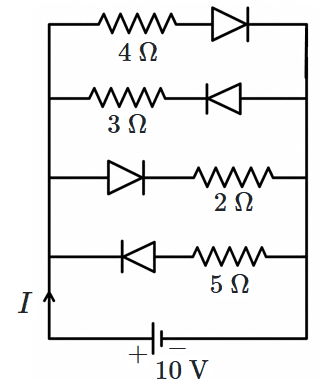
Show answer
Answer: (2)
Q4 Units and Measurement
Show answer
Answer: (3)
Why: Since the speed of light is taken as unity, the distance in the new unit is numerically equal to the travel time expressed entirely in seconds. Converting the given six minutes forty seconds into seconds gives 400, so the Sun-Earth distance in this unit is 400.
Q5 Motion in a Straight Line
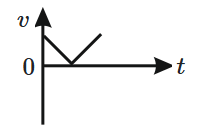 |
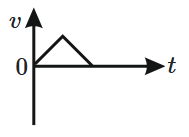 |
||
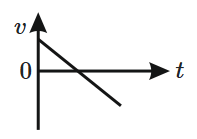 |
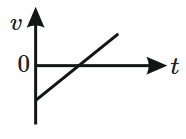 |
||
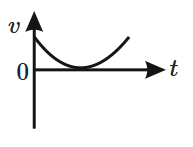 |
|||
- only
- and only
- only
- only
Show answer
Answer: (1) only
Q6 Units and Measurement
- cm
- cm
- cm
- cm
Show answer
Answer: (3) cm
Why: The least count is one main scale division minus one vernier division. Since 20 vernier divisions coincide with 16 main scale divisions, the difference works out to one fifth of a main scale division, which is 0.02 cm.
Q7 Alternating Current
- kHz
- kHz
- kHz
- kHz
Show answer
Answer: (3) kHz
Why: The resistance does not affect the resonance frequency, which depends only on the inductance and capacitance through f = 1/(2 pi sqrt(LC)). Substituting the 1 mH inductance and 0.1 microfarad capacitance gives about 15.9 kHz.
Q8 Moving Charges and Magnetism
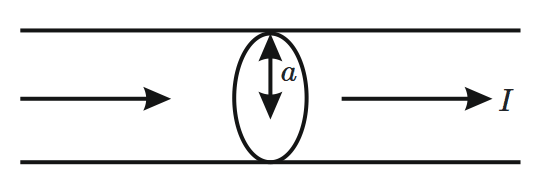
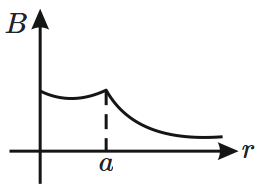
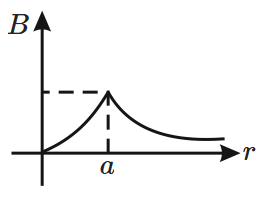
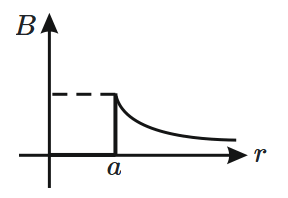
Show answer
Answer: (1) 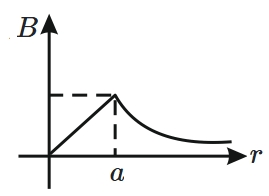
Q9 Current Electricity
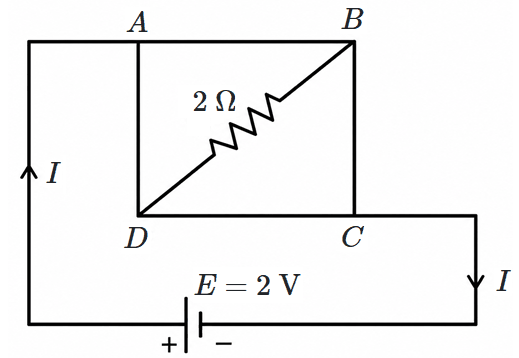
Show answer
Answer: (1)
Q10 Nuclei
(take , )
Show answer
Answer: (1)
Why: Equating the volume from density (mass divided by density) with the volume from R = R0 times A^(1/3), which gives V = (4/3) pi R0^3 A, yields A = 3m / (4 pi R0^3 rho). Substituting the given mass, density and R0 gives a mass number of approximately 12.
Q11 Electromagnetic Induction
- volts
- volts
- volts
- volts
Show answer
Answer: (1) volts
Q12 Moving Charges and Magnetism
Show answer
Answer: (1)
Why: A shunt in parallel with the galvanometer carries the excess current, so its resistance is the galvanometer resistance times the full-scale current divided by the difference between the 10 A range current and the 1 mA full-scale current. This gives approximately 0.01 ohm.
Q13 Wave Optics
(assume the two slits produce waves of equal intensity)
Show answer
Answer: (1)
Why: At a path difference of lambda, the waves interfere constructively, so the maximum intensity is K. Intensity at any point is the maximum multiplied by cos squared of half the phase difference, and a path difference of lambda/3 corresponds to a phase difference of one third of a full cycle, giving cos squared of one sixth of a full cycle equal to one quarter. Therefore the intensity is one quarter of K.
Q14 Laws of Motion
Show answer
Answer: (3)
Why: The resultant of two perpendicular forces is the square root of the sum of their squares, and dividing by the mass gives an acceleration of 2 m/s^2. The direction makes an angle with the 8 N force whose tangent equals 6 divided by 8, which is 3/4.
Q15 Electrostatic Potential and Capacitance
and are connected as shown, along with a battery of V.
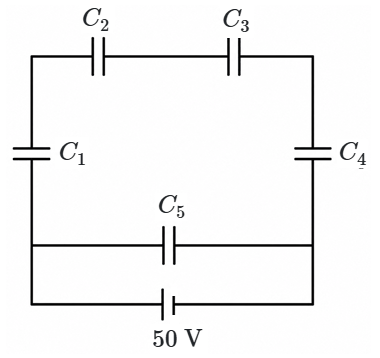
The equivalent capacitance and the charges on each capacitor, respectively, are:
- on all capacitors
- on all capacitors
- on to and on
- on to and on
Show answer
Answer: (1) on all capacitors
Q16 Current Electricity
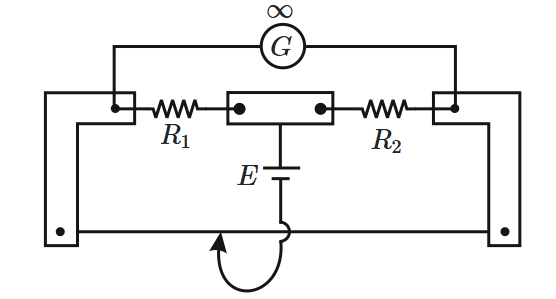
- Only the right-sided deflection.
- Only the left-sided deflection.
- There will be no deflection irrespective of the position of the jockey.
- Both right-sided and left-sided deflection and, at balance point, no deflection.
Show answer
Answer: (4) Both right-sided and left-sided deflection and, at balance point, no deflection.
Q17 Work, Energy and Power
- W
- W
- kW
- kW
Show answer
Answer: (4) kW
Why: The work done in lifting the mass against gravity is mass times g times height, and power is work divided by time. Using 1000 kg, 9.8 m/s^2, 20 m and 10 s gives 19.6 kW.
Q18 Mechanical Properties of Solids
| List-I | List-II | ||
| A. | Young's Modulus | I. | |
| B. | Compressibility | II. | |
| C. | Bulk Modulus | III. | |
| D. | Poisson's Ratio | IV. |
Choose the correct answer from the options given below:
Show answer
Answer: (4)
Why: Young's modulus is stress divided by strain, which is F times L over A times the change in length, so it matches the option with that expression (II). Compressibility is the fractional volume change per unit pressure change (III), bulk modulus is its reciprocal, pressure times V over the volume change (IV), and Poisson's ratio is the negative ratio of lateral strain to longitudinal strain (I). This gives A-II, B-III, C-IV, D-I.
Q19 Ray Optics and Optical Instruments
- emerges parallel to the principal axis
- appears to diverge from the first principal focus
- passes through which is the radius of curvature of the lens
- passes through the second principal focus
Show answer
Answer: (2) appears to diverge from the first principal focus
Why: A ray parallel to the principal axis of a concave lens, after refraction, diverges as though it came from the focus on the object side. That focus is the first principal focus, so the option stating that the ray appears to diverge from the first principal focus is correct.
Q20 Systems of Particles and Rotational Motion
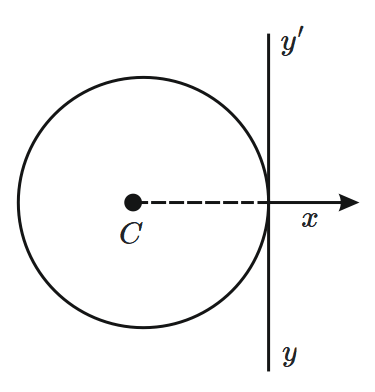
Show answer
Answer: (1)
Q21 Units and Measurement
Show answer
Answer: (4)
Q22 Waves
where and are in cm and in s. The phase difference between the oscillatory motions of two points separated by a distance of m is:
Show answer
Answer: (4)
Why: The phase difference between two points is 2 pi times the coefficient of x in the wave equation times the separation, with the separation in the same unit as x. Since x is in centimetres, the 0.5 m separation must first be converted to centimetres. Multiplying 2 pi by 0.0080 and by that separation in centimetres gives 0.8 pi rad, which is the option stated as 0.8 pi rad.
Q23 Ray Optics and Optical Instruments
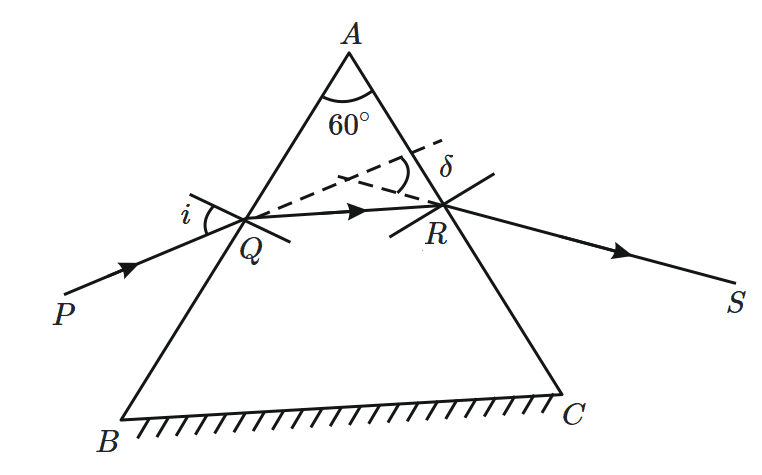
Show answer
Answer: (1)
Q24 Semiconductor Electronics
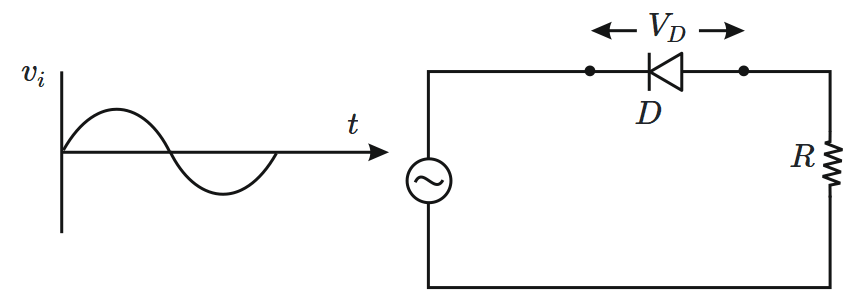
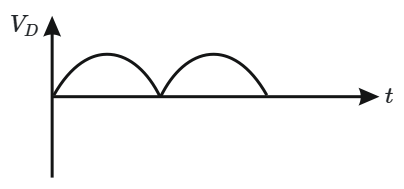
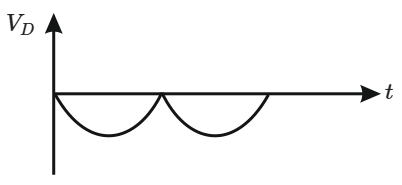
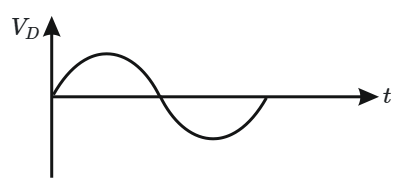
Show answer
Answer: (2) 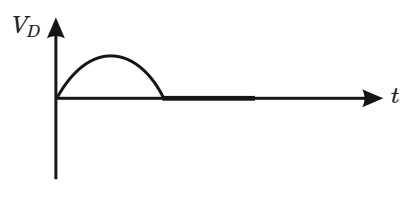
Q25 Oscillations
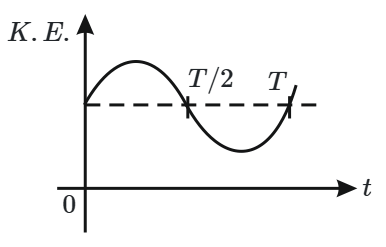
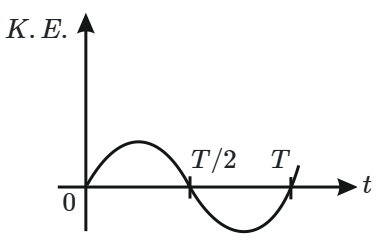
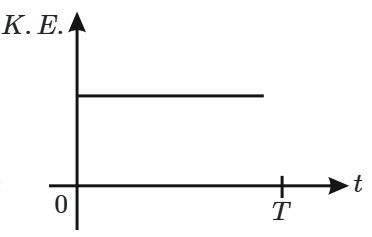
Show answer
Answer: (3) 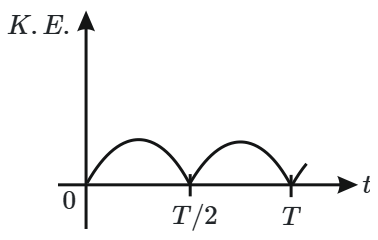
Q26 Current Electricity
Show answer
Answer: (2)
Why: The terminal voltage of a cell is its EMF minus the voltage drop across its internal resistance, that is, EMF minus current times internal resistance. Using the given EMF, current and internal resistance in this formula gives the option of 10.8 V.
Q27 Gravitation
Show answer
Answer: (4)
Why: The work done equals the change in gravitational potential energy, which is GMm times the difference between 1 over R and 1 over (R plus the height). With the height equal to R and g equal to GM over R squared, this simplifies to m g R over 2, which is the option stated as mg R/2.
Q28 Thermodynamics
Show answer
Answer: (3)
Why: From the first law of thermodynamics, the heat supplied equals the increase in internal energy plus the work done by the system, so the rate of increase in internal energy equals the rate of heat supply minus the rate of work done. Subtracting 75 W from 100 W gives the option of 25 W.
Q29 Current Electricity
Show answer
Answer: (2)
Why: For a fixed heater resistance, power is proportional to the square of the applied voltage, since P equals V squared over R. The new power is therefore the rated 400 W multiplied by the square of the ratio of 200 V to 220 V, which comes to about 331 W, the option stated as 331 W.
Q30 Motion in a Straight Line
Person has reaction time of s.
Person has reaction time of s.
Person has reaction time of s.
Person has reaction time of s.
Person has reaction time of s.
What is the correct order of the distance travelled by the ruler for each person?
Show answer
Answer: (4)
Why: The distance fallen before the ruler is caught is one half times g times the square of the reaction time, so distance increases with reaction time. Ordering the reaction times from largest to smallest gives B (0.22 s), E (0.21 s), A (0.20 s), D (0.19 s), then C (0.18 s), which is the option listing B greater than E greater than A greater than D greater than C.
Q31 Electrostatic Potential and Capacitance
Show answer
Answer: (2)
Why: Charge divides equally between two identical capacitors when they are joined, so the final stored energy is half of the initial energy, and the energy lost is therefore half of the initial stored energy, equal to the option of 0.5 × 10^-6 J.
Q32 Oscillations
(take and )
Show answer
Answer: (4)
Why: The period is the time taken divided by the number of oscillations, and for a simple pendulum the period is 2π times the square root of L divided by g, so L equals g times T squared divided by 4π squared. Substituting the given values of g and π squared gives exactly 1 m, which is option (4).
Q33 Alternating Current
Show answer
Answer: (1)
Why: The current is a sine function of time, so it reaches its peak value when the phase is π/2, which takes one quarter of the period. The period is the reciprocal of the frequency, so the time is one quarter of the reciprocal of 60 Hz, which equals the option 1/240 s.
Q34 Wave Optics
| (A) | As there is no gain or loss of energy, these phenomena are consistent with the principle of conservation of energy. |
| (B) | Diffraction and interference are characteristics exhibited only by light waves. |
- (A) is True, but (B) is False
- Both (A) and (B) are True
- (A) is False, but (B) is True
- Both (A) and (B) are False
Show answer
Answer: (1) (A) is True, but (B) is False
Why: Energy is only redistributed between bright and dark regions, with no net gain or loss, so statement (A) is true and agrees with conservation of energy. Interference and diffraction are shared by all waves, including sound and water waves, not just light, so statement (B) is false, matching the option that says (A) is true but (B) is false.
Q35 Laws of Motion
Show answer
Answer: (4)
Why: The box does not slip when the trolley's acceleration is at most the maximum static friction force divided by the mass, which equals the coefficient of static friction times g, and the mass cancels out. This gives the maximum acceleration as the coefficient times g, which equals the option 1.2 m/s squared.
Q36 Oscillations
(consider mass of the bob )
Show answer
Answer: (1)
Why: At the equilibrium position the potential energy is zero, so the total energy equals the kinetic energy, one half times mass times speed squared. Solving gives speed equal to the square root of twice the total energy divided by the mass, with the mass in kilograms, which yields about 1.41 m/s, the option (1) value.
Q37 Nuclei
| The volume of a nucleus is proportional to | |
| The volume of a nucleus is proportional to | |
| The difference in mass of an atom and its nucleus is called the mass defect. | |
| The difference in mass of a nucleus and its constituents is called the mass defect. |
- and are True but and are False
- and are True, but and are False
- and are True, but and are False
- and are True but and are False
Show answer
Answer: (1) and are True but and are False
Why: Nuclear radius is proportional to the cube root of the mass number, so volume is proportional to the mass number itself, making statement (B) true and statement (A) false. Mass defect is the difference between the mass of the nucleus and the sum of the masses of its constituent nucleons, so (D) is true, while (C) wrongly refers to the atom and is false, matching the option where (B) and (D) are true.
Q38 Systems of Particles and Rotational Motion
Show answer
Answer: (4)
Why: Since the angular acceleration is uniform, the number of revolutions equals the average of the initial and final rotational speeds, multiplied by the time expressed in minutes. Applying this to the given speeds and the 10 s duration gives 150 revolutions, which is option (4).
Q39 Mechanical Properties of Fluids
(consider the density of water and gravitational acceleration )
Show answer
Answer: (4)
Why: The 100 atm figure is absolute pressure, so the pressure that the water column itself supplies is the limit minus one atmosphere of atmospheric pressure. For a column of water, this gauge pressure equals density times g times depth, so the depth is that pressure difference divided by the product of density and g, which gives 990 m.
Q40 Electromagnetic Waves
| List I (Electromagnetic wave) |
List II (Production) |
||
| A. | Microwave | I. | Electrons in atoms emit light when they move from a higher energy level to a lower energy level |
| B. | Visible light | II. | Radioactive decay of nucleus |
| C. | Gamma rays | III | Vibration of atoms and molecules |
| D. | Infra-red rays | IV. | Klystron valve or magnetron valve |
- A-III, B-I, C-II, D-IV
- A-III, B-IV, C-I, D-II
- A-IV, B-III, C-II, D-I
- A-IV, B-I, C-II, D-III
Show answer
Answer: (4) A-IV, B-I, C-II, D-III
Why: Microwaves are produced by klystron or magnetron valves, visible light comes from electrons dropping from a higher to a lower energy level in atoms, gamma rays are emitted in radioactive decay of nuclei, and infrared rays arise from vibrations of atoms and molecules. Matching each item to these sources gives microwave with klystron or magnetron, visible with electron transitions, gamma with radioactive decay, and infrared with atomic and molecular vibrations.
Q41 Electrostatic Potential and Capacitance
| Inside a conductor, the electrostatic field is zero. | |
| The electric field at the surface of a charged conductor does not depend on its surface charge density. | |
| The interior of a charged conductor can have no excess charge in the static situation. | |
| At the surface of a charged conductor, the electrostatic field must be normal to the surface at every point. | |
| The electrostatic potential is zero everywhere inside a charged conductor. |
Show answer
Answer: (3)
Why: The field inside a conductor is zero, the interior of a charged conductor carries no excess charge in electrostatic equilibrium, and the field at the surface is perpendicular to it, so statements A, C and D are correct. The surface field depends on the surface charge density through E equals sigma divided by epsilon zero, and the potential inside is constant at the surface value rather than zero, so B and E are incorrect.
Q42 Dual Nature of Radiation and Matter
(take Planck's constant as J-s)
Show answer
Answer: (1)
Why: Photoelectric emission needs each photon's energy, which is inversely proportional to wavelength, to exceed the 6.6 eV work function. The 200 nm radiation is the longest wavelength listed, so its photons have the lowest energy and fall below the work function, whereas the 150, 100 and 50 nm photons are more energetic and can eject electrons.
Q43 Atoms
(take , and )
Show answer
Answer: (4)
Why: The first excited state corresponds to principal quantum number n equal to 2, and the radius of a hydrogen orbit is n squared times the Bohr radius. Equivalently, the radius can be found from r equals k e squared divided by twice the magnitude of the energy, with the energy converted to joules using the given eV conversion and k equal to one over four pi epsilon zero, which gives about 2.1 times 10 to the power minus 10 m.
Q44 Semiconductor Electronics
| When the forward bias voltage across a junction diode increases above a certain threshold voltage, the diode current increases significantly. | |
| This current is called reverse saturation current. |
- Both Statements and are False.
- Statement is True, but Statement is False.
- Both Statements and are True.
- Statement is False, but Statement is True.
Show answer
Answer: (2) Statement is True, but Statement is False.
Why: Statement A is true, since a forward-biased p-n junction conducts strongly once the voltage exceeds the threshold (knee) voltage. Statement B is false because the current described in statement B is the reverse saturation current, which flows under reverse bias rather than forward bias.
Q45 Kinetic Theory of Gases
(atomic mass of argon and molecular mass of chlorine)
Show answer
Answer: (1)
Why: The root mean square speed of a gas is the square root of three times the gas constant times temperature divided by the molar mass, so at the same temperature the ratio of the two speeds equals the square root of the ratio of the molar masses, which is the square root of 70 divided by 40. The temperature cancels, and the 2:1 mass ratio of the mixture does not affect the molecular speeds, giving root 7 divided by 2.
NEET 2026 Chemistry questions (45)
Q46 Alcohols, Phenols and Ethers
| List-I | List-II | ||
| A. | 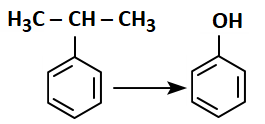 |
I. | (i) Oleum; (ii) NaOH, ; (iii) |
| B. |  |
II. | (i) ; (ii) |
| C. | 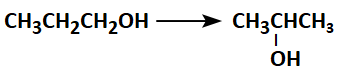 |
III. | (i) (ii) |
| D. | 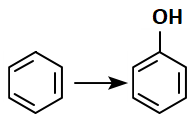 |
IV | (i) Conc. (ii) |
- A - I, B - III, C -IV, D - II
- A - II, B - IV, C - III, D - I
- A - II, B - III, C - I, D - IV
- A - II, B - III, C - IV, D - I
Show answer
Answer: (4) A - II, B - III, C - IV, D - I
Q47 Amines
Show answer
Answer: (2)
Why: Ethane reacts with chlorine under UV light to give chloroethane, which reacts with ammonia to give ethylamine, a primary amine. Treatment with sodium nitrite and HCl converts the primary amine to a diazonium salt that is hydrolysed by water with loss of nitrogen gas, so the final product Z is ethanol, C2H5OH.
Q48 Equilibrium
Calculate pH when the following equilibrium exists at 298 K :
,
(Given : )
- 4.699
- 8.714
- 9.301
- 5.286
Show answer
Answer: (3) 9.301
Q49 Some Basic Concepts of Chemistry
- of of
- of of
- of of
- of of
Show answer
Answer: (3) of of
Why: CO2 reacts with hot coke by C + CO2 gives 2CO, so each volume of CO2 consumed yields twice that volume of CO, and the total volume rises by the volume of CO2 consumed. Using this, the remaining CO2 and the CO formed give the composition 0.8 dm^3 of CO and 0.6 dm^3 of CO2, which is option (3).
Q50 Structure of Atom
| List-I (Quantum Numbers) |
List-II (Orbital) |
|||
| 'n' | 'l' | |||
| A. | 2 | 1 | I. | 3d |
| B. | 4 | 0 | II. | 2p |
| C. | 5 | 3 | III. | 4s |
| D. | 3 | 2 | IV. | 5f |
Choose the correct answer from the options given below :
- A-II, B-III, C-IV, D-I
- A-I, B-II, C-III, D-IV
- A-IV, B-II, C-III, D-I
- A-II, B-III, C-I, D-IV
Show answer
Answer: (1) A-II, B-III, C-IV, D-I
Why: The orbital is identified from n and l, where l = 0, 1, 2, 3 correspond to s, p, d, f. So n = 2 with l = 1 is 2p, n = 4 with l = 0 is 4s, n = 5 with l = 3 is 5f, and n = 3 with l = 2 is 3d, which matches option (1): A-II, B-III, C-IV, D-I.
Q51 Haloalkanes and Haloarenes
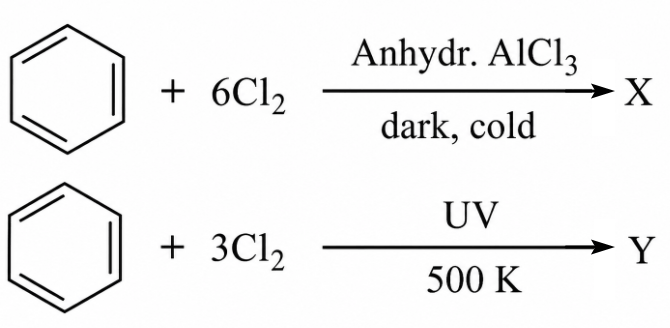
- 3 and 6
- 6 and 6
- 6 and 3
- 3 and 3
Show answer
Answer: (2) 6 and 6
Q52 Haloalkanes and Haloarenes
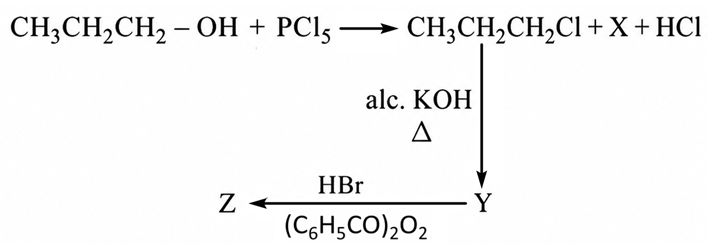
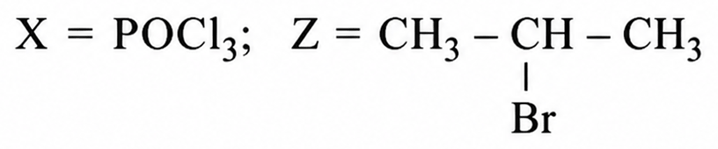

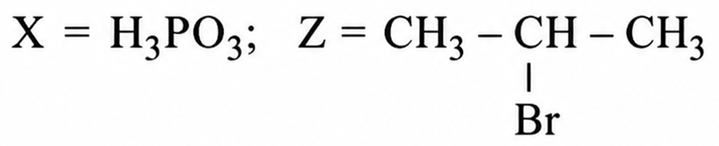
Show answer
Answer: (4) 
Q53 The d and f Block Elements
| List-I (Transition metal/compound/complex) |
List-II (Catalytic Role) |
||
| (a) | (i) | Preparation of ammonia from mixture | |
| (b) | (ii) | Polymerisation of alkynes | |
| (c) | (iii) | Preparation of from | |
| (d) | complex | (iv) | Oxidation of ethyne to ethanal |
Choose the correct answer from the options given below :
- A-III, B-IV, C-I, D-II
- A-II, B-I, C-IV, D-III
- A-IV, B-I, C-III, D-II
- A-III, B-I, C-IV, D-II
Show answer
Answer: (4) A-III, B-I, C-IV, D-II
Why: V2O5 is the catalyst in the Contact process that converts SO2 to H2SO4, finely divided Fe is the catalyst in the Haber process for ammonia from N2 and H2, PdCl2 catalyses oxidation of ethyne to ethanal, and the Ni complex catalyses polymerisation of alkynes. This matches option (4): A-III, B-I, C-IV, D-II.
Q54 Chemical Bonding and Molecular Structure
- It has a trigonal pyramidal geometry with two lone pairs on Cl atom
- It has T-shaped geometry with two lone pairs on Cl atom
- It has a trigonal planar geometry with two lone pairs on Cl atom
- It has T-shaped geometry with three lone pairs on Cl atom
Show answer
Answer: (2) It has T-shaped geometry with two lone pairs on Cl atom
Why: In ClF3 the central Cl has 3 bonding pairs and 2 lone pairs, giving five electron domains arranged as a trigonal bipyramid, and the lone pairs occupy equatorial positions so the molecule is T-shaped. This is the content of option (2).
Q55 Electrochemistry
Pt (s) | (g, 2 atm) | HCl (aq, 0.02 M)
= 0 V
(Given : ,
log 2 = 0.3010)
- 0.109 V
- 0.035 V
- − 0.035 V
- − 0.109 V
Show answer
Answer: (1) 0.109 V
Q56 Chemical Kinetics
| List-I (Order of reaction) | List-II (Unit of rate constant) | ||
| A. | Zero order | I. | |
| B. | First order | II. | |
| C. | Second order | III. | |
| D. | Third order | IV. |
Choose the correct answer from the options given below:
- A-IV, B-III, C-II, D-I
- A-I, B-II, C-III, D-IV
- A-IV, B-III, C-I, D-II
- A-IV, B-II, C-I, D-III
Show answer
Answer: (3) A-IV, B-III, C-I, D-II
Why: The unit of the rate constant is set by the reaction order: zero order gives mol L^-1 s^-1, first order gives s^-1, second order gives mol^-1 L s^-1, and third order gives mol^-2 L^2 s^-1. This matches option (3): A-IV, B-III, C-I, D-II.
Q57 The d and f Block Elements
- 2.84 BM
- 5.92 BM
- 4.90 BM
- 3.87 BM
Show answer
Answer: (1) 2.84 BM
Why: The spin-only magnetic moment is sqrt(n(n+2)) Bohr magnetons, where n is the number of unpaired electrons. Ti2+ with 3d^2 has two unpaired electrons, giving about 2.84 BM, which is option (1).
Q58 Haloalkanes and Haloarenes

The suitable method that can be used for the separation of products X and Y is:
- Continuous extraction
- Differential extraction
- Fractional distillation
- Sublimation
Show answer
Answer: (3) Fractional distillation
Q59 Structure of Atom
Show answer
Answer: (3)
Q60 Salt Analysis
Identify the correct anion from the following:
- Acetate,
- Carbonate,
- Sulphate,
- Sulphide,
Show answer
Answer: (1) Acetate,
Why: The vinegar smell and the acidic vapours that turn blue litmus red show that acetic acid is released when dilute H₂SO₄ is added. Acetate ions combine with hydrogen ions to form volatile acetic acid, so the anion is acetate, CH₃COO⁻.
Q61 Amines
A. (i) LiAlH4; (ii) H2O
B. Sn + HCl
C. H2/Ni
D. Na(Hg)/C2H5OH
E. Br2/aq. NaOH
Choose the correct answer from the options given below:
- A, B and C only
- A, C and D only
- A, D and E only
- B, D and E only
Show answer
Answer: (2) A, C and D only
Why: Lithium aluminium hydride followed by water hydrolysis, catalytic hydrogenation with H₂ over Ni, and sodium amalgam in ethanol all add hydrogen across the carbon-nitrogen triple bond and reduce a nitrile to a primary amine. Sn with HCl reduces nitro compounds rather than nitriles, and Br₂ with aqueous NaOH is the Hofmann degradation of amides, so those two are excluded.
Q62 The p-Block Elements (Class 11)
- Carbon has the ability to form pπ-pπ multiple bond with itself.
- (E = B and Al) is a monomer when E = B and a dimer when E = Al.
- Oxygen exhibits only 2 oxidation states.
- The order of catenation property of Group 14 elements is C>> Si > Ge ≈ Sn.
Show answer
Answer: (3) Oxygen exhibits only 2 oxidation states.
Q63 The d and f Block Elements
the most common oxidation state among lanthanoids.
- Its nearest noble gas is radon.
- It acquires a 4f¹⁴ electronic configuration after losing one more electron.
- Its atomic number is 61.
- It acquires a 4f⁰ electronic configuration after losing one more electron.
Show answer
Answer: (4) It acquires a 4f⁰ electronic configuration after losing one more electron.
Why: Cerium forms the Ce⁴⁺ ion by losing one more electron, which leaves it with an empty 4f shell, a 4f⁰ configuration. This empty f-subshell gives extra stability, which is why cerium shows the +4 state despite +3 being the common state among lanthanoids.
Q64 Organic Chemistry: Some Basic Principles and Techniques
- Covalent form to covalent form
- Ionic form to ionic form
- Covalent form to ionic form
- Ionic form to covalent form
Show answer
Answer: (3) Covalent form to ionic form
Why: In Lassaigne's test, sodium fusion converts covalently bonded elements such as C, N, S and halogens into ionic forms like NaCN, Na₂S and sodium halides. These ionic species are then detected by specific tests in the aqueous extract.
Q65 Some Basic Concepts of Chemistry
(Given : Molar mass of urea : 60 g mol-1, NA : 6.022 × 10²³ particles mol-1)
- 2.168 × 10²³
- 2.168 × 10²²
- 1.084 × 10²²
- 1.084 × 10²³
Show answer
Answer: (1) 2.168 × 10²³
Q66 Organic Chemistry: Some Basic Principles and Techniques

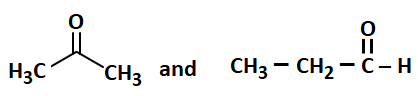

Show answer
Answer: (2) 
Q67 The p-Block Elements (Class 12)
- and form dπ-dπ bond with transition metals.
- Nitrogen can form dπ-pπ bond with oxygen.
- Nitrogen can form pπ-pπ multiple bonds with itself.
- Phosphorus, arsenic and antimony show catenation property.
Show answer
Answer: (2) Nitrogen can form dπ-pπ bond with oxygen.
Why: The incorrect statement is that nitrogen can form a dπ-pπ bond with oxygen. Nitrogen has no d orbitals in its valence shell, so it cannot form dπ bonds. The other statements are correct: phosphines and arsines form dπ-dπ bonds with transition metals, nitrogen forms pπ-pπ multiple bonds with itself, and phosphorus, arsenic and antimony show some catenation.
Q68 Salt Analysis
- Pinkish red to yellow
- Yellow to pinkish red
- Colourless to pink
- Pink to colourless
Show answer
Answer: (3) Colourless to pink
Why: Phenolphthalein is colourless in acidic and neutral solution and turns pink in alkaline solution. Near the equivalence point of the titration, as the solution becomes slightly alkaline, the indicator changes from colourless to pink.
Q69 Chemical Bonding and Molecular Structure
| List-I | List-II | ||
| A. | C2H4 | I. | 3 σ bonds, 2 π bonds |
| B. | C2H2 | II. | 3 σ bonds, one lone pair |
| C. | CH4 | III. | 4 σ bonds |
| D. | NH3 | IV. | 5 σ bonds, 1 π bond |
Choose the correct answer from the options given below :
- A-IV, B-I, C-III, D-II
- A-III, B-IV, C-II, D-I
- A-I, B-II, C-IV, D-III
- A-II, B-III, C-I, D-IV
Show answer
Answer: (1) A-IV, B-I, C-III, D-II
Why: C2H4 (ethene) has five sigma bonds and one pi bond, so A matches IV. C2H2 (ethyne) has three sigma bonds and two pi bonds, so B matches I. CH4 (methane) has four sigma bonds, so C matches III. NH3 has three sigma bonds and one lone pair on nitrogen, so D matches II.
Q70 Thermodynamics
- 700 J
- 300 J
- 400 J
- 500 J
Show answer
Answer: (2) 300 J
Why: By the first law of thermodynamics, the change in internal energy equals heat absorbed by the system minus work done by the system. Using the 500 J absorbed and the 200 J done by the system gives a change of 300 J, which is the option of 300 J.
Q71 Hydrocarbons
- CO and
- CO and
- and
- and
Show answer
Answer: (1) CO and
Why: At high temperature over a nickel catalyst, methane reacts with steam in steam reforming to give carbon monoxide and hydrogen gas. This is the option naming CO and H2.
Q72 Aldehydes, Ketones and Carboxylic Acids
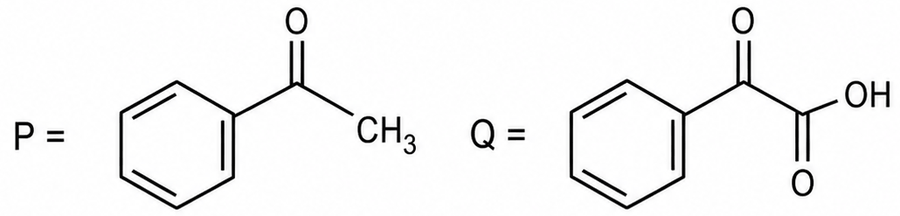
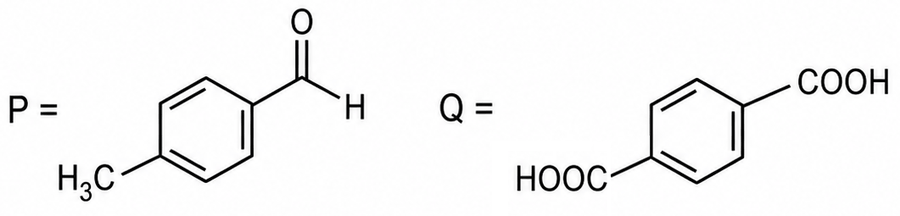
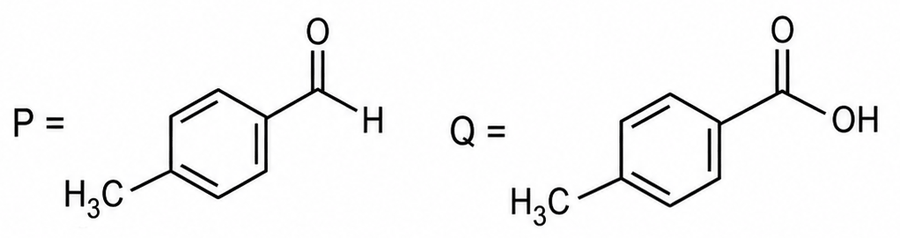
Show answer
Answer: (2) 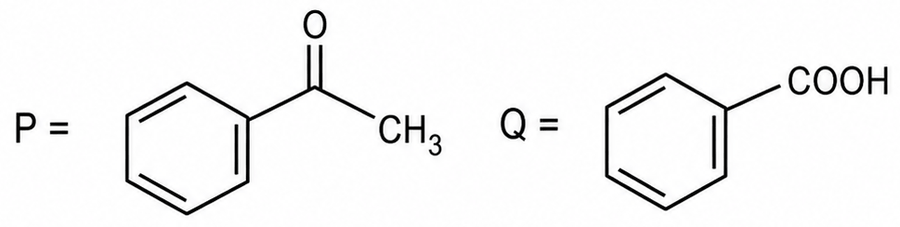
Q73 Electrochemistry
(Given : Molar mass of Cu = 63 g mol-1; 1 F = 96487 C mol-1)
- 2.4036 g
- 1.7018 g
- 0.5876 g
- 0.2938 g
Show answer
Answer: (4) 0.2938 g
Why: The charge passed equals the current multiplied by the time in seconds, so the 10 minutes must first be converted to seconds. Moles of copper deposited equal the charge divided by the product of the Faraday constant and the valency of copper, which is two because Cu2+ is reduced to copper metal. Mass deposited equals those moles multiplied by the molar mass of 63 g per mol, which gives the option of about 0.2938 g.
Q74 Alcohols, Phenols and Ethers
- Phenolic
- Alcohol
- Aldehyde
- Carboxylic acid
Show answer
Answer: (1) Phenolic
Why: The phthalein dye test is used to detect phenolic groups, since phenols react with phthalic anhydride in concentrated sulfuric acid to form a phthalein dye that gives a characteristic colour in alkali. Alcohols, aldehydes and carboxylic acids do not give this test.
Q75 Biomolecules
- DNA possesses a single-stranded helix structure and contains uracil as one of the four bases.
- RNA possesses a single-stranded helix structure and contains thymine as one of the four bases.
- DNA possesses a double-stranded helix structure and contains thymine as one of the four bases.
- RNA possesses a double-stranded helix structure and contains uracil as one of the four bases.
Show answer
Answer: (3) DNA possesses a double-stranded helix structure and contains thymine as one of the four bases.
Why: DNA exists as a double-stranded helix, with the bases adenine, guanine, cytosine and thymine. The option stating a double-stranded DNA helix containing thymine is the correct one. RNA is generally single-stranded and contains uracil instead of thymine, so the other options are wrong.
Q76 Solutions
| A. | The molality of 2.5 g of ethanoic acid (Molar mass: 60 g mol-1) in 75 g of benzene solution is 0.556 m. |
| B. | The molarity of a solution containing 5 g of NaOH (molar mass: 40 g mol-1) in 450 mL of solution is 0.278 M at 298 K. |
| C. | Aquatic species are more comfortable in cold water. |
| D. | The solubility of a gas increases with a decrease in pressure. |
| E. | For a binary mixture of A and B, the number of moles of A and B are nA and nB, respectively. The mole fraction of B will be xB = nA / (nA + nB). |
Choose the correct answer from the options given below :
- A and C only
- A, B, and C only
- A, D, and E only
- A and B only
Show answer
Answer: (2) A, B, and C only
Why: Statement A is correct because moles of ethanoic acid divided by the solvent mass in kilograms gives the stated molality. Statement B is correct because moles of NaOH divided by the solution volume in litres gives the stated molarity. Statement C is correct because cold water holds more dissolved oxygen, which suits aquatic life, while D is wrong since gas solubility increases with pressure, and E is wrong since x_B should be n_B divided by the total moles.
Q77 Solutions
- formation of hydrogen bonding between acetone and chloroform.
- increase in the escaping tendency of molecules of each component.
- stronger intermolecular forces between chloroform molecules than those between chloroform and acetone molecules.
- repulsive forces.
Show answer
Answer: (1) formation of hydrogen bonding between acetone and chloroform.
Why: Chloroform and acetone form hydrogen bonds between the hydrogen of chloroform and the oxygen of acetone's carbonyl group. These new attractions are stronger than the original molecular interactions, so the molecules escape more easily less than expected, which gives a negative deviation from Raoult's law.
Q78 Equilibrium
What is the pH of this buffer solution ?
- 2
- 10
- 4
- 6
Show answer
Answer: (3) 4
Why: The acid dissociation constant of HX equals the ionic product of water divided by the base constant of X^-, so it can be found from the given Kb. When the concentrations of the conjugate base and the weak acid are equal, the Henderson-Hasselbalch relation makes pH equal to pKa, which gives the option 4.
Q79 Classification of Elements and Periodicity in Properties
- The name of the element with atomic number 107 is Unnilseptium.
- The largest and the smallest species among , , and are and , respectively.
- The similarity in behaviour of with is referred to as 'diagonal relationship'.
- The oxidation state and covalency of in are 3 and 6 respectively.
Show answer
Answer: (2) The largest and the smallest species among , , and are and , respectively.
Why: The incorrect statement is the one saying Al is the largest and Mg2+ the smallest. Neutral Mg is larger than neutral Al, and removing electrons shrinks an atom, so the true order is Mg > Al > Mg2+ > Al3+, making Mg the largest and Al3+ the smallest.
Q80 Classification of Elements and Periodicity in Properties
- P < Si < Be < Mg < Na
- Be < Si < P < Mg < Na
- P < Si < Na < Mg < Be
- P< Mg < Be < Si < Na
Show answer
Answer: (1) P < Si < Be < Mg < Na
Why: Metallic character increases going down a group and from right to left across a period, so the phosphorus and silicon nonmetal or metalloid species are least metallic, beryllium and magnesium are metals with magnesium more metallic, and sodium, an alkali metal, is most metallic. This matches the order phosphorus < silicon < beryllium < magnesium < sodium, the first option.
Q81 Organic Chemistry: Some Basic Principles and Techniques
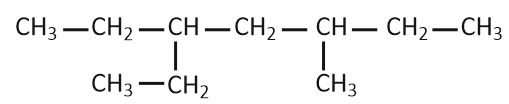
- 2,4-diethylhexane
- 3,5-diethylhexane
- 3-ethyl-5-methylheptane
- 3-methyl-5-ethylheptane
Show answer
Answer: (3) 3-ethyl-5-methylheptane
Q82 Coordination Compounds
| List-I (Complex/ ion) |
List-II (Shape/geometry) |
||
| A. | I. | Octahedral | |
| B. | II. | Trigonal bipyramidal | |
| C. | III. | Square planar | |
| D. | IV. | Tetrahedral |
Choose the correct answer from the options given below:
- A-I, B-III, C-IV, D-II
- A-III, B-IV, C-I, D-II
- A-IV, B-I, C-III, D-II
- A-III, B-I, C-IV, D-II
Show answer
Answer: (4) A-III, B-I, C-IV, D-II
Why: The platinum complex with two chloride and two ammine ligands is square planar, the cobalt hexaammine complex is octahedral, the tetrachloronickelate(II) ion is tetrahedral, and iron pentacarbonyl is trigonal bipyramidal. The option that pairs platinum with square planar, cobalt with octahedral, nickel with tetrahedral, and iron with trigonal bipyramidal is correct.
Q83 Chemical Kinetics
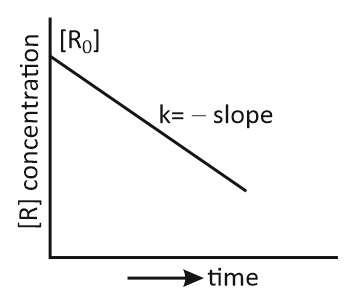
- 0
- 1
- 2
- 2.5
Show answer
Answer: (1) 0
Q84 Coordination Compounds
- Ethylenediaminetetraacetate ion
- Oxalate
- Ethane-1,2-diamine
- Thiocyanate
Show answer
Answer: (4) Thiocyanate
Why: An ambidentate ligand can coordinate through two different donor atoms, and thiocyanate can bind either through its sulfur atom or through its nitrogen atom. The other options, such as oxalate and ethylenediamine, bind only through their donor atoms in fixed positions, so the thiocyanate option is correct.
Q85 Thermodynamics
For the reaction:
2A(g) + B(g) → 2D(g)
At 298 K:
ΔU° = −10 kJ mol⁻¹
ΔS° = −44 J K⁻¹ mol⁻¹
Given R = 8.31 J mol⁻¹ K⁻¹,
find ΔG° for the reaction and determine whether the reaction is spontaneous at 298 K.
- −1.635 kJ mol−1, spontaneous
- +0.63568 kJ mol−1, non-spontaneous
- −0.63568 kJ mol−1, spontaneous
- +1.635 kJ mol−1, non-spontaneous
Show answer
Answer: (2) +0.63568 kJ mol−1, non-spontaneous
Why: First convert the internal energy change to enthalpy change using the change in moles of gaseous species, which is the gaseous product moles minus the gaseous reactant moles, multiplied by R and T, and express the entropy change in kJ per mol per K. Then compute Gibbs energy change as enthalpy change minus T times entropy change. Because the result is positive, the reaction is non-spontaneous at 298 K, which matches the option with a positive value and non-spontaneous label.
Q86 Chemical Bonding and Molecular Structure
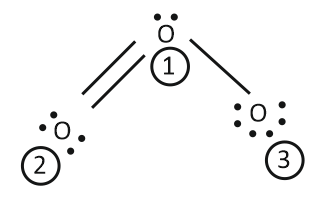
The correct formal charges on oxygen atoms numbered 2, 1 and 3 respectively are:
- -1, 0, +1
- 0, +1, -1
- 0, 0, 0
- +1, 0, -1
Show answer
Answer: (2) 0, +1, -1
Q87 Equilibrium
Show answer
Answer: (3)
Why: The relation between Kp and Kc is Kp = Kc times (RT) raised to the change in moles of gas, so they differ only when the number of gaseous moles changes. In the ammonia synthesis reaction, four moles of gaseous reactants form two moles of gaseous product, so the change is nonzero and Kp differs from Kc. The other three reactions have equal gaseous moles on both sides, so their Kp and Kc are equal.
Q88 Chemical Kinetics
The energy of activation in kcal mol-1 for the reaction is :
(Given : k in
- 12.42
- 14.34
- 18.63
- 24.84
Show answer
Answer: (4) 24.84
Q89 Amines
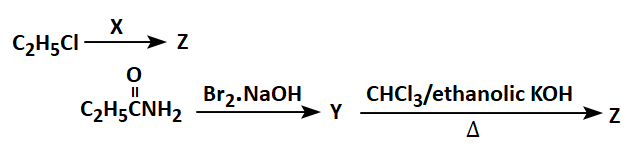
X and Z respectively, are
Show answer
Answer: (4)
Q90 Coordination Compounds
| List-I | List-II | ||
| A. | I. | Optical | |
| B. | II. | Solvate | |
| C. | III. | Geometrical | |
| D. | IV. | Linkage |
Choose the correct answer from the options given below:
- A-III, B-I, C-II, D-IV
- A-I, B-III, C-II, D-IV
- A-III, B-I, C-IV, D-II
- A-II, B-IV, C-III, D-I
Show answer
Answer: (3) A-III, B-I, C-IV, D-II
Why: The square planar platinum complex exists as cis and trans forms that differ only in the spatial arrangement of ligands, which is geometrical isomerism. The tris(ethylenediamine) cobalt(III) ion is non-superimposable on its mirror image, showing optical isomerism. The pentaammine nitro cobalt complex can bind the nitro ligand through nitrogen or oxygen, which is linkage isomerism, while the hexaaqua chromium chloride shows solvate (hydrate) isomerism when water molecules move between the coordination sphere and the outer sphere.
NEET 2026 Biology questions (90)
Q91 Biodiversity and Conservation
- Over-exploitation; Alien species invasions; Air pollution; Co-extinctions
- Habitat loss and fragmentation; over-exploitation; Alien species invasions; Co-extinctions
- Habitat loss and fragmentation; Air pollution; Water pollution; Co-extinctions
- Over-exploitation; Alien species invasions; Soil pollution; Co-extinctions
Show answer
Answer: (2) Habitat loss and fragmentation; over-exploitation; Alien species invasions; Co-extinctions
Why: The Evil Quartet is the set of four main drivers of biodiversity loss: habitat loss and fragmentation, over-exploitation of species, invasion by alien species, and co-extinctions. The option listing these four exactly is the correct one, while the other options include air pollution, water pollution or soil pollution, which are not part of this group.
Q92 Cell: The Unit of Life
- Nucleolus
- Chromatin
- Centrosome
- Kinetochore
Show answer
Answer: (1) Nucleolus
Why: Ribosomal RNA is transcribed and processed in the nucleolus, a dense region inside the nucleus that is organised around the nucleolar organiser regions of specific chromosomes. The chromatin, centrosome and kinetochore have other roles in genome packaging, cell division and chromosome movement respectively.
Q93 Cell Cycle and Cell Division
| List-I | List-II | ||
| A. | phase | I. | Actual cell division occurs |
| B. | S phase | II. | Cell is metabolically active and continuously grows but does not replicate its DNA |
| C. | phase | III. | Synthesis of DNA occurs and the amount of DNA per cell doubles |
| D. | M phase | IV. | Proteins are synthesized while cell growth continues |
- A-II, B-III, C-IV, D-I
- A-III, B-IV C-I D-II
- A-I, B-II, C-III, D-IV
- A-IV, B-I, C-II, D-III
Show answer
Answer: (1) A-II, B-III, C-IV, D-I
Why: In G1 the cell is metabolically active and grows continuously but does not replicate its DNA, and in the S phase DNA synthesis occurs so the DNA content per cell doubles. In the G2 phase the cell continues to grow while proteins required for division are synthesised, and the M phase is when actual nuclear and cell division takes place.
Q94 Ecosystem
| List-I | List-II | ||
| A. | Productivity | I. | Cross primary productivity minus respiration losses |
| B. | Net primary productivity | II. | Rate of formation of new organic matter by consumers |
| C. | Gross primary productivity | III. | Rate of biomass production |
| D. | Secondary productivity | IV. | Rate of production of organic matter during photosynthesis |
- A-I, B-II, C-III, D-IV
- A-III, B-I C-IV D-II
- A-III, B-I, C-II, D-IV
- A-I, B-III, C-IV, D-II
Show answer
Answer: (2) A-III, B-I C-IV D-II
Why: Productivity is defined as the rate of biomass production, and net primary productivity is gross primary productivity minus respiratory losses. Gross primary productivity is the rate of organic matter production during photosynthesis, and secondary productivity is the rate of formation of new organic matter by consumers.
Q95 Biodiversity and Conservation
| A. | The Amazon rainforest being cut and cleared for cultivation of soyabeans is an example of habitat loss. |
| B. | Steller's sea cow and passenger pigeon became extinct due to over-exploitation by humans. |
| C. | The Nile perch introduced into Lake Victoria in East Africa helped in population growth of cichlid fish in the lake. |
| D. | Water hyacinth is an invasive species. |
| E. | When a species becomes extinct, the plant and animal species associated with it are not affected. |
- B, C and D only
- A, B and D only
- A, B and E only
- C, D and E only
Show answer
Answer: (2) A, B and D only
Why: Clearing the Amazon rainforest for soyabean cultivation is habitat loss, Steller's sea cow and the passenger pigeon were driven to extinction by over-exploitation, and water hyacinth is an invasive species. The Nile perch introduced into Lake Victoria actually caused the decline of the native cichlid fish, and the extinction of one species does affect the plant and animal species associated with it through co-extinctions.
Q96 Biomolecules
| A. | Lipids are generally water-soluble. |
| B. | Proteins are polypeptides |
| C. | Polysaccharides are long chains of sugars. |
| D. | Adenine and guanine are substituted pyrimidines. |
| E. | Almost all enzymes are proteins. |
- C, D and E only
- B, C and E only
- B, D and E only
- A, B and C only
Show answer
Answer: (2) B, C and E only
Why: Proteins are polypeptide chains, polysaccharides are long chains of sugar units, and almost all enzymes are proteins. Lipids are generally insoluble in water, and adenine and guanine are substituted purines rather than pyrimidines.
Q97 Photosynthesis in Higher Plants
- 18 ATP and 12 NADPH
- 6 ATP and 12 NADPH
- 24 ATP and 18 NADPH
- 12 ATP and 18 NADPH
Show answer
Answer: (1) 18 ATP and 12 NADPH
Why: In the Calvin cycle, ATP is consumed in the phosphorylation steps and NADPH is consumed in the reduction of 3-phosphoglycerate to triose phosphate, and the total requirement for making one glucose molecule is 18 ATP and 12 NADPH. The option giving these exact amounts is the correct one.
Q98 Biotechnology: Principles and Processes
| A. | They are called molecular scissors. |
| B. | These are the enzymes responsible for restricting the growth of bacteriophages in E. coli. |
| C. | They cut the DNA only at the centre of the palindromic sites. |
| D. | They remove nucleotides only from the ends of DNA fragments. |
| E. | They recognise specific palindromic base-pair sequences. |
Choose the answer from the options given below:
- A and B only
- D and E only
- C and D only
- A and E only
Show answer
Answer: (3) C and D only
Why: The false statements are that restriction endonucleases always cut DNA exactly at the centre of the palindromic site, and that they only remove nucleotides from the ends of DNA fragments. In fact they cleave the phosphodiester bonds at specific positions within the recognition sequence, which can be central or offset, and they cut internal bonds rather than trimming ends. The statements about molecular scissors, bacterial defence against phages, and recognising palindromic sequences are true.
Q99 Ecosystem
| List-I | List-II | ||
| A. | Decomposition | I. | Accumulation of dark coloured amorphous colloidal substance |
| B. | Detritus | II. | Release of inorganic nutrients by the activity of microbes in soil |
| C. | Mineralisation | III. | Breaking down of complex organic matter into inorganic substances |
| D. | Humification | IV. | Dead remains of plants and animals including fecal matter |
- A-I, B-II, C-III, D-IV
- A-IV, B-III, C-I, D-II
- A-III, B-IV, C-II, D-I
- A-III, B-II, C-I, D-IV
Show answer
Answer: (3) A-III, B-IV, C-II, D-I
Why: Decomposition is the breakdown of complex organic matter into simpler inorganic substances. Detritus is the dead remains of plants and animals, including faecal matter. Mineralisation is the release of inorganic nutrients by microbial activity in the soil. Humification is the accumulation of a dark, amorphous, colloidal substance called humus.
Q100 Plant Kingdom
- Selaginella
- Funaria
- Pinus
- Wolffia
Show answer
Answer: (3) Pinus
Why: In Pinus, a gymnosperm, the ovules are borne openly on the megasporophylls (scales of the cones) and are not enclosed by any ovary wall. This naked-ovule condition is what defines gymnosperms, whereas the other options either lack ovules and seeds or are not seed plants with exposed ovules in this sense.
Q101 Morphology of Flowering Plants
| List-I (Placentation) |
List-II (Example) |
||
| A. | Marginal | I. | Mustard |
| B. | Axile | II. | Pea |
| C. | Parietal | III. | Marigold |
| D. | Basal | IV. | Lemon |
- A-I, B-III, C-II, D-IV
- A-IV, B-II, C-I, D-III
- A-II, B-IV, C-I, D-III
- A-III, B-I, C-IV, D-II
Show answer
Answer: (3) A-II, B-IV, C-I, D-III
Why: Marginal placentation occurs in pea, where ovules attach along the margin of a single carpel. Axile placentation occurs in lemon, with ovules arranged around a central axis in a multi-chambered ovary. Parietal placentation occurs in mustard, with ovules attached to the inner walls of the ovary. Basal placentation occurs in marigold, with a single ovule attached at the base of the ovary.
Q102 Morphology of Flowering Plants
- The root cap zone
- The region of meristematic activity
- The region of elongation
- The region of maturation
Show answer
Answer: (4) The region of maturation
Why: Root hairs are tubular extensions of epidermal cells that arise from the region of maturation, also called the zone of differentiation, located just behind the zone of elongation. This is where the epidermal cells have fully differentiated, and root hairs increase the absorptive surface area.
Q103 Morphology of Flowering Plants
- Increased vacuolation
- Large conspicuous nuclei
- Cell enlargement
- New cell wall deposition
Show answer
Answer: (2) Large conspicuous nuclei
Why: Large conspicuous nuclei are a feature of meristematic cells, which are actively dividing, not of cells in the elongation phase. During elongation, cells enlarge, undergo increased vacuolation, and deposit new cell wall material, so the nucleus is no longer prominent.
Q104 Molecular Basis of Inheritance
| A. | transcription unit in DNA is defined primarily by three regions : promoter, structural gene and terminator. |
| B. | The promoter is said to be located towards the 5'-end of the structural gene. |
| C. | The promoter is a DNA sequence that provides binding site for RNA polymerase. |
| D. | The promoter defines the template and coding strands. |
| E. | The terminator is located towards the 3'-end of the coding strand and it defines the end of the process of transcription. |
- A, B, C, D and E
- B, C, D and E only
- A, C, D and E only
- A, B, C and D only
Show answer
Answer: (1) A, B, C, D and E
Why: All the statements are correct. A transcription unit consists of a promoter, a structural gene, and a terminator. The promoter lies towards the 5' end of the structural gene, serves as the binding site for RNA polymerase, and its orientation determines which strand acts as the template and which as the coding strand. The terminator lies towards the 3' end of the coding strand and marks the end of transcription.
Q105 Biomolecules
- Quaternary structure
- Tertiary structure
- Primary structure
- Secondary structure
Show answer
Answer: (4) Secondary structure
Why: The alpha helix is a secondary structure of proteins, in which the polypeptide backbone coils into a regular helix stabilised by hydrogen bonds between backbone atoms within the same chain. It is distinct from the primary sequence, the overall three-dimensional folding of tertiary structure, and the association of multiple chains in quaternary structure.
Q106 Biomolecules
| A. | They are substituted methanes. |
| B. | Serine is an aromatic amino acid |
| C. | Valine is a neutral amino acid. |
| D. | Lysine is an acidic amino acid. |
- C and D only
- A and B only
- A and C only
- B and C only
Show answer
Answer: (3) A and C only
Why: Amino acids can be regarded as substituted methanes, with the central carbon carrying an amino group, a carboxyl group, a hydrogen and a side chain, and valine is a neutral amino acid because its side chain is nonpolar and uncharged. Serine is not aromatic since its side chain is a simple hydroxymethyl group, and lysine is basic rather than acidic because it carries an extra amino group.
Q107 Anatomy of Flowering Plants
- to make the leaf impermeable to fungal spores.
- to perform photosynthesis.
- to minimize water loss during water stress.
- to transport water.
Show answer
Answer: (3) to minimize water loss during water stress.
Why: Bulliform cells are large motor cells on the upper epidermis of grass leaves that lose turgor under water stress, which causes the leaf to roll or fold and so minimizes water loss by transpiration.
Q108 Photosynthesis in Higher Plants
| A. | The water splitting complex is associated with PS I. |
| B. | plants use the pathway of fixation as the main biosynthetic pathway. |
| C. | In plants, photorespiration does not occur. |
| D. | plants exhibit ‘Kranz’ anatomy. |
| E. | ATP synthesis in chloroplast occurs through chemiosmosis. |
- B only
- A and D only
- B and C only
- B and E only
Show answer
Answer: (2) A and D only
Why: The incorrect statements are the one claiming the water splitting complex is associated with photosystem I, when it actually works with the other photosystem, and the one claiming C3 plants show Kranz anatomy, which is a characteristic feature of C4 plants. The remaining statements about C4 plants, photorespiration and chemiosmotic ATP synthesis in chloroplasts are acceptable as written.
Q109 Anatomy of Flowering Plants
| List-I | List-II | ||
| A. | Conjunctive tissue | I. | Specialised cells in the vicinity of guard cells |
| B. | Casparian strips | II. | Endodermal cells rich in starch |
| C. | Subsidiary cells | III. | Tissue between xylem and phloem |
| D. | Starch sheath | IV. | Endodermal cells with suberin deposition |
- A-IV, B-III, C-1, D-II
- A-III, B-IV, C-II, D-I
- A-III, B-IV C-I, D-II
- A-IV, B-III, C-II, D-I
Show answer
Answer: (3) A-III, B-IV C-I, D-II
Why: Conjunctive tissue is the parenchymatous tissue lying between xylem and phloem, Casparian strips are suberin deposits in endodermal cells, subsidiary cells are the specialised cells adjacent to guard cells, and the starch sheath is the layer of endodermal cells rich in starch grains. So the correct pairing is A with III, B with IV, C with I and D with II.
Q110 Biotechnology: Principles and Processes
| List-I | List-II | ||
| A. | Genetically modified organism | I. | Agrobacterium tumefaciens |
| B. | Thermostable DNA Polymerase | II. | Bt cotton |
| C. | Ti plasmid | III. | Thermus aquaticus |
| D. | pBR322 | IV. | Escherichia coli |
- A-II, B-I, C-IV, D-III
- A-I, B-IV, C-III, D-II
- A-II, B-III, C-I, D-IV
- A-I, B-II, C-IV, D-III
Show answer
Answer: (3) A-II, B-III, C-I, D-IV
Why: Bt cotton is the classic genetically modified organism, Thermus aquaticus is the source of the thermostable DNA polymerase used in PCR, the Ti plasmid comes from Agrobacterium tumefaciens and is used as a vector, and pBR322 is a cloning vector originally derived from Escherichia coli.
Q111 Plant Growth and Development
- Dedifferentiation
- Elasticity
- Redifferentiation
- Plasticity
Show answer
Answer: (4) Plasticity
Why: Heterophylly, where a plant produces different leaf forms depending on the environment, is an example of phenotypic plasticity, meaning a single genotype gives rise to different phenotypes under different conditions.
Q112 Morphology of Flowering Plants
- the main axis terminates in a flower
- the growth is limited
- flowers are borne in an acropetal succession
- flowers are solitary
Show answer
Answer: (3) flowers are borne in an acropetal succession
Why: In a racemose inflorescence the main axis grows indefinitely, and flowers open in an acropetal succession, meaning the youngest flowers are formed toward the apex and the oldest ones lie toward the base.
Q113 Principles of Inheritance and Variation
- Haemophilia
- Thalassemia
- Sickle-cell anaemia
- Phenylketonuria
Show answer
Answer: (3) Sickle-cell anaemia
Why: Sickle-cell anaemia results from a single base change that replaces glutamic acid with valine in the beta globin chain of haemoglobin, producing abnormal sickle-shaped red blood cells. Haemophilia, thalassemia and phenylketonuria have different causes and do not involve this substitution.
Q114 Principles of Inheritance and Variation
| List-I | List-II | ||
| A. | Incomplete dominance | I. | Human skin colour |
| B. | Co-dominance | II. | Inheritance of flower colour in Antirrhinum sp. |
| C. | Pleiotropy | III. | Phenylketonuria disease in humans |
| D. | Polygenic inheritance | IV. | ABO blood groups |
- A-II, B-IV, C-III, D-I
- A-I, B-III, C-II, D-IV
- A-II, B-I, C-III, D-IV
- A-I, B-IV, C-III, D-II
Show answer
Answer: (1) A-II, B-IV, C-III, D-I
Why: Incomplete dominance is seen in flower colour inheritance in Antirrhinum, where heterozygotes show an intermediate phenotype, so A matches II. Co-dominance is shown by the ABO blood groups, where both alleles are expressed fully in the heterozygote, so B matches IV. Pleiotropy, where one gene affects several traits, is exemplified by phenylketonuria, so C matches III. Polygenic inheritance, where many genes act together to give a continuous range of phenotypes such as human skin colour, matches D with I.
Q115 Sexual Reproduction in Flowering Plants
| A. | Microspore tetrads |
| B. | Sporogenous tissue |
| C. | Pollen grains |
| D. | Pollen mother cells |
- D, A, C, B
- B, D, C, A
- B, D, A, C
- A, D, C, B
Show answer
Answer: (3) B, D, A, C
Why: Microsporogenesis begins with the sporogenous tissue in the anther, whose cells differentiate into pollen mother cells. Each pollen mother cell undergoes meiosis to form microspore tetrads, and the microspores then mature into pollen grains. The correct sequence is therefore B, D, A, C.
Q116 Molecular Basis of Inheritance
| A. | Isolation of DNA and its digestion by restriction endonucleases. |
| B. | Hybridisation using a labelled VNTR probe. |
| C. | Transferring of separated DNA fragments to synthetic membranes. |
| D. | Detection of hybridised DNA fragments by autoradiography. |
| E. | Separation of DNA fragments by electrophoresis. |
- A, E, C, B, D
- A, E, B, C, D
- A, B, D, C, E
- A, D, B, E, C
Show answer
Answer: (1) A, E, C, B, D
Why: DNA fingerprinting starts with isolating the DNA and cutting it with restriction endonucleases. The fragments are then separated by electrophoresis, transferred to a synthetic membrane by blotting, hybridised with a labelled VNTR probe, and finally the hybridised bands are detected by autoradiography. The sequence is A, E, C, B, D.
Q117 Biodiversity and Conservation
- Biomagnification
- Biofortification
- Bioremediation
- Bioprospecting
Show answer
Answer: (4) Bioprospecting
Why: Bioprospecting is the search for and exploration of molecular, genetic and species-level biodiversity to find organisms or compounds of economic value. Biomagnification refers to the build-up of toxins along food chains, biofortification to improving the nutritional quality of crops, and bioremediation to using organisms to clean up pollutants.
Q118 Principles of Inheritance and Variation
| A. | An offspring formed from the union of a sperm and an egg, develops as a female (queen or worker). |
| B. | An unfertilized egg develops as a male by parthenogenesis. |
| C. | A male has half the number of chromosomes than that of a female. |
| D. | Males produce sperm by meiosis. |
| E. | Honeybees have a haplodiploid sex-determination system. |
- B, C, D and E only
- A, B, C and D only
- A, B, D and E only
- A, B, C and E only
Show answer
Answer: (4) A, B, C and E only
Why: In honeybees, a fertilised egg develops into a female (queen or worker) and an unfertilised egg develops into a male by parthenogenesis, so A and B are true. Males are haploid and so have half the chromosome number of females, and the system is haplodiploid, so C and E are true. Males produce sperm by mitosis rather than meiosis, so statement D is false.
Q119 Biotechnology: Principles and Processes
- Denaturation → Annealing → Extension
- Denaturation → Extension → Annealing
- Extension → Annealing → Denaturation
- Annealing → Denaturation → Extension
Show answer
Answer: (1) Denaturation → Annealing → Extension
Why: Each PCR cycle begins with denaturation, where heating separates the double-stranded DNA into single strands. The temperature is then lowered so that primers anneal to the complementary sites on the single strands. Finally, DNA polymerase extends the primers along the template during the extension step.
Q120 Biotechnology: Principles and Processes
| A. | The cutting of DNA is done by molecular scissors. |
| B. | The DNA fragments separate according to their size in an agarose gel, upon electrophoresis. |
| C. | The separated DNA fragments can be seen without staining when exposed to UV light. |
| D. | The separated DNA fragments, when stained with ethidium bromide, can be seen in visible light. |
- A and D only
- B and D only
- B and C only
- A and B only
Show answer
Answer: (4) A and B only
Why: DNA is cut into specific fragments by molecular scissors, which are restriction enzymes, so statement A is correct. On electrophoresis in an agarose gel, DNA fragments migrate and separate according to their size, so statement B is correct. Statement C is wrong because the DNA is not visible without staining, and statement D is wrong because ethidium bromide-stained DNA is seen under UV light rather than visible light.
Q121 Biological Classification
| A. | Cell structure |
| B. | Body organization |
| C. | Presence of flagellum |
| D. | Reproduction |
| E. | Phylogenetic relationships |
- A, B, D and E only
- A, B, C, D and E
- A, B and E only
- B, C and D only
Show answer
Answer: (1) A, B, D and E only
Why: Whittaker's Five Kingdom classification was based on cell structure (prokaryotic or eukaryotic), body organisation (unicellular, colonial or multicellular), mode of nutrition, reproduction and phylogenetic relationships. The presence of a flagellum is not one of his main criteria, so the correct set is A, B, D and E.
Q122 Sexual Reproduction in Flowering Plants
- Central cell
- Primary endosperm cell
- Zygote
- Synergid
Show answer
Answer: (2) Primary endosperm cell
Why: The primary endosperm cell is triploid because it forms when one male gamete fuses with the two polar nuclei of the central cell, giving three sets of chromosomes. The central cell before fertilisation is diploid, the zygote is diploid, and the synergid is haploid.
Q123 Molecular Basis of Inheritance
| A. | Histones are organized to form a unit of eight molecules called histone octamer. |
| B. | Histones are negatively charged basic proteins. |
| C. | Histones are rich in the basic amino acid residues - lysine and arginine. |
| D. | The positively charged DNA is wrapped around the histone octamer to form nucleosome. |
| E. | The packaging of chromatin at higher levels requires an additional set of proteins called non-histone chromosomal proteins. |
- A, B and D only
- A, C and E only
- C, D and E only
- B, D and E only
Show answer
Answer: (2) A, C and E only
Why: The correct statements are that histones form an octamer of eight histone molecules, that they are rich in the basic amino acids lysine and arginine, and that non-histone chromosomal proteins are needed for higher-order chromatin packaging. Histones are positively charged, not negatively charged, and it is the negatively charged DNA that wraps around the histone octamer.
Q124 Biodiversity and Conservation
- Sacred Groves
- Wildlife Safari Parks
- Botanical Gardens
- Seed Banks
Show answer
Answer: (1) Sacred Groves
Why: Sacred groves are patches of forest protected by local communities, so the species are conserved in their natural habitat, which is in situ conservation. Wildlife safari parks, botanical gardens and seed banks all conserve species outside their natural habitat, which is ex situ conservation.
Q125 Molecular Basis of Inheritance
- transacetylase
- the repressor of lac operon
- permease
- beta-galactosidase
Show answer
Answer: (4) beta-galactosidase
Why: The z gene of the lac operon codes for beta-galactosidase, the enzyme that hydrolyses lactose into glucose and galactose. Permease is coded by the y gene, transacetylase by the a gene, and the repressor by the i gene.
Q126 Plant Growth and Development
| List-I (Growth Regulator) |
List-II (Function/Effect) |
||
| A. | 2,4-D | I. | Brewing industry |
| B. | II. | Stimulation of stomatal closure | |
| C. | Kinetin | III. | Herbicide |
| D. | ABA | IV. | Nutrient mobilisation |
- A-IV, B-III, C-II, D-I
- A-I, B-II, C-IV, D-III
- A-III, B-I, C-IV, D-II
- A-I, B-IV, C-III, D-II
Show answer
Answer: (3) A-III, B-I, C-IV, D-II
Why: 2,4-D is a synthetic auxin used as a herbicide, so it matches the herbicide option. Gibberellic acid GA3 is used in the brewing industry to increase malt production, kinetin promotes nutrient mobilisation and delays senescence, and abscisic acid (ABA) stimulates stomatal closure.
Q127 Biotechnology and its Applications
| A. | Digestion of cell walls. |
| B. | Isolation of naked protoplasts. |
| C. | Fusion of protoplasts to get hybrid protoplast. |
| D. | Isolation of single cells from two different varieties of plants. |
| E. | Growing of hybrid protoplast to form a new plant. |
- E, A, B, C, D
- D, A, B, C, E
- E, B, A, D, C
- D, B, A, E, C
Show answer
Answer: (2) D, A, B, C, E
Why: Somatic hybridisation begins with isolating single cells from two different varieties of plants, then digesting their cell walls with enzymes, then isolating the naked protoplasts. These protoplasts are fused to form a hybrid protoplast, which is cultured and grown into a new plant. The correct order is therefore D, A, B, C, E.
Q128 Respiration in Plants
The Respiratory Quotient (RQ) of a biomolecule used for respiration, as per the above equation, would be :
- Less than 0.5
- Between 0.5 and 0.95
- Between 1.25 and 2
- 1.0
Show answer
Answer: (2) Between 0.5 and 0.95
Why: The respiratory quotient is the ratio of the volume of CO2 released to the volume of O2 consumed, which can be read directly from the equation as 102 CO2 produced for 145 O2 consumed. The biomolecule here is a lipid (fat), which has a high proportion of hydrogen and carbon relative to oxygen, so it needs more oxygen and gives an RQ below 1. This places it within the range between 0.5 and 0.95.
Q129 Biodiversity and Conservation
- The current species extinction rates are lower than those in previous episodes.
- The present species extinction rates are 100 to 1000 times faster than in the pre-human times.
- The present net species extinction rate is zero.
- The current species extinction rate is nearly 10 times faster than that in previous episodes.
Show answer
Answer: (2) The present species extinction rates are 100 to 1000 times faster than in the pre-human times.
Why: The sixth extinction is distinctive because it is driven by human activities, and present species extinction rates are 100 to 1000 times faster than those in pre-human times. This speed of loss is far higher than the background rate seen in earlier extinction episodes.
Q130 Biomolecules
| List-I | List-II | ||
| A. | Trypsin | I. | Intercellular ground substance |
| B | Morphine | II. | Lectin |
| C | Concanavalin | III. | Enzyme |
| D | Collagen | IV. | Alkaloid |
Choose the correct answer from the options given below:
- A-III, B-IV, C-II, D-I
- A-I, B-II, C-III, D-IV
- A-III, B-II, C-IV, D-I
- A-IV, B-III, C-II, D-I
Show answer
Answer: (1) A-III, B-IV, C-II, D-I
Why: Trypsin is a digestive enzyme (III), morphine is an alkaloid (IV), concanavalin is a lectin, a carbohydrate-binding protein (II), and collagen is the major fibrous protein of the intercellular ground substance (I). So the matching is A-III, B-IV, C-II, D-I.
Q131 The Living World
- Both the words in a biological name, when handwritten, are separately underlined or printed in italics.
- The specific epithet in the biological name starts with a small letter.
- The first word in the biological name represents the specific epithet, while the second component denotes the genus.
- Biological names are generally in Latin.
Show answer
Answer: (3) The first word in the biological name represents the specific epithet, while the second component denotes the genus.
Why: The false statement is the one saying the first word denotes the specific epithet and the second denotes the genus. In binomial nomenclature the first word is the genus and the second is the specific epithet. The other statements are true: both words are underlined or italicised, the specific epithet begins with a small letter, and names are generally Latin.
Q132 Photosynthesis in Higher Plants
- PEP carboxylase
- RuBP carboxylase - oxygenase
- Carboxypeptidase
- Hexokinase
Show answer
Answer: (2) RuBP carboxylase - oxygenase
Why: The carboxylation step of the Calvin cycle is performed by RuBP carboxylase-oxygenase, commonly called RuBisCO, which fixes carbon dioxide onto ribulose bisphosphate. PEP carboxylase works in C4 plants, carboxypeptidase is a protein-digesting enzyme, and hexokinase phosphorylates glucose, so none of these is the correct choice.
Q133 Morphology of Flowering Plants
Show answer
Answer: (1)
Why: The Solanaceae flower is bisexual and actinomorphic with a superior ovary made of fused carpels, as shown by the subscript G(2). The sepals are united, the petals are united into a tubular corolla, and the stamens are attached to the corolla tube (epipetalous), which is what the bracket over the corolla and androecium indicates. The option showing this fused corolla and stamen arrangement is therefore correct.
Q134 Sexual Reproduction in Flowering Plants
- Geitonogamy
- Autogamy
- Xenogamy
- Cleistogamy
Show answer
Answer: (3) Xenogamy
Why: Xenogamy is the transfer of pollen from one plant to the stigma of a different plant of the same species. Because the pollen comes from a genetically different individual, it brings genetically different pollen to the stigma, unlike autogamy, geitonogamy or cleistogamy, which involve the same plant.
Q135 Respiration in Plants
| List-I (Process) |
List-II (Location) |
||
| A. | Glycolysis | I. | Inner mitochondrial membrane |
| B. | ETS | II. | Mitochondrial matrix |
| C. | Accumulation of protons | III. | Cytoplasm |
| D. | Krebs’ cycle | IV. | Intermembrane space |
- A-I, B-IV, C-III, D-II
- A-III, B-I, C-IV, D-II
- A-IV, B-II, C-I, D-III
- A-II, B-III, C-IV, D-I
Show answer
Answer: (2) A-III, B-I, C-IV, D-II
Why: Glycolysis occurs in the cytoplasm, and the electron transport system is located on the inner mitochondrial membrane. Protons accumulate in the intermembrane space during electron transport, and the Krebs cycle takes place in the mitochondrial matrix.
Q136 Biotechnology: Principles and Processes
- Gentamycin
- Ampicillin and tetracycline
- Tetracycline
- Ampicillin
Show answer
Answer: (3) Tetracycline
Why: The BamHI site in pBR322 lies within the tetracycline resistance gene, so inserting foreign DNA there inactivates that gene. The ampicillin resistance gene is unaffected, which means the recombinant bacteria lose tetracycline resistance but keep ampicillin resistance.
Q137 Principles of Inheritance and Variation
- CAG
- GUG
- AUG
- GAG
Show answer
Answer: (2) GUG
Why: In sickle cell anaemia, the sixth codon of the beta globin gene changes from GAG, which codes for glutamic acid, to GUG, which codes for valine. This single substitution makes haemoglobin polymerise under low oxygen and distorts red blood cells into a sickle shape.
Q138 Reproductive Health
- Ova collected from a female donor are transferred to the uterus of an infertile female.
- It is the transfer of an ovum collected from a donor into the fallopian tube of another female who cannot produce ovum but can provide suitable environment for fertilization and development.
- Early embryos with up to 8 blastomeres are transferred to the uterus of an infertile female.
- Early embryos with up to 8 blastomeres are transferred into the fallopian tube of an infertile female.
Show answer
Answer: (2) It is the transfer of an ovum collected from a donor into the fallopian tube of another female who cannot produce ovum but can provide suitable environment for fertilization and development.
Why: GIFT (gamete intrafallopian transfer) involves collecting ova from a donor and placing them into the fallopian tube of a female who cannot produce ova but can provide a suitable environment for fertilization and development. The other options describe either transfer into the uterus or transfer of early embryos, which belong to other assisted reproduction techniques.
Q139 Organisms and Populations
- Female wasp and fig
- Cuckoo and crow
- Ophrys and bumblebee
- Sea anemone and clown fish
Show answer
Answer: (3) Ophrys and bumblebee
Why: In sexual deceit, one species gains a benefit by deceiving another into behaviour that helps it, as in the Ophrys orchid, whose flower mimics a female bumblebee so that male bumblebees attempt pseudocopulation and carry pollen. The other pairs show mutualism, brood parasitism or other interactions that do not involve sexual deception.
Q140 Evolution
- Homo habilis → Homo erectus → Ramapithecus → Neanderthal → Homo sapiens
- Ramapithecus → Homo habilis → Homo erectus → Neanderthal → Homo sapiens
- Homo sapiens → Ramapithecus → Homo habilis → Neanderthal → Homo erectus
- Neanderthal → Ramapithecus → Homo habilis → Homo erectus → Homo sapiens
Show answer
Answer: (2) Ramapithecus → Homo habilis → Homo erectus → Neanderthal → Homo sapiens
Why: The fossil hominin sequence in order of appearance is Ramapithecus, then Homo habilis, then Homo erectus, then Neanderthal, and finally Homo sapiens, which matches the progressive development of brain size and language ability. The option listing this sequence is the only one that follows this order.
Q141 Human Reproduction
| List-I | List-II | ||
| A. | The foetus movement starts and hair appears on the head | I. | 24 weeks of pregnancy |
| B. | The foetus develops limbs and digits | II. | 20 weeks of pregnancy |
| C. | The foetus develops external genital organs | III. | 8 weeks of pregnancy |
| D. | The foetus body is covered with fine hair; eyelids separate and eyelashes are formed | IV. | 12 weeks of pregnancy |
- A-III,B-II,C-IV,D-I
- A-II,B-IV,C-III,D-I
- A-IV,B-II,C-III,D-I
- A-II,B-III,C-IV,D-I
Show answer
Answer: (4) A-II,B-III,C-IV,D-I
Q142 Animal Kingdom
| A. | Endoskeleton was made of cartilage. |
| B. | Ectoparasitic; as they were found attached on fish skin with their circular sucking mouth. |
| C. | Paired fins and scales were absent, but 7 pairs of gill slits were present. |
- Exocoetus sp.
- Branchiostoma sp.
- Petromyzon sp.
- Scoliodon sp.
Show answer
Answer: (3) Petromyzon sp.
Why: Petromyzon, the lamprey, has a cartilaginous endoskeleton, lacks paired fins and scales, has seven pairs of gill slits, and is an ectoparasite that attaches to fish with its circular sucking mouth. Exocoetus has paired fins, Branchiostoma lacks a true cartilaginous skeleton and is not ectoparasitic, and Scoliodon is a shark with scales and paired fins.
Q143 Human Reproduction
| A. | Spermatogonia always undergo meiotic cell division |
| B. | Primary Spermatogonia divide mitotically to produce secondary Spermatocytes. |
| C. | Secondary Spermatocytes, through their second meiotic division, produce haploid spermatids |
| D. | Spermatids produce spermatozoa through mitosis. |
| E. | Spermatids transform into spermatozoa by spermiogenesis. |
- C and E only
- A, C and E only
- B, C and D only
- A and E only
Show answer
Answer: (1) C and E only
Why: Only statements C and E are correct: secondary spermatocytes complete the second meiotic division to form haploid spermatids, and spermatids are transformed into spermatozoa by spermiogenesis. Spermatogonia divide mitotically, primary spermatocytes undergo meiosis, and spermatids change into sperm without dividing, so statements A, B and D are wrong.
Q144 Principles of Inheritance and Variation
- 50%
- 0%
- 75%
- 25%
Show answer
Answer: (4) 25%
Why: An O child needs to receive the recessive i allele from both parents. The mother, heterozygous for A, has IA i, and the father, heterozygous for B, has IB i, so each parent passes i with a probability of one half, and the combined probability is the product of these two independent chances, which equals 25%.
Q145 Excretory Products and their Elimination
| A. | Increase in blood pressure and Glomerular filtration rate. |
| B. | Reabsorption of and water from distal parts of tubule due to Aldosterone. |
| C. | Fall in Glomerular filtration rate. |
| D. | Vasoconstriction by Angiotensin II and release of Aldosterone. |
| E. | Renin converts Angiotensin II. |
- C, A, B, D, E
- A, D, B, E, C
- A, C, E, B, D
- C, E, D, B, A
Show answer
Answer: (4) C, E, D, B, A
Why: A fall in glomerular filtration rate and blood pressure causes the juxtaglomerular cells to release renin, which acts on angiotensinogen to lead to the formation of angiotensin II. Angiotensin II causes vasoconstriction and stimulates aldosterone release, and aldosterone promotes reabsorption of sodium and water in the distal tubule, which raises blood pressure and glomerular filtration rate again.
Q146 Breathing and Exchange of Gases
| List-I (Respiratory Volume) |
List-II (Capacity in mL) |
||
| A. | ERV (Expiratory Reserve Volume) | I. | 2500 – 3000 mL |
| B. | RV (Residual Volume) | II. | 500 mL |
| C. | IRV (Inspiratory Reserve Volume) | III. | 1000 – 1100 mL |
| D. | TV (Tidal Volume) | IV. | 1100 – 1200 mL |
- A-III,B-I,C-IV,D-II
- A-I,B-III,C-II,D-IV
- A-III,B-IV,C-I,D-II
- A-I,B-II,C-III,D-IV
Show answer
Answer: (3) A-III,B-IV,C-I,D-II
Why: ERV is about 1000-1100 mL, RV is about 1100-1200 mL, IRV is about 2500-3000 mL, and TV is about 500 mL, so the correct matching is A with III, B with IV, C with I and D with II. These are the standard NCERT values for the lung volumes.
Q147 Reproductive Health
| List-I | List-II | ||
| A. | Progestasert | I. | Barrier made of rubber used by females |
| B. | Multiload 375 | II. | Oral contraceptive |
| C. | Diaphragm | III. | Hormone releasing IUD |
| D. | Saheli | IV. | Copper releasing IUD |
- A-III,B-IV,C-I,D-II
- A-III,B-IV,C-II,D-I
- A-IV,B-II,C-I,D-III
- A-IV,B-III,C-I,D-II
Show answer
Answer: (1) A-III,B-IV,C-I,D-II
Why: Progestasert is a hormone-releasing IUD (List-II III), Multiload 375 is a copper-releasing IUD (IV), the Diaphragm is a rubber barrier device used by females (I), and Saheli is an oral contraceptive (II). This gives A-III, B-IV, C-I, D-II, which is the first option.
Q148 Cell: The Unit of Life
- Centrosomes
- Ribosomes
- Lysosomes
- Mitochondria
Show answer
Answer: (2) Ribosomes
Why: Ribosomes are the only organelles listed that have no membrane and are present in both prokaryotic and eukaryotic cells. Centrosomes, lysosomes and mitochondria are membrane-bound or absent in prokaryotes, so the option Ribosomes is correct.
Q149 Ecosystem
- Pyramid of energy in pond ecosystem
- Pyramid of biomass in sea
- Pyramid of number in grassland
- Pyramid of biomass in grassland
Show answer
Answer: (2) Pyramid of biomass in sea
Why: In a sea ecosystem the pyramid of biomass is inverted because the standing biomass of phytoplankton at the producer level is small, while the zooplankton and higher trophic levels can have a larger total biomass due to fast turnover of producers. So the option Pyramid of biomass in sea is correct.
Q150 Animal Kingdom
- Struthio
- Psittacula
- Neophron
- Aptenodytes
Show answer
Answer: (4) Aptenodytes
Why: Aptenodytes, the penguin, is a flightless bird whose forelimbs are modified into flat, paddle-like flippers used for swimming. The other options are an ostrich (Struthio), a parrot (Psittacula) and a vulture (Neophron), which do not fit this description.
Q151 Microbes in Human Welfare
| List-I (Bioactive molecules) |
List-II (Importance) |
||
| A. | Streptokinase | I. | Immunosuppressive agent |
| B. | Statins | II. | Removal of clots from the blood vessels |
| C. | Lipases | III. | Blood cholesterol-lowering agent |
| D. | Cyclosporin A | IV. | Detergent formulations |
- A-II, B-III, C-IV, D-I
- A-IV, B-III, C-II, D-I
- A-II, B-III, C-I, D-IV
- A-III, B-II, C-IV, D-I
Show answer
Answer: (1) A-II, B-III, C-IV, D-I
Why: Streptokinase is used to dissolve clots in blood vessels (A-II), and statins lower blood cholesterol (B-III). Lipases are used in detergent formulations to break down fats in stains (C-IV), and Cyclosporin A is an immunosuppressant used after organ transplants (D-I).
Q152 Cell: The Unit of Life
| A. | The endomembrane system includes Golgi complex, endoplasmic reticulum and mitochondria. |
| B. | Rough endoplasmic reticulum bears ribosomes on its surface. |
| C. | Both mitochondria and plastids have circular DNA. |
| D. | A network of microtubules, microfilaments and intermediate filaments present in the cytoplasm is called cytoskeleton. |
| E. | Mitochondrion is a single membrane-bound structure. |
- C, D and E only
- A and B only
- A, B and C only
- B, C and D only
Show answer
Answer: (4) B, C and D only
Why: Statements B, C and D are correct: rough endoplasmic reticulum carries ribosomes on its surface, mitochondria and plastids have circular DNA, and the cytoskeleton is the network of microtubules, microfilaments and intermediate filaments. Statement A is wrong because mitochondria are not part of the endomembrane system, and statement E is wrong because mitochondria are double membrane-bound.
Q153 Animal Kingdom
- Devil fish, Cuttlefish and Hagfish
- Starfish, Hagfish and Cuttlefish
- Flying fish, Angel fish and Fighting fish
- Saw fish, Fighting fish and Dog fish
Show answer
Answer: (3) Flying fish, Angel fish and Fighting fish
Why: Osteichthyes are the bony fishes, and flying fish, angel fish and fighting fish are all bony fishes. Devil fish is a ray and hagfish is a jawless cyclostome, cuttlefish is a mollusc and starfish is an echinoderm, while saw fish and dog fish are cartilaginous fishes.
Q154 Principles of Inheritance and Variation
- all males
- all females
- females and males, respectively
- males and females, respectively
Show answer
Answer: (4) males and females, respectively
Why: In grasshoppers the sex determination is of the XX-XO type, where males have one fewer sex chromosome than females. So the members with 23 chromosomes are males and those with 24 chromosomes are females, which matches the option males and females, respectively.
Q155 Body Fluids and Circulation
- 160 – 240/cu.mm and 1600 – 2000/cu.mm, respectively
- 100 – 120/cu.mm and 160 – 200/cu.mm, respectively
- 300 – 500/cu.mm and 500 – 700/cu.mm, respectively
- 300 – 500/cu.mm and 1200 – 1500/cu.mm, respectively
Show answer
Answer: (1) 160 – 240/cu.mm and 1600 – 2000/cu.mm, respectively
Why: Eosinophils are a small minority of the total white cell count, while lymphocytes form a much larger share, so the option pairing a low eosinophil range with a higher lymphocyte range of 1600 to 2000 per cubic mm fits a total of 8000 per cubic mm.
Q156 Biotechnology and its Applications
- cryIAc and cryIIIAb
- cryIAc and cryIIAb
- cryIAc and cryIAb
- cryIIAb and cryIAc
Show answer
Answer: (3) cryIAc and cryIAb
Why: The cry protein gene cryIAc from Bacillus thuringiensis controls cotton bollworms, and the gene cryIAb controls the corn borer, so the option naming cryIAc then cryIAb is correct.
Q157 Human Health and Disease
| List-I (Drug) |
List-II (Effect) |
||
| A. | Nicotine | I. | Causes sense of euphoria and increased energy |
| B. | Morphine | II. | Stimulates adrenal gland to release catecholamines into blood circulation |
| C. | Heroin | III. | Effective sedative and painkiller |
| D. | Cocaine | IV. | A depressant; slows down body function |
- A-III, B-II, C-IV, D-I
- A-II. B-III, C-IV, D-I
- А-ІІ, В-III, C-I, D-IV
- A-III, B-II, C-I, D-IV
Show answer
Answer: (2) A-II. B-III, C-IV, D-I
Why: Nicotine stimulates the adrenal gland to release catecholamines into the blood, morphine is an effective sedative and painkiller, heroin is a depressant that slows body functions, and cocaine causes a sense of euphoria and increased energy. This matches the option A-II, B-III, C-IV, D-I.
Q158 Locomotion and Movement
| List-I | List-II | ||
| A. | Tetany | I. | Inflammation of joints |
| B. | Arthritis | II. | Autoimmune disorder affecting neuromuscular junction |
| C. | Myasthenia gravis | III. | Wild contraction in muscle due to low in body fluid |
| D. | Muscular dystrophy | IV. | Progressive degeneration of skeletal muscle |
- A-III, B-I, C-II, D-IV
- A-IV, B-III, C-II, D-I
- A-I, B-II, C-III, D-IV
- A-III, B-II, C-I, D-IV
Show answer
Answer: (1) A-III, B-I, C-II, D-IV
Why: Tetany is a sustained muscle contraction caused by low calcium ions in body fluids, arthritis is inflammation of joints, myasthenia gravis is an autoimmune disorder affecting the neuromuscular junction, and muscular dystrophy is progressive degeneration of skeletal muscle. This matches the option A-III, B-I, C-II, D-IV.
Q159 Principles of Inheritance and Variation
- Male honeybees
- Male grasshoppers
- Male earthworms
- Male frogs
Show answer
Answer: (1) Male honeybees
Why: In male honeybees (drones), the cells are haploid because they develop parthenogenetically from unfertilised eggs, and they produce sperm by mitotic division without meiosis, so the option naming male honeybees is correct.
Q160 Breathing and Exchange of Gases
| A. | Diffusion of and between blood and tissues |
| B. | Diffusion of and across alveolar membrane |
| C. | Pulmonary ventilation by which atmospheric air is drawn in and rich alveolar air is released out |
| D. | Cellular respiration |
| E. | Transport of gases by the blood |
- A, B, C, D, E
- E, A, C, D, B
- C, A, B, E, D
- C, B, E, A, D
Show answer
Answer: (4) C, B, E, A, D
Q161 Human Reproduction
A. Zona pellucida
B. Perivitelline space
C. Corona radiata
D. Plasma membrane of ovum
Choose the correct answer from the options given below:
- C,A,D,B
- C,A,B,D
- D,B,A,C
- A,C,B,D
Show answer
Answer: (2) C,A,B,D
Why: Moving from outside to inside around the female gamete, the corona radiata is the outermost layer, followed by the zona pellucida, then the perivitelline space, and finally the plasma membrane of the ovum, which is the order C, A, B, D in the correct option.
Q162 Biotechnology and its Applications
- Alzheimer's disease
- Emphysema
- Rheumatoid arthritis
- Cystic fibrosis
Show answer
Answer: (2) Emphysema
Why: Alpha-1-antitrypsin protects lung tissue from enzymes such as elastase, and its deficiency leads to lung damage, so the human protein obtained from transgenic animals is used to treat emphysema.
Q163 Cell: The Unit of Life
| A. | Membrane of human RBCs has approximately 52% protein. |
| B. | Major phospholipids are arranged in a bilayer. |
| C. | Extensions of the plasma membrane into the cell form mesosomes. |
| D. | Tails towards the inner part of lipids are hydrophobic and thus protected from aqueous medium. |
| E. | Glycocalyx is present on the outer surface of the plasma membrane. |
Choose the correct answer from the options given below:
- A, C and E only
- B, C and E only
- C, D and E only
- A, B and D only
Show answer
Answer: (4) A, B and D only
Why: The correct statements are A, B and D: human red blood cell membranes contain about 52 percent protein, the major phospholipids are arranged in a bilayer, and the hydrophobic tails of the lipids point inward, shielded from the aqueous medium. Statement C is incorrect because mesosomes are infoldings of the plasma membrane found in prokaryotic cells, not eukaryotic cells.
Q164 Structural Organisation in Animals
A. Bulging eyes
B. Vocal sacs
C. Webbed digits in feet
D. Copulatory pad on first digit of fore limbs
E. Olive green-coloured skin with dark irregular spots
Choose the correct answer from the options given below:
- B and D only
- B and C only
- A and B only
- C and E only
Show answer
Answer: (1) B and D only
Why: Male frogs have vocal sacs, which are throat pouches that amplify their mating calls, and a copulatory pad on the first digit of the fore limbs, which helps them grip the female during amplexus. Bulging eyes, webbed feet and skin colour do not distinguish the sexes, so the option pairing vocal sacs with the copulatory pad is correct.
Q165 Organisms and Populations
Show answer
Answer: (1)
Why: The Verhulst-Pearl logistic equation makes the growth rate proportional to the current population N and to the fraction of the carrying capacity K still unused, given by (K minus N) divided by K. Growth therefore slows to zero as N approaches K.
Q166 Structural Organisation in Animals
| A. | Hepatic portal system is the special venous connection between liver and intestine. |
| B. | There are twelve pairs of cranial nerves arising from the brain. |
| C. | The ureters and oviducts open separately into the cloaca in female frogs. |
| D. | Hind-brain consists of cerebellum, medulla oblongata and optic lobes. |
| E. | Sinus venosus joins the right atrium of heart. |
- B and D only
- A, C and E only
- A, B and C only
- B and C only
Show answer
Answer: (2) A, C and E only
Why: The hepatic portal system is the venous link carrying blood from the intestine to the liver, and in female frogs the ureters and oviducts open separately into the cloaca. The sinus venosus opens into the right atrium. The statement about twelve pairs of cranial nerves and the statement placing optic lobes in the hind-brain are both incorrect, since the optic lobes belong to the mid-brain.
Q167 Body Fluids and Circulation
| A. | Erythroblastosis foetalis is a condition observed having foetus with blood and mother with blood. |
| B. | Rh antigen is observed on RBCs in the majority of human beings. |
| C. | Before blood transfusion, Rh group should also be matched. |
| D. | Rh incompatibility is observed when a pregnant mother is and the foetus is |
| E. | Erythroblastosis foetalis can be avoided by administering anti-Rh antibodies to the mother immediately after the delivery of the second child. |
- A and E only
- A and B only
- B and C only
- C and D only
Show answer
Answer: (1) A and E only
Why: Erythroblastosis foetalis arises when the mother is Rh-negative and the foetus is Rh-positive, so the statement reversing these blood types is incorrect. Anti-Rh antibodies must be given to the Rh-negative mother after delivery of the Rh-positive child to prevent sensitisation in later pregnancies, not only after the second child.
Q168 Locomotion and Movement
| A. | Human skull is monocondylic. |
| B. | The joint between any two adjoining vertebrae is a cartilaginous joint. |
| C. | In human beings, the number of cervical vertebrae is seven. |
| D. | All ribs except the last 2 pairs are bicephalic. |
| E. | The occipital bone of skull is articulated with atlas vertebra. |
- A, B and D only
- B and E only
- B, C and E only
- C, D and E only
Show answer
Answer: (3) B, C and E only
Why: The human skull is dicondylic, having two occipital condyles, so the monocondylic statement is wrong. The vertebral joints are cartilaginous, there are seven cervical vertebrae, and the occipital bone articulates with the atlas. The rib statement is inaccurate because the first rib is also single-headed, not just the last two.
Q169 Chemical Coordination and Integration
| List-I | List-II | ||
| A. | Cortisol | I. | Stimulates the formation of alveoli in mammary glands |
| B. | Aldosterone | II. | Produces anti-inflammatory reaction |
| C. | Cholecystokinin | III. | Stimulates reabsorption of and water from renal tubule |
| D. | Progesterone | IV. | Stimulates secretion of pancreatic enzymes and bile juice |
- A-III, B-II, C-IV, D-I
- A-II, B-III, C-IV, D-I
- A-IV, B-II, C-I, D-III
- A-II, B-III, C-I, D-IV
Show answer
Answer: (2) A-II, B-III, C-IV, D-I
Why: Cortisol is a glucocorticoid that produces anti-inflammatory action, and aldosterone stimulates sodium and water reabsorption in the renal tubule. Cholecystokinin stimulates secretion of pancreatic enzymes and bile, while progesterone stimulates the growth of alveoli in the mammary glands.
Q170 Human Health and Disease
| A. | The parasites reproduce asexually in RBCs, bursting the cells. |
| B. | The parasites reproduce asexually in liver cells, bursting the cells and releasing into blood. |
| C. | Gametocytes develop in RBCs. |
| D. | Sporozoites reach the liver through the blood. |
| E. | Female mosquito injects sporozoites into humans during bite. |
- A, B, C, D, E
- E, D, B, A, C
- C, A, B, D, E
- E, C, D, B, A
Show answer
Answer: (2) E, D, B, A, C
Why: The life cycle begins when the female mosquito injects sporozoites during a bite, and the sporozoites travel through the blood to the liver. There they multiply asexually in liver cells, bursting them and releasing parasites into the blood, which then invade red blood cells for further asexual cycles. Some of these develop into gametocytes within the red blood cells.
Q171 Animal Kingdom
| A. | Digestive system in Platyhelminthes is incomplete. |
| B. | Bilateral symmetry is a characteristic feature of adult Echinoderms. |
| C. | Pseudocoelom is possessed by Aschelminthes. |
| D. | Notochord is persistent throughout life in the class Chondrichthyes. |
| E. | Members of class Reptilia maintain a constant body temperature. |
- B and E only
- C and D only
- A and C only
- B and D only
Show answer
Answer: (1) B and E only
Why: Adult echinoderms show radial symmetry rather than bilateral symmetry, and reptiles are cold-blooded (poikilothermic) rather than maintaining a constant body temperature. The statements about the incomplete digestive system of Platyhelminthes, pseudocoelom in Aschelminthes and the persistent notochord in Chondrichthyes are correct.
Q172 Neural Control and Coordination
- Post-synaptic membrane
- Pre-synaptic membrane
- Myelin sheath
- Schwann cell
Show answer
Answer: (1) Post-synaptic membrane
Why: Neurotransmitters released from the pre-synaptic knob diffuse across the synaptic cleft and bind to receptor proteins embedded in the post-synaptic membrane, which then triggers a response in the next neuron or effector cell.
Q173 Locomotion and Movement
| A. | A motor neuron carries a signal sent by the Central Nervous System (CNS) to the sarcolemma of the muscle fibre. |
| B. | The neural signal generates an action potential which causes the release of into sarcoplasm. |
| C. | Increase in inactivates the actin for breaking cross bridges. |
| D. | Actin binds to the myosin head to form a cross bridge. |
| E. | Shortening of sarcomere takes place by pulling actin filaments towards the centre of 'A' band. |
- A, B, D and E only
- C and D only
- C and E only
- A and B only
Show answer
Answer: (1) A, B, D and E only
Why: The statements that a motor neuron from the CNS carries the signal to the sarcolemma, that the action potential releases Ca++ into the sarcoplasm, that actin binds myosin heads to form cross bridges, and that the sarcomere shortens as actin filaments are pulled toward the centre of the A band are all correct. The statement that Ca++ inactivates actin is wrong, because a rise in Ca++ removes the blocking of actin binding sites so that cross bridges can form.
Q174 Evolution
- Eyes of octopuses and mammals
- Fore limbs of whales and bats
- Wings of butterflies and birds
- Flippers of penguins and dolphins
Show answer
Answer: (2) Fore limbs of whales and bats
Why: The forelimbs of whales and bats are homologous structures inherited from a common ancestor with the same basic bone pattern, so they reflect divergent evolution rather than convergence. The eyes of octopuses and mammals, the wings of butterflies and birds, and the flippers of penguins and dolphins are analogous structures that evolved separately to serve similar functions.
Q175 Excretory Products and their Elimination
- Distal convoluted tubule and efferent renal arteriole
- Proximal convoluted tubule and afferent renal arteriole
- Distal convoluted tubule and afferent renal arteriole
- Proximal convoluted tubule and efferent renal arteriole
Show answer
Answer: (3) Distal convoluted tubule and afferent renal arteriole
Why: The juxtaglomerular apparatus is made of the macula densa cells of the distal convoluted tubule and the granular cells of the afferent arteriole, both belonging to the same nephron. These two cell groups are in contact at the point where the tubule touches the arteriole.
Q176 Biomolecules
X Y
| |
C - C E X- Y + C = C
(Substrate) (Product) (Product)
Identify the enzyme class 'E' from the following options :
- Ligases
- Lyases
- Isomerases
- Transferases
Show answer
Answer: (2) Lyases
Why: The enzyme removes the groups X and Y from adjacent carbon atoms and creates a new C=C double bond, a non-hydrolytic elimination reaction. Enzymes that break C-C, C-O or C-N bonds this way without using water are lyases.
Q177 Breathing and Exchange of Gases
| List-I | List-II | ||
| A. | Molluscs | I. | Pulmonary respiration only |
| B. | Reptiles | II. | Branchial respiration |
| C. | Adult amphibians | III. | Cellular respiration |
| D. | Amoeba | IV. | Pulmonary and Cutaneous respiration |
- A-III, B-II, C-I, D-IV
- A-II, B-I, C-IV, D-III
- A-II, B-I, C-III, D-IV
- A-I, B-II, C-IV, D-III
Show answer
Answer: (2) A-II, B-I, C-IV, D-III
Why: Molluscs such as snails and mussels respire through gills, which is branchial respiration. Reptiles breathe only through lungs, while adult amphibians use both lungs and skin, and Amoeba exchanges gases directly across its body surface by cellular respiration.
Q178 Microbes in Human Welfare
- The production of large amount of by Clostridium butylicum
- The production of large amount of and by Trichoderma polysporum
- The production of large amount of and by lactic acid bacteria called Lactobacillus
- The production of large amount of by Propionibacterium shermanii
Show answer
Answer: (4) The production of large amount of by Propionibacterium shermanii
Why: The large holes in Swiss cheese are caused by the CO2 gas produced by the bacterium Propionibacterium shermanii, which becomes trapped in the cheese as it ripens. The other options are incorrect because Clostridium butylicum is used for butanol production, Trichoderma is a fungus, and Lactobacillus produces lactic acid rather than causing these holes.
Q179 Evolution
| List-I | List-II | ||
| A. | About 65 mya | I. | Jawless fish probably evolved |
| B. | About 500 mya | II. | The dinosaurs suddenly disappeared from the earth |
| C. | About 350 mya | III. | Seaweeds and few plants probably existed |
| D. | About 320 mya | IV. | Invertebrates were formed and became active |
- A-II, B-IV, C-I, D-III
- A-II, B-IV, C-III, D-I
- A-I, B-II, C-III, D-IV
- A-III, B-IV, C-I, D-II
Show answer
Answer: (1) A-II, B-IV, C-I, D-III
Q180 Organisms and Populations
| A. | In both parasitism and commensalism, only one species benefits and the other species is harmed. |
| B. | Both species benefit in mutualism. |
| C. | Both species benefit in commensalism. |
| D. | In parasitism, only one species benefits and the other species is harmed |
| E. | In amensalism, one species is harmed and the other is unaffected. |
- A and D only
- A and B only
- B and E only
- B, D and E only
Show answer
Answer: (4) B, D and E only
Why: In mutualism both species benefit, and in parasitism one species benefits while the other is harmed. In amensalism one species is harmed while the other is unaffected, which together make the statements B, D and E correct. Commensalism is wrong to say both species benefit, because only one species benefits and the other is unaffected, and parasitism and commensalism are wrong to say both species are harmed or that the other is harmed in commensalism.
NEET 2026 cut-off
There is no cut-off for the 3 May sitting. The qualifying marks below are from the re-examination of 21 June 2026.
| Category | Qualifying criterion | Marks range | Candidates |
|---|---|---|---|
| UR/EWS | >=50th | 715–213 | 996,935 |
| OBC | >=40th but <50th | 212–177 | 81,111 |
| SC | >=40th but <50th | 212–177 | 29,947 |
| ST | >=40th but <50th | 212–177 | 12,452 |
| UR/EWS & PwBD | >=45th but <50th | 212–194 | 480 |
| OBC & PwBD | >=40th but <45th | 193–177 | 185 |
| SC & PwBD | >=40th but <45th | 193–177 | 64 |
| ST & PwBD | >=40th but <45th | 191–177 | 11 |
Source: NTA, "Key data points of NEET (UG) over years", for the re-examination of 21 June 2026 (official). [NTA key data points of NEET (UG) over years]
Frequently asked questions
Was NEET 2026 cancelled?
Yes. NTA cancelled the examination held on 3 May 2026 by a press release dated 12 May 2026 and re-conducted it on 21 June 2026.
Is the 3 May 2026 paper counted for the result?
No. The NEET 2026 result declared on 16 July 2026 is based on the re-examination of 21 June 2026.
Did candidates have to register again for the re-exam?
No. NTA carried forward the registration data and centre choices of the May 2026 cycle; no fresh registration and no additional fee was required, and the fee already paid was refunded.
Is there an official answer key for the 3 May 2026 paper?
Only provisional answer keys, published by NTA on 6 May 2026 for booklet codes 11, 12, 13 and 14. No final key was issued.
Is the 3 May 2026 paper worth solving?
It is a full 180-question paper on the same pattern as the re-examination, so it works as a practice paper. Its answers here are not from a final official key.
More NEET question papers
- Re-NEET 2026 question paper
- NEET 2025 question paper
- NEET 2024 question paper
- NEET 2023 question paper
- NEET 2022 question paper
- NEET 2021 question paper
- NEET 2020 question paper
- NEET 2019 question paper
See also all previous year papers, chapter-wise PYQs and free mock tests.