Cell: The Unit of Life has 125 questions in this archive of official NEET and AIPMT papers, asked between 2006 and 2026. It appeared in 33 of the 33 papers held here (AIPMT 2006 to Re-NEET 2026); the most recent paper with a question from it is Re-NEET 2026. The most-asked topics by tag are Mitochondria (17), Golgi Apparatus (15) and Ribosome and Inclusion Bodies (14). In the last 10 main papers (2017 to 2026) it had 38 questions.
Cell: The Unit of Life practice hub Take the chapter test
Cell: The Unit of Life PYQs year by year
| Year | Papers in archive | Questions | By paper |
|---|---|---|---|
| 2026 | 2 | 11 | NEET 2026: 4, Re-NEET 2026: 7 |
| 2025 | 1 | 5 | NEET 2025: 5 |
| 2024 | 3 | 12 | NEET 2024: 4, NEET 2024 Re-exam (1,563 candidates): 5, NEET 2024 (Jhajjar): 3 |
| 2023 | 2 | 4 | NEET 2023: 2, NEET 2023 (Manipur): 2 |
| 2022 | 3 | 7 | NEET 2022: 3, NEET 2022 (Abroad): 2, NEET 2022 (Ganganagar): 2 |
| 2021 | 1 | 4 | NEET 2021: 4 |
| 2020 | 2 | 6 | NEET 2020: 2, NEET 2020 (Covid Re-exam): 4 |
| 2019 | 2 | 8 | NEET 2019: 4, NEET 2019 (Odisha): 4 |
| 2018 | 1 | 5 | NEET 2018: 5 |
| 2017 | 1 | 2 | NEET 2017: 2 |
| 2016 | 2 | 7 | NEET 2016 Phase 1: 4, NEET 2016 Phase 2: 3 |
| 2015 | 2 | 15 | AIPMT 2015: 8, AIPMT 2015 Re-exam: 7 |
| 2014 | 1 | 4 | AIPMT 2014: 4 |
| 2013 | 2 | 7 | NEET 2013: 4, NEET 2013 (Karnataka): 3 |
| 2012 | 2 | 6 | AIPMT 2012: 4, AIPMT 2012 Mains: 2 |
| 2011 | 1 | 3 | AIPMT 2011: 3 |
| 2010 | 1 | 6 | AIPMT 2010: 6 |
| 2009 | 1 | 3 | AIPMT 2009: 3 |
| 2008 | 1 | 5 | AIPMT 2008: 5 |
| 2007 | 1 | 3 | AIPMT 2007: 3 |
| 2006 | 1 | 2 | AIPMT 2006: 2 |
Most-asked topics (top 15 of 27)
| Topic | PYQs |
|---|---|
| Mitochondria | 17 |
| Golgi Apparatus | 15 |
| Ribosome and Inclusion Bodies | 14 |
| Plastids | 12 |
| Prokaryotic Cell Organisation | 12 |
| Nucleus | 11 |
| Details of Prokaryotic Cell Structure | 9 |
| Cell Membrane | 9 |
| Nucleus: Chromosomes | 9 |
| Eukaryotic Cell Orgenelle | 8 |
| Endomembrane System | 7 |
| Lysosomes | 6 |
| Cilia & Flagella | 6 |
| Endomembrane System (Endoplasmic Reticulum) | 4 |
| Cytoskeleton | 4 |
Cell: The Unit of Life NEET PYQ 2026 (11 questions)
Q1 Re-NEET 2026 Mitochondria
- aqueous humor
- matrix
- cytosol
- mucus
Show answer
Answer: (2) matrix
Why: The inner mitochondrial membrane is folded into cristae and encloses the matrix, which contains the enzymes of the Krebs cycle and the mitochondrial DNA and ribosomes. The other options (aqueous humor, cytosol and mucus) are not structures inside mitochondria.
Q2 Re-NEET 2026 Cell Theory
- Antonie Von Leeuwenhoek
- Schleiden and Schwann
- Robert Brown
- Singer and Nicolson
Show answer
Answer: (2) Schleiden and Schwann
Why: The cell theory, which states that all living organisms are made of cells and that cells arise from pre-existing cells, was formulated by Schleiden and Schwann. Leeuwenhoek first observed microorganisms, Brown discovered the nucleus, and Singer and Nicolson proposed the fluid mosaic model of membranes.
Q3 Re-NEET 2026 Plastids
- amyloplast
- chloroplast
- chromoplast
- aleuroplast
Show answer
Answer: (3) chromoplast
Why: Chromoplasts are plastids that contain carotenoid pigments such as xanthophylls and carotenes, which give fruits and flowers their yellow, orange or red colours. Amyloplasts store starch, chloroplasts contain chlorophyll for photosynthesis, and aleuroplasts store proteins.
Q4 Re-NEET 2026 Endomembrane System (Endoplasmic Reticulum)
- is a site for the synthesis of carbohydrates
- has ribosomes attached to its surface
- is the major site for the synthesis of lipids
- is actively involved in protein synthesis
Show answer
Answer: (3) is the major site for the synthesis of lipids
Why: The smooth endoplasmic reticulum is the major site for lipid synthesis, including phospholipids and steroids, and it lacks attached ribosomes, which are found on the rough endoplasmic reticulum instead. Options about ribosomes and protein synthesis describe the rough endoplasmic reticulum, not the smooth type.
Q5 Re-NEET 2026 Details of Prokaryotic Cell Structure
(a) Ribosomes are made of 50S and 30S subunits
(b) They can have plasmids
(c) They contain mesosome
(d) They have peroxisomes
Choose the correct answer from the options given below :
- (a), (b) and (c) only
- (b) and (c) only
- (a) and (c) only
- (a), (c) and (d) only
Show answer
Answer: (1) (a), (b) and (c) only
Q6 Re-NEET 2026 Cell Membrane
| List-I | List-II | ||
| A. | Cristae | I. | Flat membrane sacs in stroma of chloroplast |
| B. | Cisternae | II. | Infoldings in mitochondria |
| C. | Thylakoids | III. | Cell membrane |
| D. | Phospholipid | IV. | Disc shaped sacs in the Golgi apparatus |
Choose the correct answer from the options given below :
- A-IV, B-III, C-I, D-II
- A-III, B-IV, C-I, D-II
- A-II, B-IV, C-I, D-III
- A-II, B-IV, C-III, D-I
Show answer
Answer: (3) A-II, B-IV, C-I, D-III
Why: Cristae are infoldings of the inner membrane of mitochondria, cisternae are disc-shaped sacs of the Golgi apparatus, thylakoids are flattened membrane sacs in the chloroplast stroma, and phospholipids form the cell membrane. These pairings correspond to option (3).
Q7 Re-NEET 2026 Endomembrane System
- Golgi complex, chloroplast, peroxisomes and vacuole
- endoplasmic reticulum, Golgi complex, lysosomes and vacuole
- endoplasmic reticulum, chloroplast, peroxisomes and vacuole
- mitochondria, chloroplast, peroxisomes and vacuole
Show answer
Answer: (2) endoplasmic reticulum, Golgi complex, lysosomes and vacuole
Why: The endomembrane system comprises the structures that work together through vesicle transport: the endoplasmic reticulum, Golgi complex, lysosomes, and vacuoles. Chloroplasts, mitochondria, and peroxisomes are not part of this system.
Q8 NEET 2026 (3 May, cancelled) Nucleus
- Nucleolus
- Chromatin
- Centrosome
- Kinetochore
Show answer
Answer: (1) Nucleolus
Why: Ribosomal RNA is transcribed and processed in the nucleolus, a dense region inside the nucleus that is organised around the nucleolar organiser regions of specific chromosomes. The chromatin, centrosome and kinetochore have other roles in genome packaging, cell division and chromosome movement respectively.
Q9 NEET 2026 (3 May, cancelled) Ribosome and Inclusion Bodies
- Centrosomes
- Ribosomes
- Lysosomes
- Mitochondria
Show answer
Answer: (2) Ribosomes
Why: Ribosomes are the only organelles listed that have no membrane and are present in both prokaryotic and eukaryotic cells. Centrosomes, lysosomes and mitochondria are membrane-bound or absent in prokaryotes, so the option Ribosomes is correct.
Q10 NEET 2026 (3 May, cancelled) Cell Organisation
| A. | The endomembrane system includes Golgi complex, endoplasmic reticulum and mitochondria. |
| B. | Rough endoplasmic reticulum bears ribosomes on its surface. |
| C. | Both mitochondria and plastids have circular DNA. |
| D. | A network of microtubules, microfilaments and intermediate filaments present in the cytoplasm is called cytoskeleton. |
| E. | Mitochondrion is a single membrane-bound structure. |
- C, D and E only
- A and B only
- A, B and C only
- B, C and D only
Show answer
Answer: (4) B, C and D only
Why: Statements B, C and D are correct: rough endoplasmic reticulum carries ribosomes on its surface, mitochondria and plastids have circular DNA, and the cytoskeleton is the network of microtubules, microfilaments and intermediate filaments. Statement A is wrong because mitochondria are not part of the endomembrane system, and statement E is wrong because mitochondria are double membrane-bound.
Q11 NEET 2026 (3 May, cancelled) Cell Membrane
| A. | Membrane of human RBCs has approximately 52% protein. |
| B. | Major phospholipids are arranged in a bilayer. |
| C. | Extensions of the plasma membrane into the cell form mesosomes. |
| D. | Tails towards the inner part of lipids are hydrophobic and thus protected from aqueous medium. |
| E. | Glycocalyx is present on the outer surface of the plasma membrane. |
Choose the correct answer from the options given below:
- A, C and E only
- B, C and E only
- C, D and E only
- A, B and D only
Show answer
Answer: (4) A, B and D only
Why: The correct statements are A, B and D: human red blood cell membranes contain about 52 percent protein, the major phospholipids are arranged in a bilayer, and the hydrophobic tails of the lipids point inward, shielded from the aqueous medium. Statement C is incorrect because mesosomes are infoldings of the plasma membrane found in prokaryotic cells, not eukaryotic cells.
Cell: The Unit of Life NEET PYQ 2025 (5 questions)
Q12 NEET 2025 Golgi Apparatus
| Assertion (A): | The primary function of the Golgi apparatus is to package the materials made by the endoplasmic reticulum and deliver it to intracellular targets and outside the cell. |
| Reason (R): | Vesicles containing materials made by the endoplasmic reticulum fuse with the cis face of the Golgi apparatus, and they are modified and released from the trans face of the Golgi apparatus. |
- (A) is True but (R) is False.
- (A) is False but (R) is True.
- Both (A) and (R) are True and (R) is the correct explanation of (A).
- Both (A) and (R) are True but (R) is not the correct explanation of (A).
Show answer
Answer: (3) Both (A) and (R) are True and (R) is the correct explanation of (A).
Why: The Golgi apparatus packages materials received from the endoplasmic reticulum and delivers them to intracellular targets or outside the cell. This is explained by vesicles from the ER fusing at the cis face, being modified as they pass through the Golgi, and being released from the trans face.
Q13 NEET 2025 Introduction to Botany
- Chemical approach to study and understand living organisms
- Behavioural approach to study and understand living organisms
- Physico-chemical approach to study and understand living organisms
- Physiological approach to study and understand living organisms
Show answer
Answer: (3) Physico-chemical approach to study and understand living organisms
Why: Reductionist biology studies living organisms by breaking them down into their component parts and explaining them through physical and chemical principles, which is the physico-chemical approach.
Q14 NEET 2025 Ribosome and Inclusion Bodies
| A. | The eukaryotic ribosomes are 80S and prokaryotic ribosomes are 70S. |
| B. | Each ribosome has two subunits. |
| C. | The two sub-units of 80S ribosomes are 60S and 40S, while those of 70S are 50S and 30S |
| D. | The two subunits of 80S ribosomes are 60S and 20S, and those of 70S are 50S and 20S |
| E. | The two subunits of 80S are 60S and 30S, and those of 70S are 50S and 30S. |
- A, B and E are true
- B, D and E are true
- A, B and C are true
- A, B and D are true
Show answer
Answer: (3) A, B and C are true
Why: Eukaryotic ribosomes are 80S and prokaryotic ribosomes are 70S, and each ribosome is made of two subunits. The subunits of 80S ribosomes are 60S and 40S, and those of 70S ribosomes are 50S and 30S. Statements A, B and C are therefore true, while D and E give incorrect subunit values.
Q15 NEET 2025 Cell Envelope and its Modifications
- Cristae
- Endoplasmic Reticulum
- Mesosome
- Chromatophores
Show answer
Answer: (3) Mesosome
Q16 NEET 2025 Cell Membrane
| List-I | List-I | ||
| A. | Centromere | I. | Mitochondrion |
| B. | Cilium | II. | Cell division |
| C. | Cristae | III. | Cell movement |
| D. | Cell membrane | IV. | Phospholipid Bilayer |
- A-IV, B-II, C-III, D-I
- A-II, B-III, C-I, D-IV
- A-I, B-II, C-III, D-IV
- A-II, B-I, C-IV, D-III
Show answer
Answer: (2) A-II, B-III, C-I, D-IV
Why: The centromere is the region of a chromosome that holds sister chromatids together and attaches to spindle fibres, so it is linked to cell division. A cilium is a hair-like projection that drives cell movement, cristae are the infoldings of the inner membrane of the mitochondrion, and the cell membrane is built as a phospholipid bilayer.
Cell: The Unit of Life NEET PYQ 2024 (12 questions)
Q17 NEET 2024 (Jhajjar) Prokaryotic Cell Organisation
- Ribosomes
- Mesosomes
- Golgi Apparatus
- Centrosomes
Show answer
Answer: (2) Mesosomes
Why: Mesosomes are membrane invaginations in bacterial cells that are associated with the formation of the cell wall and the septum during cell division. Ribosomes, Golgi apparatus and centrosomes do not perform this role in bacteria.
Q18 NEET 2024 (Jhajjar) Mitochondria
| List-I | List-II | ||
| A. | Cilia | I. | Spindle fibres |
| B. | Endoplasmic Reticulum | II. | Cristae |
| C. | Mitochondria | III. | Axoneme |
| D. | Kinetochore | IV. | Ribosomes |
Choose the correct answer from the options given below:
- A-I, B-IV, C-II, D-III
- A-III, B-IV, C-II, D-I
- A-I, B-III, C-II, D-IV
- A-III, B-II, C-I, D-IV
Show answer
Answer: (2) A-III, B-IV, C-II, D-I
Q19 NEET 2024 (Jhajjar) Golgi Apparatus
| Statement I: | The Golgi cisternae are concentrically arranged near the nucleus with distinct convex cis or the forming face and concave trans or the maturing face. |
| Statement II: | The cis and trans faces of the organelle are identical and interconnected. |
- Both Statement I and Statement II are True.
- Both Statement I and Statement II are False.
- Statement I is True but Statement II is False.
- Statement I is False but Statement II is True.
Show answer
Answer: (3) Statement I is True but Statement II is False.
Why: Statement I is true: the cis or forming face of the Golgi is convex and faces the endoplasmic reticulum, while the trans or maturing face is concave. Statement II is false because the cis and trans faces are structurally and functionally distinct, not identical.
Q20 NEET 2024 Re-exam (1,563 candidates) Eukaryotic Cell Orgenelle
| List-I | List-II | ||
| A. | Fleming | I. | Disc shaped sacs or cisternae near cell nucleus |
| B. | Robert Brown | II. | Chromatin |
| C. | George Palade | III. | Ribosomes |
| D. | Camillo Golgi | IV. | Nucleus |
- A-II,B-IV,C-III,D-I
- A-II, B-III,C-I,D-IV
- A-I,B-II, C-III, D-IV
- A-IV,B-II, C-III, D-I
Show answer
Answer: (1) A-II,B-IV,C-III,D-I
Why: Fleming is associated with chromatin, the material that stains readily and forms chromosomes, and Robert Brown discovered the nucleus. George Palade identified ribosomes as particles on the endoplasmic reticulum, and Camillo Golgi described the disc-shaped sacs near the nucleus that are now called the Golgi apparatus, so the matching in the correct option is Fleming with chromatin, Brown with nucleus, Palade with ribosomes and Golgi with the disc-shaped sacs.
Q21 NEET 2024 Re-exam (1,563 candidates) Prokaryotic Cell Organisation
- Membrane bound vesicular structure
- Chain of many ribosomes attached to a single mRNA
- special structure formed by the extension of plasma membrane
- medium sized chromosome
Show answer
Answer: (3) special structure formed by the extension of plasma membrane
Why: A mesosome is a special structure formed by the extension of the plasma membrane into the cell, forming vesicles, tubules or lamellae, which is option (3). It is found in prokaryotic cells such as bacteria and is thought to help in cell wall formation, DNA replication and distribution during cell division.
Q22 NEET 2024 Re-exam (1,563 candidates) Nucleus: Chromosomes
| List-I | List-II | ||
| A. | Metacentric chromosome | I. | Chromosome has a terminal centromere |
| B. | Sub-metacentric chromosome | II. | Middle centromere forming two equal arms of chromosome |
| C. | Acrocentric chromosome | III. | Centromere is slightly away from the middle chromosome resulting into two unequal arms |
| D. | Telocentric chromosome | IV. | Centromere is situated close to its end forming one extremely short and one very long arm |
- A-II, B-I, C- IV, D- III
- A-IV, B-I, C- II, D- III
- A-I, B-II, C- III, D- IV
- A-II, B-III, C- IV, D- I
Show answer
Answer: (4) A-II, B-III, C- IV, D- I
Why: A metacentric chromosome has a middle centromere forming two equal arms, a sub-metacentric chromosome has a centromere slightly away from the middle with unequal arms, an acrocentric chromosome has a centromere close to its end with one extremely short arm and one very long arm, and a telocentric chromosome has a terminal centromere.
Q23 NEET 2024 Re-exam (1,563 candidates) Mitochondria
| List-I | List-II | ||
| A. | F1 Particles | I. | Chromosomes |
| B. | Histones | II. | Cilia |
| C. | Axoneme | III. | Golgi apparatus |
| D. | Cisternae | IV. | Mitochondria |
- A-II, B-I, C-IV, D-III
- A-IV, B-I, C-II, D-III
- A-IV, B-I, C-III, D-II
- A-IV, B-III, C-I, D-II
Show answer
Answer: (2) A-IV, B-I, C-II, D-III
Why: F1 particles (ATP synthase headpieces) are found on the inner membrane of mitochondria, and histones are the proteins around which DNA is wound to form chromosomes. The axoneme is the central microtubule core of cilia, and cisternae are the flattened sacs that make up the Golgi apparatus.
Q24 NEET 2024 Re-exam (1,563 candidates) Golgi Apparatus
| Statement I: | Concentrically arranged cisternae of Golgi complex are arranged near the nucleus with distinct convex cis or maturing and concave trans or forming face. |
| Statement II: | A number of proteins are modified in the cisternae of Golgi complex before they are released from cis face. |
- Statement I is True but Statement II is False.
- Statement I is False but Statement II is True.
- Both Statement I and Statement II are True.
- Both Statement I and Statement II are False.
Show answer
Answer: (4) Both Statement I and Statement II are False.
Why: In the Golgi complex, the cis face is the convex maturing or receiving face near the endoplasmic reticulum, and the trans face is the concave forming or releasing face, so the orientation given in the first statement is reversed. Proteins are modified as they move through the cisternae and are sorted and released from the trans face, not from the cis face, so the second statement is also false.
Q25 NEET 2024 Plastids
| List-I | List-II | ||
| A. | Nucleolus | I. | Site of formation of glycolipid |
| B. | Centriole | II. | Organization like the cartwheel |
| C. | Leucoplasts | III. | Site for active ribosomal RNA |
| D. | Golgi apparatus | IV. | For storing nutrients |
Choose the correct answer from the options given below:
- A-II, B-III, C-I, D-IV
- A-III, B-IV, C-II, D-I
- A-I, B-II, C-III, D-IV
- A-III, B-II, C-IV, D-I
Show answer
Answer: (4) A-III, B-II, C-IV, D-I
Why: The nucleolus is the site of active ribosomal RNA synthesis, the centriole has a cartwheel-like arrangement of microtubules, leucoplasts are colourless plastids used for storing nutrients, and the Golgi apparatus is the site where glycolipids are formed. Matching these gives A-III, B-II, C-IV, D-I, which is the option with A-III, B-II, C-IV, D-I.
Q26 NEET 2024 Plastids
- Circular, double stranded
- Linear, single stranded
- Circular, single stranded
- Linear, double stranded
Show answer
Answer: (1) Circular, double stranded
Why: Chloroplasts contain their own genome, which is a circular, double-stranded DNA molecule, similar to the organisation of bacterial DNA. This is one of the features supporting the endosymbiotic origin of plastids.
Q27 NEET 2024 Mitochondria
| List-I | List-II | ||
| A. | Axoneme | I. | Centriole |
| B. | Cartwheel pattern | II. | Cilia and flagella |
| C. | Crista | III. | Chromosome |
| D. | Satellite | IV. | Mitochondria |
Choose the correct answer from the options given below:
- A-IV, B-II, C-III, D-I
- A-II ,B-IV, C-I, D-III
- A-II, B-I, C-IV, D-III
- A-IV,B-III, C-II, D-I
Show answer
Answer: (3) A-II, B-I, C-IV, D-III
Why: The axoneme is the microtubular core of cilia and flagella, and the cartwheel pattern is a structural feature of the centriole. Cristae are the infoldings of the inner membrane of mitochondria, and satellites are the small knobbed regions attached to certain chromosomes.
Q28 NEET 2024 Plastids
| Statement I: | Mitochondria and chloroplasts are both double membrane bound organelles. |
| Statement II: | Inner membrane of mitochondria is relatively less permeable, as compared to chloroplast. |
In the light of the above statements, choose the most appropriate answer from the options given below:
- Both Statement I and Statement II are incorrect.
- Statement I is correct but Statement II is incorrect.
- Statement I is incorrect but Statement II is correct.
- Both Statement I and Statement II are correct.
Show answer
Answer: (2) Statement I is correct but Statement II is incorrect.
Cell: The Unit of Life NEET PYQ 2023 (4 questions)
Q29 NEET 2023 (Manipur) Prokaryotic Cell Organisation
| I: | In bacteria, the mesosomes are formed by the extensions of the plasma membrane. |
| II: | The mesosomes, in bacteria, help in DNA replication and cell wall formation. |
- Statement I is correct but Statement II is incorrect
- Statement I is incorrect but Statement II is correct
- Both Statement I and Statement II are correct
- Both Statement I and Statement II are incorrect
Show answer
Answer: (3) Both Statement I and Statement II are correct
Why: Mesosomes in bacteria are infoldings or extensions of the plasma membrane. They are thought to help in DNA replication by anchoring the nucleoid and in the formation of the cell wall during cell division, so both statements are accurate.
Q30 NEET 2023 (Manipur) Golgi Apparatus
| A: | It is the important site for the formation of glycoprotein and glycolipids |
| B: | It produces cellular energy in the form of ATP |
| C: | It modifies the protein synthesized by ribosomes on ER |
| D: | It facilitates the transport of ions |
| E: | It provides mechanical support |
- (B) and (C) only
- (A) and (C) only
- (A) and (D) only
- (D) and (E) only
Show answer
Answer: (2) (A) and (C) only
Why: The Golgi apparatus is the important site for forming glycoproteins and glycolipids, and it modifies proteins synthesised by ribosomes on the endoplasmic reticulum. It does not produce ATP or provide mechanical support, and it is not primarily involved in ion transport.
Q31 NEET 2023 Cytoskeleton
- Transportation
- Nuclear division
- Protein synthesis
- Motility
Show answer
Answer: (4) Motility
Why: The cytoskeleton, a network of microtubules, microfilaments and intermediate filaments, drives cell movement and the motility of cell parts such as cilia and flagella. Transport and protein synthesis are done by other structures, and nuclear division is not its main role.
Q32 NEET 2023 Endomembrane System
| A: | Mitochondria |
| B: | Endoplasmic Reticulum |
| C: | Chloroplasts |
| D: | Golgi complex |
| E: | Peroxisomes |
- A, D and E only
- B and D only
- A, C and E only
- A and D only
Show answer
Answer: (3) A, C and E only
Why: The endomembrane system includes the endoplasmic reticulum, Golgi complex, lysosomes, vacuoles and the plasma membrane, which are related through membrane flow. Mitochondria, chloroplasts and peroxisomes are not part of it, since they are independent organelles that do not receive membrane through this pathway.
Cell: The Unit of Life NEET PYQ 2022 (7 questions)
Q33 NEET 2022 (Ganganagar) Cell Membrane
- Substances with hydrophobic moiety
- Substances with hydrophilic moiety
- All substances, irrespective of hydrophobic and hydrophilic moiety
- Substances which are soluble in lipids
Show answer
Answer: (2) Substances with hydrophilic moiety
Why: The interior of the cell membrane is a hydrophobic lipid bilayer, so polar or charged substances carrying hydrophilic groups cannot easily pass through it without transport proteins. Substances with hydrophobic groups, by contrast, dissolve readily in the lipid layer and diffuse across.
Q34 NEET 2022 (Ganganagar) Lysosomes
- Hydrolytic enzymes will function more efficiently
- Hydrolytic enzymes will become inactive
- Lysosomal enzymes will be released into the cytoplasm
- Lysosomal enzymes will be more active
Show answer
Answer: (2) Hydrolytic enzymes will become inactive
Why: Lysosomal hydrolytic enzymes work best in the acidic pH maintained inside lysosomes. If the pH became alkaline, these enzymes would lose their activity and become inactive.
Q35 NEET 2022 (Abroad) Endomembrane System
Given below are two statements:
| Statement I: | Membrane-bound organelles of the endomembrane system coordinate cellular functions. |
| Statement II: | Mitochondria and chloroplasts are not considered a part of the endomembrane system. |
In the light of the above statements, choose the most appropriate answer from the options given below :
- Statement I is correct but Statement II is incorrect.
- Statement I is incorrect but Statement II is correct.
- Both Statement I and Statement II are correct.
- Both Statement I and Statement II are incorrect.
Show answer
Answer: (3) Both Statement I and Statement II are correct.
Why: The endomembrane system consists of membrane-bound organelles such as the endoplasmic reticulum, Golgi apparatus, lysosomes and vacuoles, which work together to coordinate cell functions. Mitochondria and chloroplasts are not part of this system because they are not derived from the endomembrane network.
Q36 NEET 2022 (Abroad) Plastids
Match List-I with List-II
| List-I | List-II | ||
| (a) | Chromoplasts | (i) | Proteins |
| (b) | Amyloplasts | (ii) | Oil and fats |
| (c) | Elaioplasts | (iii) | Starch |
| (d) | Aleuroplasts | (iv) | Carotene |
Choose the correct answer from the option given below
- a-(iv), b-(i), c-(iii), d-(ii)
- a-(iv), b-(iii), c-(ii), d-(i)
- a-(iv), b-(ii), c-(iii), d-(i)
- a-(iv), b-(iii), c-(i), d-(ii)
Show answer
Answer: (2) a-(iv), b-(iii), c-(ii), d-(i)
Why: Chromoplasts contain carotenoid pigments such as carotene, which give fruits and flowers their colour. Amyloplasts store starch, elaioplasts store oils and fats, and aleuroplasts store proteins.
Q37 NEET 2022 Nucleus: Chromosomes
Match List-I with List-II.
| List-I | List-II | ||
| (a) | Metacentric chromosome | (i) | Centromere situated close to the end forming one extremely short and one very long arms |
| (b) | Acrocentric chromosome | (ii) | Centromere at the terminal end |
| (c) | Sub-metacentric | (iii) | Centromere in the middle forming two equal arms of chromosomes |
| (d) | Telocentric chromosome | (iv) | Centromere slightly away from the middle forming one shorter arm and one longer arm |
Choose the correct answer from the options given below:
- a-(i), b-(ii), c-(iii), d-(iv)
- a-(iii), b-(i), c-(iv), d-(ii)
- a-(i), b-(iii), c-(ii), d-(iv)
- a-(ii), b-(iii), c-(iv), d-(i)
Show answer
Answer: (2) a-(iii), b-(i), c-(iv), d-(ii)
Why: A metacentric chromosome has its centromere in the middle, forming two equal arms, matching (iii). An acrocentric chromosome has its centromere near the end, giving one very short and one very long arm, matching (i). A submetacentric chromosome has its centromere slightly away from the middle, matching (iv). A telocentric chromosome has its centromere at the terminal end, matching (ii).
Q38 NEET 2022 Prokaryotic Cell Organisation
| Statement I: | Mycoplasma can pass through less than 1 micron filter size. |
| Statement II: | Mycoplasma are bacteria with cell walls. |
- Statement I is incorrect but Statement II is correct.
- Both Statement I and Statement II are correct.
- Both Statement I and Statement II are incorrect.
- Statement I is correct but Statement II is incorrect.
Show answer
Answer: (4) Statement I is correct but Statement II is incorrect.
Why: Mycoplasma are very small organisms that can pass through filters that retain ordinary bacteria, so Statement I is correct. They lack a cell wall entirely, which is why they are not affected by penicillin-type antibiotics, so Statement II is incorrect.
Q39 NEET 2022 Endomembrane System
- SER are the sites for lipid synthesis
- RER has ribosomes attached to ER
- SER is devoid of ribosomes
- In prokaryotes, only RER is present
Show answer
Answer: (4) In prokaryotes, only RER is present
Why: The incorrect statement is the one claiming that only rough endoplasmic reticulum is present in prokaryotes. Prokaryotic cells lack membrane-bound organelles, so they have no endoplasmic reticulum of either type, although they do have ribosomes.
Cell: The Unit of Life NEET PYQ 2021 (4 questions)
Q40 NEET 2021 Nucleus: Chromosomes
- Sub-metacentric
- Acrocentric
- Metacentric
- Telocentric
Show answer
Answer: (3) Metacentric
Why: A metacentric chromosome has its centromere positioned at the middle, so both chromosome arms are of equal length. This is the definition of a metacentric chromosome, which matches the option Metacentric.
Q41 NEET 2021 Plastids
Match List-I with List-II
| List-I | List - II | ||
| a. | Cristae | i. | Primary constriction in chromosome |
| b. | Thylakoids | ii. | Disc-shaped sacs in Golgi apparatus |
| c. | Centromere | iii. | Infoldings in mitochondria |
| d. | Cisternae | iv. | Flattened membranous sacs in stroma of plastids |
Choose the correct answer from the options given below:
- a-(iii), b-(iv), c-(i), d-(ii)
- a-(ii), b-(iii), c-(iv), d-(i)
- a-(iv), b-(iii), c-(ii), d-(i)
- a-(i), b-(iv), c-(iii), d-(ii)
Show answer
Answer: (1) a-(iii), b-(iv), c-(i), d-(ii)
Why: Cristae are infoldings of the inner membrane of mitochondria, thylakoids are flattened membranous sacs in the stroma of plastids, the centromere is the primary constriction of a chromosome, and cisternae are disc-shaped sacs of the Golgi apparatus. These pairings match option (1), a-(iii), b-(iv), c-(i), d-(ii).
Q42 NEET 2021 Nucleus
Which of the following is an incorrect statement?
- The perinuclear space forms a barrier between the materials present inside the nucleus and that of the cytoplasm.
- Nuclear pores act as passages for proteins and RNA molecules in both directions between nucleus and cytoplasm.
- Mature sieve tube elements possess a conspicuous nucleus and usual cytoplasmic organelles.
- Microbodies are present both in plant and animal cells.
Show answer
Answer: (3) Mature sieve tube elements possess a conspicuous nucleus and usual cytoplasmic organelles.
Why: Mature sieve tube elements lack a nucleus and most cytoplasmic organelles, so the statement claiming they have a conspicuous nucleus and usual organelles is the incorrect one. The other statements about the perinuclear space, nuclear pores and microbodies are accurate.
Q43 NEET 2021 Endomembrane System
The organelles that are included in the endomembrane system are:
- Golgi complex, Mitochondria, Ribosomes, and Lysosomes
- Golgi complex, Endoplasmic reticulum, Mitochondria, and Lysosomes
- The endoplasmic reticulum, Mitochondria, Ribosomes, and Lysosomes
- The endoplasmic reticulum, Golgi complex, Lysosomes, and Vacuoles
Show answer
Answer: (4) The endoplasmic reticulum, Golgi complex, Lysosomes, and Vacuoles
Why: The endomembrane system comprises the endoplasmic reticulum, Golgi complex, lysosomes and vacuoles, which function in a coordinated manner through membrane transport. Mitochondria and ribosomes are not part of this system, since mitochondria are semi-autonomous and ribosomes are not membrane-bound.
Cell: The Unit of Life NEET PYQ 2020 (6 questions)
Q44 NEET 2020 (Covid Re-exam) Ribosome and Inclusion Bodies
- Contractile vacuoles
- Gas vacuoles
- Centrioles
- Microtubules
Show answer
Answer: (2) Gas vacuoles
Why: Blue-green, purple and green photosynthetic bacteria contain gas vacuoles, which are gas-filled protein-walled vesicles that give the cell buoyancy so it can float to suitable light levels. Contractile vacuoles, centrioles and microtubules are not inclusion bodies of these bacteria.
Q45 NEET 2020 (Covid Re-exam) Nucleus
- Ribosomes
- Golgi apparatus
- Microbodies
- Nucleolus
Show answer
Answer: (4) Nucleolus
Why: Ribosomal RNA is synthesised at the nucleolus, which is located within the nucleus and contains the nucleolar organiser regions of the chromosomes. Ribosomes are assembled from rRNA there, while the Golgi apparatus and microbodies are not sites of rRNA biosynthesis.
Q46 NEET 2020 (Covid Re-exam) Prokaryotic Cell Organisation
- 0.02 m
- 1-2 m
- 10-20 m
- 0.1 m
Show answer
Answer: (4) 0.1 m
Why: PPLO (mycoplasmas) are the smallest known free-living organisms, with a size of about 0.1 μm, and they lack a rigid cell wall. The other size options are far too large or too small for these organisms.
Q47 NEET 2020 (Covid Re-exam) Golgi Apparatus
Match the following columns and select the correct option:
| Column-I | Column-II | ||
| (a) | Smooth endoplasmic reticulum |
(i) | Protein synthesis |
| (b) | Rough endoplasmic reticulum |
(ii) | Lipid synthesis |
| (c) | Golgi complex | (iii) | Glycosylation |
| (d) | Centriole | (iv) | Spindle formation |
- a-(ii), b-(i), c-(iii), d-(iv)
- a-(iii), b-(i), c-(ii), d-(iv)
- a-(iv), b-(ii), c-(i), d-(iii)
- a-(i), b-(ii), c-(iii), d-(iv)
Show answer
Answer: (1) a-(ii), b-(i), c-(iii), d-(iv)
Why: Smooth endoplasmic reticulum is the site of lipid synthesis, rough endoplasmic reticulum carries ribosomes for protein synthesis, and the Golgi complex performs glycosylation of proteins. Centrioles organise the spindle during cell division, so the matching in which smooth ER is paired with lipid synthesis, rough ER with protein synthesis, Golgi with glycosylation and centriole with spindle formation is correct.
Q48 NEET 2020 Golgi Apparatus
Which is the important site of formation of glycoproteins and glycolipids in eukaryotic cells?
- Peroxisomes
- Golgi bodies
- Polysomes
- Endoplasmic reticulum
Show answer
Answer: (2) Golgi bodies
Why: Golgi bodies process, modify and package proteins and lipids made in the endoplasmic reticulum, and they are the site where carbohydrate groups are added to form glycoproteins and glycolipids.
Q49 NEET 2020 Ribosome and Inclusion Bodies
Which of the following statements about inclusion bodies is incorrect?
- These are involved in the ingestion of food particles.
- They lie freely in the cytoplasm.
- These represent reserve material in cytoplasm.
- They are not bound by any membrane.
Show answer
Answer: (1) These are involved in the ingestion of food particles.
Why: Inclusion bodies are non-living, membrane-less storage granules lying freely in the cytoplasm, such as starch, glycogen, fat droplets, and pigments, so they act as reserve material. They are not involved in ingesting food, which is the job of food vacuoles formed by phagocytosis, so the incorrect statement is that they are involved in ingestion of food particles.
Cell: The Unit of Life NEET PYQ 2019 (8 questions)
Q50 NEET 2019 (Odisha) Eukaryotic Cell Orgenelle
Which of the following cell organelles is present in the highest number in secretory cells?
- Mitochondria
- Golgi complex
- Endoplasmic reticulum
- Lysosomes
Show answer
Answer: (2) Golgi complex
Why: Secretory cells synthesise and export large amounts of protein or other products, and the Golgi complex modifies, sorts and packages these into secretory vesicles. Because of this heavy packaging role, the Golgi complex is present in the largest number in such cells, which is the option naming the Golgi complex.
Q51 NEET 2019 (Odisha) Nucleus
Non-membranous nucleoplasmic structures in the nucleus, are the sites for active synthesis of:
- protein
- mRNA
- rRNA
- tRNA
Show answer
Answer: (3) rRNA
Why: The nucleolus is a non-membrane-bound structure inside the nucleus where ribosomal RNA is actively transcribed and assembled with proteins into ribosomal subunits. So the structure described is the site for rRNA synthesis, which is the option naming rRNA.
Q52 NEET 2019 (Odisha) Details of Prokaryotic Cell Structure
Which of the following nucleic acids is present in an organism having 70 S ribosomes only?
- Single-stranded DNA with a protein coat
- Double-stranded circular naked DNA
- Double-stranded DNA enclosed in nuclear membrane
- Double-stranded circular DNA with histone proteins
Show answer
Answer: (2) Double-stranded circular naked DNA
Why: Organisms with only 70S ribosomes are prokaryotes such as bacteria, which lack a nuclear membrane and histone-packed chromosomes. Their genetic material is a double-stranded circular DNA present as naked DNA in the cytoplasm, which is the option describing double-stranded circular naked DNA.
Q53 NEET 2019 (Odisha) Eukaryotic Cell Orgenelle
Match Column-I with Column-II.
| Column-I | Column-II | ||
| (a) | Golgi apparatus | (i) | Synthesis of protein |
| (b) | Lysosomes | (ii) | Trap waste and excretory products |
| (c) | Vacuoles | (iii) | Formation of glycoproteins and glycolipids |
| (d) | Ribosomes | (iv) | Digesting biomolecules |
Choose the right match from the options given below:
- a-(iii), b-(iv), c-(ii), d-(i)
- a-(iv), b-(iii), c-(i), d-(ii)
- a-(iii), b-(ii), c-(iv), d-(i)
- a-(i), b-(ii), c-(iv), d-(iii)
Show answer
Answer: (1) a-(iii), b-(iv), c-(ii), d-(i)
Why: The Golgi apparatus modifies and packages molecules, including forming glycoproteins and glycolipids, so a matches iii. Lysosomes contain digestive enzymes that break down biomolecules (b to iv), vacuoles store and trap waste and excretory products (c to ii), and ribosomes carry out protein synthesis (d to i).
Q54 NEET 2019 Lysosomes
Which of the following pair of organelles does not contain DNA?
- Nuclear envelope and Mitochondria
- Mitochondria and Lysosomes
- Chloroplast and Vacuoles
- Lysosomes and vacuoles
Show answer
Answer: (4) Lysosomes and vacuoles
Q55 NEET 2019 Eukaryotic Cell Orgenelle
- Aristotle
- Rudolf Virchow
- Theodor Schwann
- Schleiden
Show answer
Answer: (2) Rudolf Virchow
Why: Rudolf Virchow proposed the principle 'Omnis cellula e cellula', stating that every new cell arises from a pre-existing cell by division. Aristotle, Schwann and Schleiden contributed to earlier cell theory but did not propose this idea.
Q56 NEET 2019 Nucleus: Chromosomes
- m-arm and n-arm respectively
- s-arm and l-arm respectively
- p-arm and q-arm respectively
- q-arm and p-arm respectively
Show answer
Answer: (3) p-arm and q-arm respectively
Why: In a submetacentric chromosome the shorter arm is called the p-arm and the longer arm is called the q-arm, following standard karyotype nomenclature. The other options use incorrect labels such as m, n, s and l, or reverse the assignment of the arms.
Q57 NEET 2019 Lysosomes
Which of the following statements is not correct?
- Lysosomes are formed by the process of packaging in the endoplasmic reticulum.
- Lysosomes have numerous hydrolytic enzymes
- The hydrolytic enzyme of lysosomes are active under acidic pH
- Lysosomes are membrane bound structure.
Show answer
Answer: (1) Lysosomes are formed by the process of packaging in the endoplasmic reticulum.
Why: Lysosomes are not formed by packaging in the endoplasmic reticulum; they arise from the Golgi apparatus, which packages their hydrolytic enzymes into membrane-bound vesicles. The other statements are correct: lysosomes are membrane-bound, contain numerous hydrolytic enzymes, and these enzymes work best under the acidic pH maintained inside the lysosome.
Cell: The Unit of Life NEET PYQ 2018 (5 questions)
Q58 NEET 2018 Nucleus
Which of the following is true for nucleolus?
- Larger nucleoli are present in dividing cells.
- It is a membrane-bound structure.
- It takes part in spindle formation.
- It is a site for active ribosomal RNA synthesis.
Show answer
Answer: (4) It is a site for active ribosomal RNA synthesis.
Why: The nucleolus is a non-membrane-bound region within the nucleus where ribosomal RNA is actively synthesized and ribosomal subunits are assembled. This makes the option stating it is a site for active ribosomal RNA synthesis the true statement.
Q59 NEET 2018 Golgi Apparatus
- Fatty acid breakdown
- Formation of secretory vesicles
- Respiration in bacteria
- Activation of amino acid
Show answer
Answer: (2) Formation of secretory vesicles
Why: The Golgi complex processes, modifies and packages proteins and lipids, and it forms secretory vesicles that carry these materials out of the cell. This makes formation of secretory vesicles the correct option.
Q60 NEET 2018 Intro to Endomembrane System: Endoplasmic Reticulum
- Protein folding
- Protein glycosylation
- Cleavage of signal peptide
- Phospholipid synthesis
Show answer
Answer: (4) Phospholipid synthesis
Why: Rough endoplasmic reticulum, studded with ribosomes, carries out folding of newly made polypeptides, glycosylation of proteins, and cleavage of the signal peptide. Phospholipid synthesis takes place mainly in the smooth endoplasmic reticulum, which lacks ribosomes.
Q61 NEET 2018 Ribosome and Inclusion Bodies
Many ribosomes may associate with a single mRNA to form multiple copies of a polypeptide simultaneously. Such strings of ribosomes are termed as?
- Polysome
- Polyhedral bodies
- Plastidome
- Nucleosome
Show answer
Answer: (1) Polysome
Why: A string of ribosomes attached to a single mRNA and translating it simultaneously is called a polysome, also written polyribosome. The other options, polyhedral bodies, plastidome and nucleosome, are not terms for this structure.
Q62 NEET 2018 Nucleus: Chromosomes
- Lampbrush — Diplotene bivalents chromosomes
- Allosomes — Sex chromosomes
- Submetacentric — L-shaped chromosomes
- Polytene — Oocytes of amphibians chromosomes
Show answer
Answer: (4) Polytene — Oocytes of amphibians chromosomes
Why: Polytene chromosomes are found in salivary gland cells of Drosophila and similar insect larvae, not in amphibian oocytes; amphibian oocytes show lampbrush chromosomes. Lampbrush chromosomes are diplotene bivalents, allosomes are sex chromosomes, and submetacentric chromosomes are L-shaped, so the polytene match is the incorrect one.
Cell: The Unit of Life NEET PYQ 2017 (2 questions)
Q63 NEET 2017 Eukaryotic Cell Orgenelle
Which of the following components provides sticky character to the bacterial cell?
- Nuclear membrane
- Plasma membrane
- Glycocalyx
- Cell Wall
Show answer
Answer: (3) Glycocalyx
Why: The glycocalyx is the outermost layer of many bacterial cells, forming a capsule or slime layer made of polysaccharides and polypeptides. This gelatinous layer gives the cell its sticky character, helping it adhere to surfaces and to other cells.
Q64 NEET 2017 Mitochondria
- Ribosome
- Chloroplast
- Mitochondrion
- Lysosome
Show answer
Answer: (3) Mitochondrion
Why: Mitochondria are the sites of aerobic respiration, where the breakdown of glucose through glycolysis, the Krebs cycle and the electron transport chain releases energy used to synthesise ATP. Ribosomes make proteins, chloroplasts capture light energy, and lysosomes digest material.
Cell: The Unit of Life NEET PYQ 2016 (7 questions)
Q65 NEET 2016 Phase 2 Prokaryotic Cell Organisation
Select the mismatch:
- Gas vacuoles — Green bacteria Cells
- Large central vacuoles — Animal cells
- Protists — Eukaryotes
- Methanogens — Prokaryotes
Show answer
Answer: (2) Large central vacuoles — Animal cells
Why: Large central vacuoles are a characteristic feature of plant cells, not animal cells, so pairing them with animal cells is the mismatch. The other pairs are correct: gas vacuoles occur in green bacteria, protists are eukaryotes, and methanogens are prokaryotes.
Q66 NEET 2016 Phase 2 Details of Prokaryotic Cell Structure
Select the wrong statement:
- Bacterial cell wall is made up of peptidoglycan
- Pili and fimbriae are mainly involved in the motility of bacterial cells
- Cyanobacteria lack flagellated cells
- Mycoplasma is a wall-less microorganism
Show answer
Answer: (2) Pili and fimbriae are mainly involved in the motility of bacterial cells
Why: Pili and fimbriae are hair-like structures used mainly for attachment to surfaces and, in the case of pili, for transfer of genetic material during conjugation. Bacterial motility is chiefly provided by flagella, so the statement that pili and fimbriae are mainly involved in motility is the wrong one.
Q67 NEET 2016 Phase 2 Lysosomes
- lysosome
- microsome
- ribosome
- mesosome
Show answer
Answer: (1) lysosome
Why: A lysosome is a membrane-bound organelle packed with hydrolytic enzymes that digest macromolecules, foreign particles and worn-out cell parts. Microsomes are only fragments of endoplasmic reticulum, ribosomes are sites of protein synthesis, and mesosomes are membrane infoldings in bacteria, so none of them is the hydrolase-containing organelle.
Q68 NEET 2016 Phase 1 Ribosome and Inclusion Bodies
- polymer
- polypeptide
- okazaki fragment
- polysome
Show answer
Answer: (4) polysome
Why: A cluster of ribosomes simultaneously translating a single messenger RNA strand is called a polysome, which is the option named polysome. The ribosomes are spaced along the mRNA so that several polypeptides are made at once from the same template.
Q69 NEET 2016 Phase 1 Cytoskeleton
- spindle fibres, centrioles and cilia
- centrioles, spindle fibres and chromatin
- centrosome, nucleosome and centrioles
- cilia, flagella and peroxisomes
Show answer
Answer: (1) spindle fibres, centrioles and cilia
Why: Microtubules are protein polymers that form the spindle fibres during cell division, the core structure of centrioles, and the axonemes of cilia. Chromatin, nucleosomes, centrosomes and peroxisomes are not made of microtubules as their constituents.
Q70 NEET 2016 Phase 1 Plastids
| I: | semi-autonomous organelles. |
| II: | formed by the division of pre-existing organelles and they contain DNA but lack protein-synthesizing machinery. |
Which one of the following options is correct?
- II is true but I is false
- I is true but II is false
- Both I and II are false
- Both I and II are correct
Show answer
Answer: (2) I is true but II is false
Why: Mitochondria and chloroplasts are semi-autonomous because they contain their own DNA and can divide on their own, so statement I is true. Statement II is false because these organelles do possess their own protein-synthesizing machinery, namely ribosomes, even though they arise by division of pre-existing organelles.
Q71 NEET 2016 Phase 1 Lysosomes
- Chloroplasts
- Lysosomes
- Nuclei
- Mitochondria
Show answer
Answer: (2) Lysosomes
Why: Lysosomes are membrane-bound vesicles surrounded by a single lipid bilayer that contains digestive enzymes. Chloroplasts and mitochondria have double membranes, and the nucleus is enclosed by a nuclear envelope made of two membranes.
Cell: The Unit of Life NEET PYQ 2015 (15 questions)
Q72 AIPMT 2015 Re-exam Details of Prokaryotic Cell Structure
The structures that help some bacteria to attach to rocks and/or host tissues are?
- Rhizoids
- Fimbriae
- Mesosomes
- Holdfast
Show answer
Answer: (2) Fimbriae
Why: Fimbriae are hair-like protein appendages on the surface of some bacteria that allow them to attach firmly to rocks, host tissues and other surfaces. Rhizoids are root-like structures in algae and fungi, mesosomes are infoldings of the plasma membrane, and holdfasts are attachment organs of seaweeds rather than bacterial structures.
Q73 AIPMT 2015 Re-exam Prokaryotic Cell Organisation
Chromatophores take part in?
- Photosynthesis
- Growth
- Movement
- Respiration
Show answer
Answer: (1) Photosynthesis
Why: Chromatophores are pigment-containing structures, such as those in photosynthetic bacteria and algae, that hold chlorophyll and other pigments and carry out photosynthesis. Their role is therefore in capturing light energy for photosynthesis.
Q74 AIPMT 2015 Re-exam Ribosome and Inclusion Bodies
- Vacuoles
- Ribosomes
- Lysosome
- Mesosomes
Show answer
Answer: (2) Ribosomes
Why: Ribosomes are non-membrane-bound organelles made of ribosomal RNA and proteins, whereas vacuoles, lysosomes and mesosomes are all enclosed by membranes. So the option naming ribosomes is the one that is not membrane-bound.
Q75 AIPMT 2015 Re-exam Ribosome and Inclusion Bodies
- Lipid synthesis
- Nucleotide synthesis
- Polysaccharide synthesis
- RNA and protein synthesis
Show answer
Answer: (4) RNA and protein synthesis
Why: Balbiani rings are large puffs on polytene chromosomes in insect salivary glands where active transcription occurs, so they are sites of RNA and protein synthesis. Lipid, nucleotide and polysaccharide synthesis do not occur at these structures.
Q76 AIPMT 2015 Re-exam Prokaryotic Cell Organisation
- Nuclear envelope
- Ribosome
- Mesosome
- Plasma membrane
Show answer
Answer: (1) Nuclear envelope
Why: A prokaryotic cell lacks a membrane-bound nucleus, so it has no nuclear envelope, whereas the ribosome, mesosome and plasma membrane are all present in prokaryotes. The nucleoid is only a region of naked DNA without any surrounding double membrane.
Q77 AIPMT 2015 Re-exam Mitochondria
| Column I | Column II | ||
| A. | Thylakoids | (i) | Disc-shaped sacs in Golgi apparatus |
| B. | Cristae | (ii) | Condensed structure of DNA |
| C. | Cisternae | (iii) | Flat membranous sacs in stroma |
| D. | Chromatin | (iv) | Infolding in mitochondria |
- A → (iv), B → (iii), C → (i), D → (ii)
- A → (iii), B → (iv), C → (i), D → (ii)
- A → (iii), B → (i), C → (iv), D → (ii)
- A → (iii), B → (iv), C → (ii), D → (i)
Show answer
Answer: (2) A → (iii), B → (iv), C → (i), D → (ii)
Why: Thylakoids are flattened membranous sacs found in the stroma of chloroplasts, cristae are infoldings of the inner membrane of mitochondria, cisternae are disc-shaped sacs of the Golgi apparatus, and chromatin is the condensed form of DNA. Matching these gives option (2).
Q78 AIPMT 2015 Re-exam Mitochondria
Cellular organelles with membranes are:
- Nucleus, ribosome and mitochondria
- Chromosomes, ribosomes and endoplasmic reticulum
- Endoplasmic reticulum, ribosome and nuclei
- Lysosomes, Golgi apparatus and mitochondria
Show answer
Answer: (4) Lysosomes, Golgi apparatus and mitochondria
Why: Lysosomes, the Golgi apparatus and mitochondria are all surrounded by membranes, whereas ribosomes and chromosomes are not membrane-bound organelles. The other options each include at least one structure, such as ribosomes, that lacks a membrane.
Q79 AIPMT 2015 Nucleus
The nuclear envelope is derivative of:
- smooth endoplasmic reticulum
- membrane of Golgi complex
- microtubules
- rough endoplasmic reticulum
Show answer
Answer: (4) rough endoplasmic reticulum
Why: The nuclear envelope is derived from the rough endoplasmic reticulum, since its double membrane is continuous with the ribosome-studded membranes of the rough endoplasmic reticulum during cell division and reformation.
Q80 AIPMT 2015 Ribosome and Inclusion Bodies
- chloroplast
- ribosomes
- nucleus
- mitochondria
Show answer
Answer: (2) ribosomes
Why: Ribosomes are non-membrane-bound organelles made of ribosomal RNA and protein, and they contain no DNA. The chloroplast, nucleus and mitochondria each contain their own DNA, which is why ribosomes are the option where DNA is absent.
Q81 AIPMT 2015 Nucleus: Chromosomes
- metacentric
- acrocentric
- telocentric
- sub-metacentric
Show answer
Answer: (2) acrocentric
Why: Acrocentric chromosomes have the centromere situated close to one end, so one arm is very short and the other very long. This is the option that matches the description, whereas metacentric chromosomes have a central centromere and sub-metacentric chromosomes have it slightly off-centre.
Q82 AIPMT 2015 Prokaryotic Cell Organisation
- Anabaena
- Mucor
- Vaucheria
- Volvox
Show answer
Answer: (1) Anabaena
Why: Anabaena is a cyanobacterium, a prokaryote whose genetic material lies in a nucleoid without a nuclear membrane, so a true nucleus is absent. Mucor, Vaucheria and Volvox are eukaryotes with a true membrane-bound nucleus.
Q83 AIPMT 2015 Mitochondria
Cytochromes are found in:
- matrix of mitochondria
- outer wall of mitochondria
- cristae of mitochondria
- lysosomes
Show answer
Answer: (3) cristae of mitochondria
Why: Cytochromes are electron carriers of the electron transport chain, which is located on the inner mitochondrial membrane that folds into cristae. This is why cytochromes are found in the cristae of mitochondria rather than in the matrix, outer wall, or lysosomes.
Q84 AIPMT 2015 Plastids
- cristae
- grana
- stroma lamellae
- stroma
Show answer
Answer: (2) grana
Why: Grana are stacks of flattened, membrane-bound thylakoid sacks inside chloroplasts, which is the structure described. Cristae are infoldings of the inner mitochondrial membrane, stroma lamellae are unstacked thylakoids connecting grana, and stroma is the fluid matrix, so grana is the correct option.
Q85 AIPMT 2015 Intro to Endomembrane System: Endoplasmic Reticulum
Select the correct matching among the following pairs.
- Smooth ER-Oxidation of phospholipids
- Smooth ER-Synthesis of lipids
- Rough ER-Synthesis of glycogen
- Rough ER-Oxidation of fatty acids
Show answer
Answer: (2) Smooth ER-Synthesis of lipids
Why: Smooth endoplasmic reticulum is the site of lipid synthesis, including phospholipids and steroids, so the pairing of smooth ER with synthesis of lipids is correct. Rough ER is mainly associated with protein synthesis and processing, not glycogen synthesis or fatty acid oxidation, and smooth ER does not carry out phospholipid oxidation.
Q86 AIPMT 2015 Ribosome and Inclusion Bodies
Which one of the following is not an inclusion body found in prokaryotes?
- Phosphate granule
- Cyanophycean granule
- Glycogen granule
- Polysome
Show answer
Answer: (4) Polysome
Why: Polysomes are clusters of ribosomes attached to a single mRNA during translation, and they are not stored reserve material, so they are not inclusion bodies. Phosphate granules, cyanophycean granules and glycogen granules are all reserve inclusions found in prokaryotic cells.
Cell: The Unit of Life NEET PYQ 2014 (4 questions)
Q87 AIPMT 2014 Cytoskeleton
- Microtubules
- Microfilaments
- Intermediate filaments
- Lamins
Show answer
Answer: (2) Microfilaments
Q88 AIPMT 2014 Details of Prokaryotic Cell Structure
Which of the following structures performs the function of mitochondria in a bacteria?
- Nucleoid
- Ribosomes
- Cell wall
- Mesosomes
Show answer
Answer: (4) Mesosomes
Why: Mesosomes are infoldings of the bacterial plasma membrane that carry out respiratory enzyme functions, so they do the job that mitochondria perform in eukaryotic cells. Nucleoid holds the genetic material, ribosomes synthesise proteins, and the cell wall gives shape and protection.
Q89 AIPMT 2014 Plastids
| Column I | Column II | ||
| (a) | Centriole | (i) | Infoldings in mitochondria |
| (b) | Chlorophyll | (ii) | Thylakoids |
| (c) | Cristae | (iii) | Nucleic acids |
| (d) | Ribozymes | (iv) | Basal body of cilia or flagella |
- A-iv, B-ii, C-i, D-iii
- A-i, B-ii, C-iv, D-iii
- A-i, B-iii, C-ii, D-iv
- A-iv, B-iii, C-i, D-ii
Show answer
Answer: (1) A-iv, B-ii, C-i, D-iii
Why: A centriole forms the basal body of cilia or flagella, chlorophyll is located in the thylakoids of chloroplasts, cristae are infoldings of the inner mitochondrial membrane, and ribozymes are catalytic nucleic acids. This pairing matches the option that gives A-iv, B-ii, C-i, D-iii.
Q90 AIPMT 2014 Vacuole
- Mitochondria
- Vacuoles
- Plastids
- Ribosomes
Show answer
Answer: (2) Vacuoles
Why: The large central vacuole of a plant cell takes up or releases water, which controls the cell's turgor and so regulates osmotic expansion when the cell is placed in water. Mitochondria, plastids and ribosomes do not mainly control water uptake.
Cell: The Unit of Life NEET PYQ 2013 (7 questions)
Q91 NEET 2013 (Karnataka) Eukaryotic Cell Architecture: Types
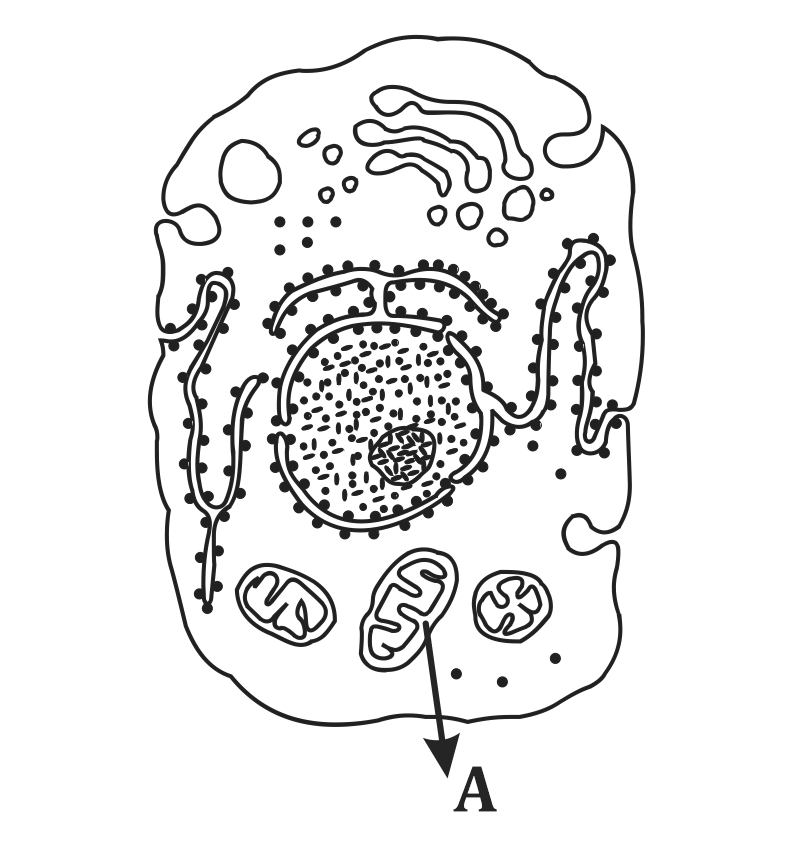
- Mitochondria - produce cellular energy in the form of ATP
- Golgi body - provides packaging material
- Lysosomes - secrete hydrolytic enzymes
- Endoplasmic reticulum - synthesis of lipids
Show answer
Answer: (1) Mitochondria - produce cellular energy in the form of ATP
Q92 NEET 2013 (Karnataka) Plastids
- Chromoplasts
- Eleioplasts
- Aleuroplasts
- Amyloplasts
Show answer
Answer: (1) Chromoplasts
Why: Chromoplasts contain carotenoid pigments that give colour to flowers and fruits and do not function as storage organs for food. Eleioplasts, aleuroplasts and amyloplasts store oils, proteins and starch respectively.
Q93 NEET 2013 (Karnataka) Prokaryotic Cell Organisation
- a layer present between cell wall and membrane of bacteria
- cell wall of bacteria
- bacterial cell glyco-engineered to possess N-glycosylated proteins
- a layer surrounding the cell wall of bacteria
Show answer
Answer: (4) a layer surrounding the cell wall of bacteria
Why: The glycocalyx is a gelatinous or slimy layer of polysaccharides lying outside the cell wall of many bacteria, and it may form a capsule or loose sheath. This matches the option describing a layer surrounding the cell wall of bacteria.
Q94 NEET 2013 Intro to Endomembrane System: Endoplasmic Reticulum
- SER
- Symplast
- Nucleoplasm
- RER
Show answer
Answer: (1) SER
Why: The smooth endoplasmic reticulum is the main site for synthesis of lipids, including phospholipids and steroids, because it lacks ribosomes and has enzymes for lipid biosynthesis. This matches the SER option.
Q95 NEET 2013 Details of Prokaryotic Cell Structure
- Basal bodies
- Pneumatophores
- Chromatophores
- Heterocysts
Show answer
Answer: (3) Chromatophores
Why: Chromatophores are membranous, pigment-containing infoldings of the plasma membrane in cyanobacteria that carry out photosynthesis. Basal bodies, pneumatophores, and heterocysts have different roles and are not pigment-bearing membranous extensions.
Q96 NEET 2013 Intro to Endomembrane System: Endoplasmic Reticulum
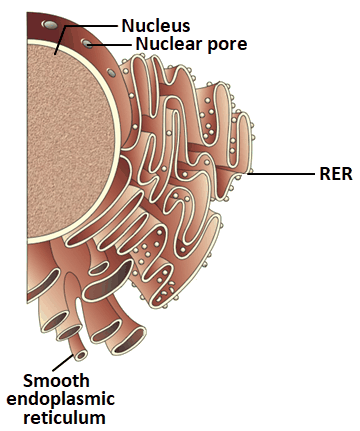
- Golgi apparatus, protein synthesis
- Golgi apparatus, formation of amino acids
- Rough endoplasmic reticulum, protein synthesis
- Rough endoplasmic reticulum, formation of glycoproteins
Show answer
Answer: (3) Rough endoplasmic reticulum, protein synthesis
Q97 NEET 2013 Golgi Apparatus
The Golgi complex plays a major role:
- in digesting proteins and carbohydrates
- as energy transferring organelles
- in post-translational modification of proteins and glycosylation of lipids
- in trapping the light and transforming it into chemical energy
Show answer
Answer: (3) in post-translational modification of proteins and glycosylation of lipids
Why: The Golgi complex modifies newly synthesised proteins after translation, for example by adding sugar groups in glycosylation, and it also glycosylates lipids to form glycolipids and packages molecules into vesicles for secretion or transport to other organelles.
Cell: The Unit of Life NEET PYQ 2012 (6 questions)
Q98 AIPMT 2012 Mains Plastids
Which one of the following cellular parts is correctly described?
- Centrioles - sites for active RNA synthesis
- Ribosomes - those on chloroplasts are larger (80s) while those in the cytoplasm are smaller (70s)
- Lysosomes - optimally active at a pH of about 8.5
- Thylakoids - flattened membranous sacs forming the grana of chloroplasts
Show answer
Answer: (4) Thylakoids - flattened membranous sacs forming the grana of chloroplasts
Why: Thylakoids are flattened membranous sacs that stack to form the grana inside chloroplasts, and they host the light-dependent reactions of photosynthesis. The other options are incorrect: centrioles are not sites of RNA synthesis, lysosomes work best in an acidic rather than alkaline pH, and ribosome sizes are not as stated.
Q99 AIPMT 2012 Mains Eukaryotic Cell Orgenelle
- Peroxisome
- ER
- Mesosome
- Ribosome
Show answer
Answer: (4) Ribosome
Why: Ribosomes are found inside the mitochondria and chloroplasts, which are themselves organelles, so they are organelles within organelles. Peroxisomes, the endoplasmic reticulum and the bacterial mesosome are not located inside other organelles in this way.
Q100 AIPMT 2012 Cell Membrane
- Ribosomes
- Chromosomal organization
- Cell wall
- Cell membrane
Show answer
Answer: (4) Cell membrane
Why: E. coli is a prokaryote and Chlamydomonas is a eukaryotic alga, so they differ in chromosomal organization (naked circular DNA versus nucleus with chromosomes) and in cell wall composition. Both, however, have a plasma membrane, so the cell membrane is the feature that does not differ.
Q101 AIPMT 2012 Cell Membrane
Select the correct statement from the following regarding cell membrane:
- Na+ and K+ ions move across cell membranes by passive transport
- Proteins make up 60% to 70% of the cell membrane
- Lipids are arranged in a bilayer with polar heads towards the inner part
- Fluid mosaic model of the cell membrane was proposed by Singer and Nicolson
Show answer
Answer: (4) Fluid mosaic model of the cell membrane was proposed by Singer and Nicolson
Why: The fluid mosaic model, in which the membrane is a fluid phospholipid bilayer with proteins embedded in it, was proposed by Singer and Nicolson. The other statements are wrong: Na+ and K+ are moved across the membrane by active transport against their gradients, not passive transport, and lipids in the bilayer have polar heads facing outward toward the aqueous environment.
Q102 AIPMT 2012 Nucleus
- Lysosomes
- Nucleolus
- Nucleoplasm
- Ribosomes
Show answer
Answer: (2) Nucleolus
Why: Ribosomal RNA is actively synthesized in the nucleolus, which is a region within the nucleus where rRNA genes are transcribed and ribosomal subunits begin to assemble. The nucleoplasm, lysosomes and ribosomes themselves are not the sites of this active rRNA synthesis.
Q103 AIPMT 2012 Ribosome and Inclusion Bodies
What is true about ribosomes?
- The prokaryotic ribosomes are 80S, where S stands for sedimentation coefficient
- These are composed of ribonucleic acid and proteins
- These are found only in eukaryotic cells
- These are self-splicing introns of some RNAs
Show answer
Answer: (2) These are composed of ribonucleic acid and proteins
Why: Ribosomes are made of ribosomal RNA and proteins, which is the correct statement. The prokaryotic ribosome is smaller than the 80S eukaryotic ribosome, and ribosomes are found in both prokaryotic and eukaryotic cells, not only in eukaryotes.
Cell: The Unit of Life NEET PYQ 2011 (3 questions)
Q104 AIPMT 2011 Cell Membrane
- nucleus
- ribosomes
- cell wall
- plasma membrane
Show answer
Answer: (4) plasma membrane
Q105 AIPMT 2011 Golgi Apparatus
Important site for the formation of glycoproteins and glycolipids:
- Golgi apparatus
- plastid
- lysosome
- vacuole
Show answer
Answer: (1) Golgi apparatus
Why: The Golgi apparatus is the organelle where glycoproteins and glycolipids are formed and modified, by adding sugar groups to proteins and lipids received from the endoplasmic reticulum. Plastids, lysosomes and vacuoles are not the main sites for this process.
Q106 AIPMT 2011 Ribosome and Inclusion Bodies
Peptide synthesis inside a cell takes place in:
- mitochondria
- chromoplast
- ribosomes
- chloroplast
Show answer
Answer: (3) ribosomes
Why: Peptide bonds are formed during protein synthesis on ribosomes, where amino acids brought by tRNA are joined in sequence according to the mRNA template. Mitochondria, chromoplasts and chloroplasts do not carry out this main step of peptide synthesis.
Cell: The Unit of Life NEET PYQ 2010 (6 questions)
Q107 AIPMT 2010 Cell Wall
Alage have cell wall made up of:
- Cellulose, galactans and mannans
- Hemicellulose, pectins and proteins
- Pectins, cellulose and proteins
- Cellulose, hemicellulose and pectins
Show answer
Answer: (1) Cellulose, galactans and mannans
Why: Algal cell walls are typically made of cellulose together with polysaccharides such as galactans and mannans, which is the combination in the correct option. The other options list pectins, hemicellulose or proteins, which are not the main components described for algae.
Q108 AIPMT 2010 Prokaryotic Cell Organisation
- Saccharomyces
- Streptococcus
- Chlamydomonas
- Plasmodium
Show answer
Answer: (2) Streptococcus
Why: Streptococcus is a bacterium, and bacteria lack membrane-bound organelles such as mitochondria, endoplasmic reticulum and nucleus, which is why it is the correct choice. Saccharomyces, Chlamydomonas and Plasmodium are eukaryotes and possess membrane-bound organelles.
Q109 AIPMT 2010 Cell Organisation
The main arena of various types of activities of a cell is:
- Plasma membrane
- Mitochondria
- Cytoplasm
- Nucleus
Show answer
Answer: (3) Cytoplasm
Why: The cytoplasm is the region where most metabolic and other cellular activities take place, making it the main arena of cell activity. The plasma membrane, mitochondria and nucleus each perform specific functions but do not host the majority of the cell's activities.
Q110 AIPMT 2010 Cell Wall
- Plasmodesmata
- Plastoquinones
- Endoplasmic reticulum
- Plasmalemma
Show answer
Answer: (1) Plasmodesmata
Why: Plasmodesmata are microscopic cytoplasmic channels that pass through the cell walls of adjacent plant cells, directly connecting their cytoplasm and allowing transport of water, ions and small molecules between them. Plastoquinones are electron carriers in photosynthesis, the endoplasmic reticulum is confined within a single cell, and the plasmalemma is the plasma membrane that bounds each cell, so none of these provides a direct pathway between two adjacent cells.
Q111 AIPMT 2010 Mitochondria
- Mitochondria
- Dictyosome
- Lysosome
- Peroxisome
Show answer
Answer: (1) Mitochondria
Why: Mitochondria contain their own circular DNA and ribosomes, which is why they are described as semi-autonomous organelles. Dictyosomes, lysosomes and peroxisomes are membrane-bound organelles that do not carry their own genetic material.
Q112 AIPMT 2010 Cell Membrane
The plasma membrane consists mainly of:
- phospholipids embedded in a protein bilayer
- proteins embedded in a phospholipid bilayer
- proteins embedded in a polymer of glucose molecules
- proteins embedded in a carbohydrate bilayer
Show answer
Answer: (2) proteins embedded in a phospholipid bilayer
Why: The plasma membrane is built on a bilayer of phospholipids, with their hydrophilic heads facing outward and hydrophobic tails inward, and proteins are embedded within or attached to this bilayer. So the correct option is proteins embedded in a phospholipid bilayer, while the options describing phospholipids in a protein bilayer or carbohydrate and glucose polymer structures are wrong.
Cell: The Unit of Life NEET PYQ 2009 (3 questions)
Q113 AIPMT 2009 Cell Wall
Plasmodesmata are:
- lignified cemented layers between cells
- locomotory structures
- membranes connecting the nucleus with plasmalemma
- connections between adjacent cells
Show answer
Answer: (4) connections between adjacent cells
Why: Plasmodesmata are fine cytoplasmic channels that pass through the cell walls and connect adjacent plant cells, allowing movement of materials between them. They are not cemented layers, locomotory organs or nuclear membranes.
Q114 AIPMT 2009 Cytoskeleton
The cytoskeleton is made up of:
- calcium carbonate granules
- callose deposits
- cellulosic microfibrils
- proteinaceous filaments
Show answer
Answer: (4) proteinaceous filaments
Why: The cytoskeleton is a network of proteinaceous filaments such as microfilaments made of actin, intermediate filaments and microtubules made of tubulin, so proteinaceous filaments is the correct option. Calcium carbonate granules, callose and cellulosic microfibrils are not components of the cytoskeleton.
Q115 AIPMT 2009 Cell Wall
- hemicellulose
- muramic acid
- calcium pectate
- phosphoglycerides
Show answer
Answer: (3) calcium pectate
Why: The middle lamella is the layer between adjacent plant cells that cements them together, and it is mainly made of calcium pectate, a salt of pectic acid.
Cell: The Unit of Life NEET PYQ 2008 (5 questions)
Q116 AIPMT 2008 Ribosome and Inclusion Bodies
Polysome is formed by:
- several ribosomes attached to a single mRNA
- many ribosomes attached to a strand of endoplasmic reticulum
- a ribosome with several subunits
- ribosomes attached in a linear arrangement
Show answer
Answer: (1) several ribosomes attached to a single mRNA
Why: A polysome, or polyribosome, is a cluster of several ribosomes simultaneously translating one mRNA molecule, which is the option describing several ribosomes attached to a single mRNA.
Q117 AIPMT 2008 Evidence for Fluidic Nature of Membrane
Keeping in view the 'fluid mosaic model' for the structure of cell membrane, which one of the following statements is correct with respect to the movement of lipids and proteins from one lipid monolayer to the other (described as flip-flop movement)?
- Both lipids and proteins can flip-flop
- While lipids can rarely flip-flop, proteins cannot
- While proteins can flip-flop, lipids cannot
- Neither lipids nor proteins can flip-flop
Show answer
Answer: (2) While lipids can rarely flip-flop, proteins cannot
Why: According to the fluid mosaic model, phospholipid molecules can occasionally flip from one monolayer to the other, but this flip-flop is rare, while proteins generally cannot flip because of their size and polarity. This matches the option saying lipids can rarely flip-flop but proteins cannot.
Q118 AIPMT 2008 Vacuole
Vacuole in a plant cell:
- is membrane-bound and contains storage
proteins and lipids - is membrane-bound and contains water and
excretory substances - lacks membrane and contains air
- lacks membrane and contains water and
excretory substances
Show answer
Answer: (2) is membrane-bound and contains water and
excretory substances
Why: A plant cell vacuole is bounded by a membrane called the tonoplast and contains cell sap made of water along with dissolved salts, sugars and excretory substances. The other options are wrong because vacuoles are membrane-bound and do not contain air, and storage proteins and lipids are not their characteristic contents.
Q119 AIPMT 2008 Ribosome and Inclusion Bodies
- copper
- manganese
- magnesium
- calcium
Show answer
Answer: (3) magnesium
Why: The large and small ribosomal subunits stay associated with each other only when magnesium ions are present at a critical concentration, which stabilises their binding. Without sufficient magnesium the subunits dissociate.
Q120 AIPMT 2008 Microbodies
- proplastids
- glyoxisomes
- peroxisomes
- mitochondria
Show answer
Answer: (2) glyoxisomes
Why: In germinating oilseeds, stored fats are broken down into fatty acids which are then oxidised by beta-oxidation inside glyoxysomes, specialised peroxisome-like organelles that also carry the glyoxylate cycle. This places fatty acid degradation exclusively in glyoxysomes, matching option (2).
Cell: The Unit of Life NEET PYQ 2007 (3 questions)
Q121 AIPMT 2007 Cell Membrane
- Cholesterol
- Glycolipids
- Proline
- Phospholipids
Show answer
Answer: (3) Proline
Why: The cell membrane is made of a lipid bilayer containing phospholipids, glycolipids and cholesterol, along with membrane proteins. Proline is an amino acid, a building block of proteins, and is not a membrane lipid.
Q122 AIPMT 2007 Prokaryotic Cell Organisation
- They are also called PPLO
- They are pleomorphic
- They are sensitive to penicillin
- They cause disease in plants
Show answer
Answer: (3) They are sensitive to penicillin
Why: Mycoplasmas lack a cell wall, so they are not sensitive to penicillin, which works by inhibiting the synthesis of peptidoglycan in cell walls. The other statements are correct: they are also called PPLO, they are pleomorphic, and they cause diseases in plants as well as animals.
Q123 AIPMT 2007 Mitochondria
Select the wrong statement from the following:
- Both chloroplast and mitochondria contain an inner and an outer membrane.
- Both chloroplasts and mitochondria have an internal compartment, the thylakoid space bounded by the thylakoid membrane.
- Both chloroplasts and mitochondria contain DNA.
- The chloroplasts are generally much larger than mitochondria.
Show answer
Answer: (2) Both chloroplasts and mitochondria have an internal compartment, the thylakoid space bounded by the thylakoid membrane.
Why: The thylakoid space is an internal compartment found only in chloroplasts, bounded by the thylakoid membrane, whereas mitochondria have cristae and a matrix instead. Therefore the statement that both organelles contain a thylakoid space is the wrong one, while the other statements about membranes, DNA and relative size are correct.
Cell: The Unit of Life NEET PYQ 2006 (2 questions)
Q124 AIPMT 2006 Mitochondria
Which of the following statements regarding mitochondrial membrane is not correct?
- The outer membrane is permeable to all kinds of molecules
- The enzymes of the electron transfer chain are embedded in the outer membrane
- The inner membrane is highly convoluted forming a series of infoldings
- The outer membrane resembles a sieve
Show answer
Answer: (2) The enzymes of the electron transfer chain are embedded in the outer membrane
Why: The statement that the electron transfer chain enzymes are embedded in the outer membrane is incorrect, because these enzymes are located in the inner membrane, which is highly folded into cristae. The outer membrane is porous and freely permeable to small molecules and ions, resembling a sieve, and the other statements are correct.
Q125 AIPMT 2006 Cilia & Flagella
Which of the following statements regarding cilia is not correct?
- The organized beating of cilia is controlled by fluxes of Ca2+ across the membrane
- Cilia are hair-like cellular appendages
- Microtubules of cilia are composed of tubulin
- Cilia contain an outer ring of nine doublet microtubules surrounding two single microtubules
Show answer
Answer: (1) The organized beating of cilia is controlled by fluxes of Ca2+ across the membrane
Why: The beating of cilia is powered by ATP and the sliding of dynein arms between doublet microtubules, not controlled by fluxes of Ca2+ across the membrane, so this is the incorrect statement. The other options are correct: cilia are hair-like appendages, their microtubules are made of tubulin, and the axoneme has nine outer doublets surrounding a central pair of single microtubules.
Frequently asked questions
How many Cell: The Unit of Life questions have been asked in NEET?
This archive holds 125 Cell: The Unit of Life questions from 33 of 33 official NEET and AIPMT papers, 2006–2026. It counts every paper held here, including re-exam and regional papers.
Which topics of Cell: The Unit of Life are asked most often?
By topic tag: Mitochondria (17), Golgi Apparatus (15), Ribosome and Inclusion Bodies (14), Plastids (12) and Prokaryotic Cell Organisation (12).
When was Cell: The Unit of Life last asked?
The most recent paper in this archive with a question from this chapter is Re-NEET 2026.
Where do the answers come from?
Each answer is the option recorded as correct in the official answer key for that paper. Where a short explanation is shown, it was written separately and checked against the key; it is not part of the official paper. Questions marked NEET 2026 (3 May, cancelled) are from the cancelled first sitting: NTA issued no final key for it, so their answers are the key on record and have not been matched to an official key.
More Biology chapter-wise PYQs
← Anatomy of Flowering Plants Cell Cycle and Cell Division →
Botany, Class 11
- The Living World (25)
- Biological Classification (90)
- Plant Kingdom (88)
- Morphology of Flowering Plants (120)
- Anatomy of Flowering Plants (83)
- Cell Cycle and Cell Division (84)
- Photosynthesis in Higher Plants (69)
- Respiration in Plants (42)
- Plant Growth and Development (71)
Old syllabus (archive)
- Transport in Plants (39)
- Mineral Nutrition (49)
- Reproduction in Organisms (22)
- Environmental Issues (80)
- Digestion and Absorption (45)
Botany, Class 12
- Sexual Reproduction in Flowering Plants (118)
- Principles of Inheritance and Variation (155)
- Molecular Basis of Inheritance (172)
- Strategies for Enhancement in Food Production (36)
- Microbes in Human Welfare (66)
- Organisms and Populations (86)
- Ecosystem (87)
- Biodiversity and Conservation (86)
Zoology, Class 11
- Animal Kingdom (109)
- Structural Organisation in Animals (90)
- Biomolecules (100)
- Breathing and Exchange of Gases (56)
- Body Fluids and Circulation (68)
- Excretory Products and their Elimination (54)
- Locomotion and Movement (58)
- Neural Control and Coordination (53)
- Chemical Coordination and Integration (76)
Zoology, Class 12
- Human Reproduction (109)
- Reproductive Health (67)
- Evolution (101)
- Human Health and Disease (100)
- Biotechnology: Principles and Processes (118)
- Biotechnology and its Applications (101)
Want more than past papers? Practise all 2,316 Cell: The Unit of Life questions on NEETprep.