Chemical Bonding and Molecular Structure has 105 questions in this archive of official NEET and AIPMT papers, asked between 2006 and 2026. It appeared in 33 of the 33 papers held here (AIPMT 2006 to Re-NEET 2026); the most recent paper with a question from it is Re-NEET 2026. The most-asked topics by tag are M.O.T (29), Hybridisation (26) and V.S.E.P.R & V.B.T (25). In the last 10 main papers (2017 to 2026) it had 24 questions.
Chemical Bonding and Molecular Structure practice hub Take the chapter test
Chemical Bonding and Molecular Structure PYQs year by year
| Year | Papers in archive | Questions | By paper |
|---|---|---|---|
| 2026 | 2 | 5 | NEET 2026: 3, Re-NEET 2026: 2 |
| 2025 | 1 | 3 | NEET 2025: 3 |
| 2024 | 3 | 10 | NEET 2024: 3, NEET 2024 Re-exam (1,563 candidates): 3, NEET 2024 (Jhajjar): 4 |
| 2023 | 2 | 4 | NEET 2023: 2, NEET 2023 (Manipur): 2 |
| 2022 | 3 | 6 | NEET 2022: 2, NEET 2022 (Abroad): 2, NEET 2022 (Ganganagar): 2 |
| 2021 | 1 | 4 | NEET 2021: 4 |
| 2020 | 2 | 9 | NEET 2020: 3, NEET 2020 (Covid Re-exam): 6 |
| 2019 | 2 | 5 | NEET 2019: 1, NEET 2019 (Odisha): 4 |
| 2018 | 1 | 2 | NEET 2018: 2 |
| 2017 | 1 | 2 | NEET 2017: 2 |
| 2016 | 2 | 8 | NEET 2016 Phase 1: 3, NEET 2016 Phase 2: 5 |
| 2015 | 2 | 6 | AIPMT 2015: 5, AIPMT 2015 Re-exam: 1 |
| 2014 | 1 | 2 | AIPMT 2014: 2 |
| 2013 | 2 | 10 | NEET 2013: 6, NEET 2013 (Karnataka): 4 |
| 2012 | 2 | 7 | AIPMT 2012: 5, AIPMT 2012 Mains: 2 |
| 2011 | 1 | 2 | AIPMT 2011: 2 |
| 2010 | 1 | 5 | AIPMT 2010: 5 |
| 2009 | 1 | 4 | AIPMT 2009: 4 |
| 2008 | 1 | 3 | AIPMT 2008: 3 |
| 2007 | 1 | 2 | AIPMT 2007: 2 |
| 2006 | 1 | 6 | AIPMT 2006: 6 |
Most-asked topics
| Topic | PYQs |
|---|---|
| M.O.T | 29 |
| Hybridisation | 26 |
| V.S.E.P.R & V.B.T | 25 |
| Polarity | 11 |
| Types of Chemical Bond | 9 |
| Octate, Isoelectronic Species, Lewis Structure & Formal Charge | 7 |
| Acidic, Basic Character & Fajan's Rule | 3 |
| van der Waal Force & Hydrogen Bonding | 2 |
| Resonance & Nature of Compounds | 2 |
| Covalent Bond | 1 |
Chemical Bonding and Molecular Structure NEET PYQ 2026 (5 questions)
Q1 Re-NEET 2026 M.O.T
- σ*2p
- π2p
- σ2p
- π*2p
Show answer
Answer: (1) σ*2p
Why: When the molecular orbitals of Ne2 are filled in order of increasing energy, the last orbital to receive electrons is the antibonding sigma orbital formed from the 2p atomic orbitals. That orbital is therefore the highest occupied molecular orbital.
Q2 Re-NEET 2026 V.S.E.P.R & V.B.T
| List-I | List-II | ||
| A. | PCl5 | I. | Tetrahedral |
| B. | BrF5 | II. | Square Planar |
| C. | BF4- | III. | Trigonal bipyramidal |
| D. | [Ni(CN)4]2- | IV. | Square Pyramidal |
Choose the correct answer from the options given below:
- A-III, B-II, C-I, D-IV
- A-IV, B-III, C-I, D-II
- A-III, B-IV, C-I, D-II
- A-III, B-I, C-II, D-IV
Show answer
Answer: (3) A-III, B-IV, C-I, D-II
Why: PCl5 is trigonal bipyramidal because it has five bonded pairs and no lone pairs on phosphorus. BrF5 is square pyramidal because bromine carries a lone pair in addition to its bonded fluorines, BF4- is tetrahedral, and [Ni(CN)4]2- is square planar due to the dsp hybridised nickel with strong field cyanide ligands.
Q3 NEET 2026 (3 May, cancelled) V.S.E.P.R & V.B.T
- It has a trigonal pyramidal geometry with two lone pairs on Cl atom
- It has T-shaped geometry with two lone pairs on Cl atom
- It has a trigonal planar geometry with two lone pairs on Cl atom
- It has T-shaped geometry with three lone pairs on Cl atom
Show answer
Answer: (2) It has T-shaped geometry with two lone pairs on Cl atom
Why: In ClF3 the central Cl has 3 bonding pairs and 2 lone pairs, giving five electron domains arranged as a trigonal bipyramid, and the lone pairs occupy equatorial positions so the molecule is T-shaped. This is the content of option (2).
Q4 NEET 2026 (3 May, cancelled) Types of Chemical Bond
| List-I | List-II | ||
| A. | C2H4 | I. | 3 σ bonds, 2 π bonds |
| B. | C2H2 | II. | 3 σ bonds, one lone pair |
| C. | CH4 | III. | 4 σ bonds |
| D. | NH3 | IV. | 5 σ bonds, 1 π bond |
Choose the correct answer from the options given below :
- A-IV, B-I, C-III, D-II
- A-III, B-IV, C-II, D-I
- A-I, B-II, C-IV, D-III
- A-II, B-III, C-I, D-IV
Show answer
Answer: (1) A-IV, B-I, C-III, D-II
Why: C2H4 (ethene) has five sigma bonds and one pi bond, so A matches IV. C2H2 (ethyne) has three sigma bonds and two pi bonds, so B matches I. CH4 (methane) has four sigma bonds, so C matches III. NH3 has three sigma bonds and one lone pair on nitrogen, so D matches II.
Q5 NEET 2026 (3 May, cancelled) Octate, Isoelectronic Species, Lewis Structure & Formal Charge
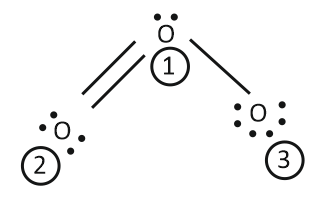
The correct formal charges on oxygen atoms numbered 2, 1 and 3 respectively are:
- -1, 0, +1
- 0, +1, -1
- 0, 0, 0
- +1, 0, -1
Show answer
Answer: (2) 0, +1, -1
Chemical Bonding and Molecular Structure NEET PYQ 2025 (3 questions)
Q6 NEET 2025 M.O.T
| Statement I: | A hypothetical diatomic molecule with bond order zero is quite stable. |
| Statement II: | As bond order increases, the bond length increases. |
- Statement I is True but Statement II is False.
- Statement I is False but Statement II is True.
- Both Statement I and Statement II are True.
- Both Statement I and Statement II are False.
Show answer
Answer: (4) Both Statement I and Statement II are False.
Q7 NEET 2025 V.S.E.P.R & V.B.T
| List-I | List-II | ||
| A. | I. | linear | |
| B. | II. | pyramidal | |
| C. | III. | distorted octahedral | |
| D. | IV. | square pyramidal |
- A-IV, B-II, C-III, D-I
- A-IV, B-II, C-I, D-III
- A-II, B-I, C-IV, D-III
- A-II, B-I, C-III, D-IV
Show answer
Answer: (3) A-II, B-I, C-IV, D-III
Q8 NEET 2025 M.O.T
| A. | dipole moment |
| B. | number of lone pairs on central atom |
| C. | bond length |
| D. | bond enthalpy |
- A and C only
- B and C only
- A and D only
- B and D only
Show answer
Answer: (3) A and D only
Why: Water has a larger dipole moment than ammonia, which is larger than chloroform, so the order in statement A holds. The bond enthalpy order N2 > O2 > H2 in statement D is also correct, because the triple bond in nitrogen is the strongest of these. Statement B is wrong because XeF2 has the most lone pairs on xenon and XeO3 has the fewest, and statement C is wrong because the N-O bond is the longest of the three, not the shortest.
Chemical Bonding and Molecular Structure NEET PYQ 2024 (10 questions)
Q9 NEET 2024 (Jhajjar) M.O.T
- Hydrogen (H₂)
- Lithium (Li₂)
- Carbon (C₂)
- Oxygen (O₂)
Show answer
Answer: (4) Oxygen (O₂)
Why: According to molecular orbital theory, the oxygen molecule has unpaired electrons in its antibonding pi* orbitals, which makes it paramagnetic. The hydrogen, lithium and carbon molecules have all their electrons paired in molecular orbitals and are therefore diamagnetic.
Q10 NEET 2024 (Jhajjar) V.S.E.P.R & V.B.T
A.
B.
C.
D.
Choose the correct answer from the options given below:
- B > A > D > C
- B > A > C > D
- D > C > B > A
- A > C > B > D
Show answer
Answer: (3) D > C > B > A
Why: Bond angle decreases down the group as the central atom becomes larger and less electronegative, so the bond pairs sit farther apart and repel less. Nitrogen, the smallest and most electronegative, has the largest angle, followed by phosphorus, arsenic and antimony, so the order is NH3 > PH3 > AsH3 > SbH3, which is the option D > C > B > A.
Q11 NEET 2024 (Jhajjar) V.S.E.P.R & V.B.T
Show answer
Answer: (1)
Why: In SF4 and BrF5 the central atom carries exactly one lone pair: sulfur in SF4 has four bonding pairs plus one lone pair (seesaw shape), and bromine in BrF5 has five bonding pairs plus one lone pair (square pyramidal shape). ClF3 and XeF4 each have two lone pairs on the central atom, so they do not qualify.
Q12 NEET 2024 (Jhajjar) V.S.E.P.R & V.B.T
- Square pyramidal and
- Square pyramidal and
- Trigonal bipyramidal and
- Trigonal bipyramidal and
Show answer
Answer: (1) Square pyramidal and
Why: In BrF5, bromine forms five bonds to fluorine and retains one lone pair, giving six electron domains and sp3d2 hybridisation with octahedral electron geometry. The lone pair occupies one octahedral position, so the molecular shape is square pyramidal.
Q13 NEET 2024 Re-exam (1,563 candidates) Polarity
Show answer
Answer: (2)
Why: HI is a diatomic molecule with a polar H–I bond and an asymmetric charge distribution, so its dipole moment is non-zero. CCl4 (tetrahedral), CO2 (linear) and BF3 (trigonal planar) are symmetrical, so their individual bond dipoles cancel and their net dipole moments are zero.
Q14 NEET 2024 Re-exam (1,563 candidates) M.O.T
| List-I (Atom/Molecule) |
List-II (Property) |
||
| A. | Nitrogen | I. | Paramagnetic |
| B. | Fluorine molecule | II. | Most reactive element in group 18 |
| C. | Oxygen molecule | III. | Element with highest ionisation enthalpy in group 15 |
| D. | Xenon atom | IV. | Strongest oxidising agent |
Identify the correct answer from the option given below:
- A- III, B-I, C-IV, D-II
- A-I, B-IV, C-III, D-II
- A-II, B-IV, C-I, D-III
- A-III, B-IV, C-I, D-II
Show answer
Answer: (4) A-III, B-IV, C-I, D-II
Why: Nitrogen has the highest ionisation enthalpy in group 15, fluorine is the strongest oxidising agent, the oxygen molecule is paramagnetic because it has unpaired electrons in its molecular orbitals, and xenon is the most reactive element in group 18. This gives A-III, B-IV, C-I, D-II.
Q15 NEET 2024 Re-exam (1,563 candidates) Types of Chemical Bond
| Column-I (Molecule) |
Column-II (Bond enthalpy) |
||
| A. | HCl | I. | 435.8 |
| B. | II. | 498 | |
| C. | III. | 946.0 | |
| D. | IV. | 431.0 |
- A-III, B-IV, C-I, D-II
- A-IV, B-I, C-III, D-II
- A-IV, B-III, C-II, D-I
- A-IV, B-III, C-I, D-II
Show answer
Answer: (4) A-IV, B-III, C-I, D-II
Why: HCl has a bond enthalpy of 431.0 kJ/mol, N2 has the highest value of 946.0 kJ/mol because of its triple bond, H2 has 435.8 kJ/mol, and O2 has 498 kJ/mol because of its double bond. Matching these values gives the option pairing A with IV, B with III, C with I and D with II.
Q16 NEET 2024 van der Waal Force & Hydrogen Bonding
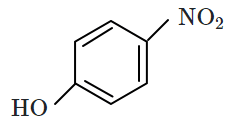
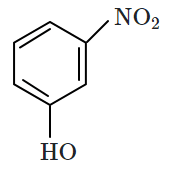
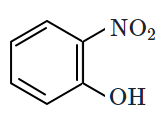
- HF
Show answer
Answer: (4)
Q17 NEET 2024 V.S.E.P.R & V.B.T
| List-I (Compound) |
List-II (Shape/geometry) |
||
| A. | NH3 | I. | Trigonal Pyramidal |
| B. | BrF5 | II. | Square planar |
| C. | XeF4 | III. | Octahedral |
| D. | SF6 | IV. | Square Pyramidal |
Choose the correct answer from the option given below:
- A-II, B-IV, C-III, D-I
- A-III, B-IV, C-I, D-II
- A-II, B-III, C-IV, D-I
- A-I, B-IV, C-II, D-III
Show answer
Answer: (4) A-I, B-IV, C-II, D-III
Why: NH3 has a lone pair on nitrogen, giving trigonal pyramidal geometry, while BrF5 has a lone pair on bromine that gives square pyramidal shape, XeF4 has lone pairs on xenon that give a square planar arrangement, and SF6 has no lone pairs and is octahedral, which matches option 4.
Q18 NEET 2024 Polarity
- BF3 has non-zero dipole moment.
- The dipole moment of NF3 is greater than that of NH3.
- Three canonical forms can be drawn for ion.
- Three resonance structures can be drawn for ozone.
Show answer
Answer: (3) Three canonical forms can be drawn for ion.
Why: The carbonate ion CO3 2- has a resonance hybrid that can be written as three equivalent canonical forms in which the double bond is placed on each of the three oxygen atoms. BF3 has zero dipole moment because of its symmetric trigonal planar shape, NF3 has a smaller dipole than NH3 because its bond dipoles oppose the lone pair dipole, and ozone has only two resonance structures.
Chemical Bonding and Molecular Structure NEET PYQ 2023 (4 questions)
Q19 NEET 2023 (Manipur) Polarity
Show answer
Answer: (4)
Why: Dipole moment depends on bond polarity and the geometry of the molecule. HF has the most polar bond and a linear, non-cancelling dipole, giving the largest moment. NH3 is pyramidal with a lone pair, giving a substantial moment, while H2S is bent but less polar because sulfur is less electronegative than nitrogen. CH4 is tetrahedral, so its bond dipoles cancel and its net moment is zero.
Q20 NEET 2023 (Manipur) M.O.T
- The antibonding molecular orbital has a node between the nuclei.
- In the formation of a bonding molecular orbital, the two electron waves of the bonding atoms reinforce each other.
- Molecular orbitals obtained from and orbitals are symmetrical around the bond axis.
- A bonding molecular orbital has larger electron density above and below the internuclear axis.
Show answer
Answer: (3) Molecular orbitals obtained from and orbitals are symmetrical around the bond axis.
Why: The pi-star antibonding orbital does have a node between the nuclei, the bonding orbital is formed by reinforcing waves, and pi bonding has electron density above and below the axis, so those statements are correct. The incorrect statement is that orbitals from 2px and 2py are symmetrical around the bond axis, because pi-type combinations are antisymmetric with a nodal plane containing the axis.
Q21 NEET 2023 M.O.T
Show answer
Answer: (2)
Why: For N2, the order of molecular orbital energies is sigma 1s, sigma* 1s, sigma 2s, sigma* 2s, then the pi 2p_x and pi 2p_y pair, then sigma 2p_z, then the pi* 2p_x and pi* 2p_y pair, and finally sigma* 2p_z. The pi 2p orbitals lie below sigma 2p_z because of s-p mixing between the 2s and 2p levels, which matches option (2).
Q22 NEET 2023 Octate, Isoelectronic Species, Lewis Structure & Formal Charge
Consider the following five chemical species:
NH₃, AlCl₃, BeCl₂, CCl₄ and PCl₅
How many of these species violate the octet rule by having either fewer or more than
eight electrons in the valence shell of their central atom?
- One
- Three
- Two
- Four
Show answer
Answer: (2) Three
Why: NH3 and CCl4 obey the octet rule with exactly eight electrons around the central atom. AlCl3 and BeCl2 violate it by having fewer than eight electrons, and PCl5 violates it by having more than eight electrons in its valence shell, so three species violate the octet rule.
Chemical Bonding and Molecular Structure NEET PYQ 2022 (6 questions)
Q23 NEET 2022 (Ganganagar) V.S.E.P.R & V.B.T
Show answer
Answer: (1)
Q24 NEET 2022 (Ganganagar) V.S.E.P.R & V.B.T
| List-I (Molecules) |
List-II (Shape) |
||
| (a) | NH3 | (i) | Square pyramidal |
| (b) | ClF3 | (ii) | Trigonal bipyramidal |
| (c) | PCl5 | (iii) | Trigonal pyramidal |
| (d) | BrF5 | (iv) | T-shape |
- a-(ii), b-(iii), c-(iv), d-(i)
- a-(iii), b-(iv), c-(ii), d-(i)
- a-(iv), b-(iii), c-(i), d-(ii)
- a-(iii), b-(iv), c-(i), d-(ii)
Show answer
Answer: (2) a-(iii), b-(iv), c-(ii), d-(i)
Why: Ammonia has a trigonal pyramidal shape due to one lone pair on nitrogen, and chlorine trifluoride is T-shaped because of two lone pairs in its trigonal bipyramidal arrangement. Phosphorus pentachloride has no lone pairs and is trigonal bipyramidal, while bromine pentafluoride has one lone pair in an octahedral arrangement, giving a square pyramidal shape.
Q25 NEET 2022 (Abroad) Resonance & Nature of Compounds
Which one of the following statements is true about the structure of ion?
- It can be explained by considering sp3 hybridization.
- Out of the three C–O bonds, two are longer and one is shorter.
- It has three sigma and three -bonds.
- All three C–O bonds are equal in length with a bond order in between 1 and 2.
Show answer
Answer: (4) All three C–O bonds are equal in length with a bond order in between 1 and 2.
Why: In the carbonate ion the central carbon is sp2 hybridised and the resonance structures make all three C–O bonds equal in length. Each C–O bond has a bond order of 4/3, which lies between 1 and 2, so option (4) is the true statement.
Q26 NEET 2022 (Abroad) M.O.T
Show answer
Answer: (3)
Why: Bond enthalpy falls as the bond order falls and as extra electrons enter antibonding orbitals. N2 has the highest bond order, followed by O2, then superoxide O2 with one extra electron, and peroxide O2 2- with two extra electrons has the lowest. This gives the order in option (3) N2 > O2 > O2- > O2 2-.
Q27 NEET 2022 M.O.T
- ion is diamagnetic.
- The bond orders of and are 2.5, 2, 1.5, and 1, respectively.
- molecule has four electrons in its two degenerate molecular orbitals.
- ion has one electron.
Show answer
Answer: (1) ion is diamagnetic.
Why: The incorrect statement is option (1), because O2+ has one unpaired electron in its molecular orbitals and is therefore paramagnetic, not diamagnetic. The other options are correct: the bond orders listed in option (2) follow from molecular orbital theory, C2 has four electrons in its two degenerate pi orbitals, and H2+ has one electron.
Q28 NEET 2022 V.S.E.P.R & V.B.T
Show answer
Answer: (1)
Why: XeF2 has the most lone pairs on its central xenon atom among these four species, and in its trigonal bipyramidal arrangement the lone pairs sit in equatorial positions, producing the greatest lone pair-lone pair repulsion. ClF3 has fewer lone pairs, while SF4 and IF5 each have just a single lone pair on the central atom, so they have much less of this repulsion.
Chemical Bonding and Molecular Structure NEET PYQ 2021 (4 questions)
Q29 NEET 2021 Hybridisation
BF3 is a planar and an electron deficient compound. Hybridization and number of electrons around the central atom, respectively are:
- sp2 and 6
- sp2 and 8
- sp3 and 4
- sp3 and 6
Show answer
Answer: (1) sp2 and 6
Q30 NEET 2021 V.S.E.P.R & V.B.T
Match List-I with List-II
| List-I | List-II | ||
| (a) | (i) | Square pyramidal | |
| (b) | (ii) | Trigonal planar | |
| (c) | (iii) | Octahedral | |
| (d) | (iv) | Trigonal bipyramidal |
Choose the correct answer from the options given below:
- a-(iii), b-(i), c-(iv), d-(ii)
- a-(iv), b-(iii), c-(ii), d-(i)
- a-(iv), b-(iii), c-(i), d-(ii)
- a-(ii), b-(iii), c-(iv), d-(i)
Show answer
Answer: (3) a-(iv), b-(iii), c-(i), d-(ii)
Why: PCl5 has a trigonal bipyramidal shape, SF6 is octahedral, BrF5 is square pyramidal because one lone pair sits on the central atom, and BF3 is trigonal planar, so the matching is a with trigonal bipyramidal, b with octahedral, c with square pyramidal, and d with trigonal planar.
Q31 NEET 2021 Octate, Isoelectronic Species, Lewis Structure & Formal Charge
- Mn2+, Fe3+
- Fe2+, Mn2+
- O2–, F–
- Na+, Mg2+
Show answer
Answer: (2) Fe2+, Mn2+
Why: Isoelectronic ions must contain the same number of electrons, which depends on each element's atomic number minus the ionic charge. Iron and manganese have different atomic numbers, so their 2+ ions still have different electron counts, unlike the remaining pairs, which do match.
Q32 NEET 2021 Polarity
Which molecule among the following is non-polar?
- SbCl5
- NO2
- POCl3
- CH2O
Show answer
Answer: (1) SbCl5
Why: In SbCl5 the five Sb-Cl bonds are arranged in a symmetrical trigonal bipyramidal geometry, so the individual bond dipoles cancel and the net dipole moment is zero. This makes SbCl5 non-polar, whereas the other molecules have asymmetric shapes that leave a net dipole.
Chemical Bonding and Molecular Structure NEET PYQ 2020 (9 questions)
Q33 NEET 2020 (Covid Re-exam) Hybridisation
Which of the compounds given below will exhibit a linear structure?
- NO2
- HOCl
- O3
- N2O
Show answer
Answer: (4) N2O
Why: N2O has a linear arrangement because its central nitrogen is sp hybridised and the molecule is N=N=O in resonance forms. NO2, HOCl and O3 all have a central atom with a lone pair, which makes them bent.
Q34 NEET 2020 (Covid Re-exam) V.S.E.P.R & V.B.T
Match the compounds of Xe in Column I with the molecular structure in Column II.
| Column-I | Column-II | ||
| (a) | XeF2 | (i) | Square planar |
| (b) | XeF4 | (ii) | Linear |
| (c) | XeO3 | (iii) | Square pyramidal |
| (d) | XeOF4 | (iv) | Pyramidal |
- a-(ii), b-(i), c-(iii), d-(iv)
- a-(ii), b-(iv), c-(iii), d-(i)
- a-(ii), b-(iii), c-(i), d-(iv)
- a-(ii), b-(i), c-(iv), d-(iii)
Show answer
Answer: (4) a-(ii), b-(i), c-(iv), d-(iii)
Q35 NEET 2020 (Covid Re-exam) Hybridisation
Match the coordination number and type of hybridization with the distribution of hybrid orbitals in space based on Valence bond theory.
| Coordination number and type of hybridisation | Distribution of hybrid orbitals in space | ||
| (a) | 4, sp3 | (i) | Trigonal bipyramidal |
| (b) | 4, dsp2 | (ii) | Octahedral |
| (c) | 5, sp3d | (iii) | Tetrahedral |
| (d) | 6, d2sp3 | (iv) | Square planar |
- a-(ii), b-(iii), c-(iv), d-(i)
- a-(iii), b-(iv), c-(i), d-(ii)
- a-(iv), b-(i), c-(ii), d-(iii)
- a-(iii), b-(i), c-(iv), d-(ii)
Show answer
Answer: (2) a-(iii), b-(iv), c-(i), d-(ii)
Why: A coordination number of 4 with sp3 hybridisation gives a tetrahedral arrangement, and 4 with dsp2 gives a square planar arrangement. A coordination number of 5 with sp3d gives a trigonal bipyramidal arrangement, and 6 with d2sp3 gives an octahedral arrangement. This matches the option where a pairs with tetrahedral, b with square planar, c with trigonal bipyramidal, and d with octahedral.
Q36 NEET 2020 (Covid Re-exam) Hybridisation
| List-I Molecule |
List-II Shape or geometry of the molecule |
|
| a. | PCl5 | Trigonal planar |
| b. | SF6 | Octahedral |
| c. | BeCl2 | Linear |
| d. | NH3 | Trigonal pyramidal |
Identify the wrong match from the given pairs:
- b
- c
- d
- a
Show answer
Answer: (4) a
Why: The wrong match is the pairing of PCl5 with trigonal planar, because PCl5 has five bond pairs and no lone pairs and adopts a trigonal bipyramidal geometry. The pairings of SF6 with octahedral, BeCl2 with linear and NH3 with trigonal pyramidal are correct.
Q37 NEET 2020 (Covid Re-exam) Covalent Bond
The potential energy (y) curve for H2 formation as a function of internuclear distance (x) of the H atoms is shown below.
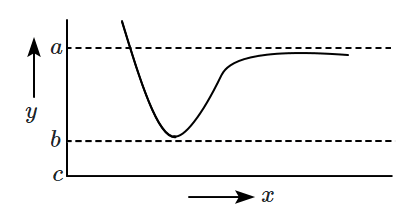
The bond energy of H2 is:
- (b – a)
- (c – a)
Show answer
Answer: (1) (b – a)
Q38 NEET 2020 (Covid Re-exam) Hybridisation
Consider the given compound:
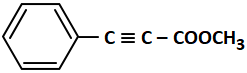
In the given options, the following for the above compound are, respectively:
(i) sp2 hybridised carbon atoms
(ii) bonds
- 7, 5
- 8, 6
- 7, 6
- 8, 5
Show answer
Answer: (3) 7, 6
Q39 NEET 2020 Polarity
Which of the following set of molecules will have zero dipole moment?
- Boron trifluoride, hydrogen fluoride, carbon dioxide, 1 3-dichlorobenzene
- Nitrogen trifluoride, beryllium difluoride, water, 1 3 -dichlorobenzene
- Boron trifluoride, beryllium difluoride, carbon dioxide, 1 4-dichlorobenzene
- Ammonia, beryllium difluoride, water, 1, 4-dichlorobenzene
Show answer
Answer: (3) Boron trifluoride, beryllium difluoride, carbon dioxide, 1 4-dichlorobenzene
Q40 NEET 2020 Acidic, Basic Character & Fajan's Rule
Match the following:
| Oxide | Nature | ||
| (a) | CO | (i) | Basic |
| (b) | BaO | (ii) | Neutral |
| (c) | Al2O3 | (iii) | Acidic |
| (d) | Cl2O7 | (iv) | Amphoteric |
Which of the following is the correct option?
- a-(ii), b-(i), c-(iv), d-(iii)
- a-(iii), b-(iv), c-(i), d-(ii)
- a-(iv), b-(iii), c-(ii), d-(i)
- a-(i), b-(ii), c-(iii), d-(iv)
Show answer
Answer: (1) a-(ii), b-(i), c-(iv), d-(iii)
Why: Carbon monoxide is a neutral oxide, barium oxide is a basic oxide because it reacts with acids to form salts, aluminium oxide is amphoteric as it reacts with both acids and bases, and dichlorine heptoxide is acidic because it dissolves in water to give perchloric acid. Hence the matching is a-(ii), b-(i), c-(iv), d-(iii).
Q41 NEET 2020 M.O.T
A molecule that cannot exist is:
Show answer
Answer: (4)
Why: Molecular orbital theory gives He2 a bond order of zero, since the two bonding electrons in sigma 1s are exactly cancelled by the two antibonding electrons in sigma* 1s, so it cannot exist. The other species Li2, C2 and O2 have positive bond orders and are known molecules.
Chemical Bonding and Molecular Structure NEET PYQ 2019 (5 questions)
Q42 NEET 2019 (Odisha) Acidic, Basic Character & Fajan's Rule
Match the oxide given in Column-I with its property given in Column-II:
| Column-I | Column-II | ||
| (i) | (a) | Neutral | |
| (ii) | (b) | Basic | |
| (iii) | (c) | Acidic | |
| (iv) | (d) | Amphoteric |
Which of the following options is correct?
- i-(b), ii-(a), iii-(d), iv-(c)
- i-(c), ii-(b), iii-(a), iv-(d)
- i-(a), ii-(d), iii-(b), iv-(c)
- i-(b), ii-(d), iii-(a), iv-(c)
Show answer
Answer: (4) i-(b), ii-(d), iii-(a), iv-(c)
Why: Sodium oxide is a basic oxide, aluminium oxide reacts with both acids and bases so it is amphoteric, nitrous oxide is a neutral oxide, and dichlorine heptoxide is an acidic oxide. This matches sodium oxide with basic, aluminium oxide with amphoteric, nitrous oxide with neutral, and dichlorine heptoxide with acidic.
Q43 NEET 2019 (Odisha) M.O.T
Show answer
Answer: (4)
Why: In the molecular orbital configuration of O2, the two electrons in the degenerate pi antibonding orbitals remain unpaired, so the molecule is paramagnetic. N2, H2 and Li2 have all their electrons paired in molecular orbitals and are therefore diamagnetic, so the answer is O2.
Q44 NEET 2019 (Odisha) Polarity
- NH₃ < BF₃ < NF₃ < H₂O
- BF₃ < NF₃ < NH₃ < H₂O
- BF₃ < NH₃ < NF₃ < H₂O
- H₂O < NF₃ < NH₃ < BF₃
Show answer
Answer: (2) BF₃ < NF₃ < NH₃ < H₂O
Why: BF3 is planar and symmetrical, so its net dipole moment is zero. NF3 has a small dipole because its bond dipoles partly oppose the lone pair dipole, NH3 has a larger dipole because its bond dipoles and lone pair dipole reinforce each other, and H2O has the largest because of its bent geometry with two lone pairs. The correct increasing order is therefore BF3 less than NF3 less than NH3 less than H2O.
Q45 NEET 2019 (Odisha) van der Waal Force & Hydrogen Bonding
The number of hydrogen bonded water molecules(s) associated with is:
| 1. | 3 | 2. | 1 |
| 3. | 2 | 4. | 5 |
Show answer
Answer: option (2)
Q46 NEET 2019 M.O.T
According to Molecular Orbital Theory (MOT), which of the following diatomic species contains only bonds in its ground state?
- Be2
- O2
- N2
- C2
Show answer
Answer: (4) C2
Why: In the MOT ground state of C2, the bonding comes only from pi-type molecular orbitals with no sigma bond from the p-orbital set, so option (4) C2 contains only pi bonds. Be2 has no net bond, while O2 and N2 each contain both sigma and pi bonds.
Chemical Bonding and Molecular Structure NEET PYQ 2018 (2 questions)
Q47 NEET 2018 Polarity
- BeH2 < CaH2 < BaH2
- CaH2 < BeH2 < BaH2
- BeH2 < BaH2 < CaH2
- BaH2 < BeH2 < CaH2
Show answer
Answer: (1) BeH2 < CaH2 < BaH2
Why: Ionic character increases with the electropositive nature of the metal, which grows down Group 2, so barium hydride is the most ionic and calcium hydride is next. Beryllium is small with high polarizing power, so beryllium hydride is the most covalent of the three.
Q48 NEET 2018 M.O.T
CN+, CN-, NO and CN
The highest bond order associated with:
- NO
- CN–
- CN+
- CN
Show answer
Answer: (2) CN–
Why: CN- has the same number of valence electrons as the nitrogen molecule, so its molecular orbital configuration gives the highest bond order among these species, a triple bond. The neutral CN and NO have lower bond orders, and CN+ has fewer electrons and a lower bond order still, so the answer is CN-.
Chemical Bonding and Molecular Structure NEET PYQ 2017 (2 questions)
Q49 NEET 2017 Hybridisation
Show answer
Answer: (3)
Why: Boron trichloride has a trigonal planar geometry with the central boron atom sp2 hybridised and no lone pair, so its bond angles are the ideal planar angle of 120°. The other species have different geometries: SF6 is octahedral, while NCl3 and PH3 are pyramidal because each has a lone pair on the central atom and therefore smaller bond angles.
Q50 NEET 2017 M.O.T
- CO, NO
Show answer
Answer: (2)
Chemical Bonding and Molecular Structure NEET PYQ 2016 (8 questions)
Q51 NEET 2016 Phase 2 Hybridisation
- Octahedral, sp3d2
- Trigonal bipyramidal, sp3d3
- Planar triangle, sp3d3
- Square planar, sp3d2
Show answer
Answer: (4) Square planar, sp3d2
Why: In XeF4 the xenon atom has its electron pairs arranged octahedrally, with the lone pairs occupying opposite positions, so the four fluorine atoms lie in a single square plane around xenon. This square planar shape corresponds to sp3d2 hybridization, which is the combination given in option (4).
Q52 NEET 2016 Phase 2 Hybridisation
In which of the following molecules, all atoms are coplanar?

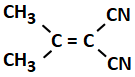
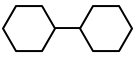
Show answer
Answer: (1) 
Q53 NEET 2016 Phase 2 V.S.E.P.R & V.B.T
- PH5 and BiCl5 do not exist
- pπ - dπ bonds are present in SO2
- SeF4 and CH4 have the same shape
Show answer
Answer: (3) SeF4 and CH4 have the same shape
Why: The incorrect statement is the one saying SeF4 and CH4 have the same shape. SeF4 has a see-saw shape because of its one lone pair on selenium, whereas CH4 is tetrahedral. The other statements, that PH5 and BiCl5 do not exist, that SO2 has pi-d pi bonding, and that I3+ is bent, are all true.
Q54 NEET 2016 Phase 2 Hybridisation
Show answer
Answer: (3)
Why: In NO+ the nitrogen has a linear geometry, which corresponds to sp hybridisation. In NO3- the nitrogen is trigonal planar, which corresponds to sp^2, and in NH3 the pyramidal shape with a lone pair on nitrogen corresponds to sp^3.
Q55 NEET 2016 Phase 2 Hybridisation
Show answer
Answer: (1)
Why: CO3^2- and NO3- have the same total number of electrons, so they are isoelectronic, and both are trigonal planar with no lone pair on the central atom, so they are isostructural. The other pairs either differ in electron count or differ in geometry.
Q56 NEET 2016 Phase 1 Hybridisation
- sp3
- sp2
- sp
- 2p
Show answer
Answer: (3) sp
Why: The negatively charged carbon in CH3C≡C⁻ is bonded to the other carbon through a triple bond, so it is sp hybridised with two sigma bonds and two pi bonds. The lone pair sits in the remaining sp hybrid orbital, which points away from the rest of the molecule.
Q57 NEET 2016 Phase 1 V.S.E.P.R & V.B.T
Mark the correct order of repulsion among the following according to the VSEPR theory.
- lone pair-lone pair > bond pair-bond pair >lone pair-bond pair
- bond pair-bond pair> lone pair-bond pair>lone pair-lone pair
- lone pair-bond pair > bond pair-bond pair >lone pair-lone pair
- lone pair-lone pair> lone pair-bond pair>bond pair-bond pair
Show answer
Answer: (4) lone pair-lone pair> lone pair-bond pair>bond pair-bond pair
Why: According to VSEPR theory, lone pair-lone pair repulsion is the strongest, followed by lone pair-bond pair repulsion, and bond pair-bond pair repulsion is the weakest. This is the order given in the option beginning with lone pair-lone pair > lone pair-bond pair > bond pair-bond pair.
Q58 NEET 2016 Phase 1 Hybridisation
An incorrect statement among the following:
- The H-O-H bond angle in H2O is larger than the H-C-H bond angle in CH4
- The H-C-H bond angle in CH4 is larger than the H-N-H bond angle in NH3
- The H-C-H bond angle in CH4, the H-N-H bond angle in NH3 and the H-0-H bond
angle in H2O are all greater than 90o - The H-O-H bond angle in H2O is smaller than the H-N-H bond angle in NH3
Show answer
Answer: (1) The H-O-H bond angle in H2O is larger than the H-C-H bond angle in CH4
Why: The H-O-H angle in water is smaller than the H-C-H angle in methane, because the lone pairs on oxygen push the bonding pairs closer together than the tetrahedral angle in methane, which has no lone pairs on carbon. Statement (1) claims the reverse, so it is the incorrect one.
Chemical Bonding and Molecular Structure NEET PYQ 2015 (6 questions)
Q59 AIPMT 2015 Re-exam M.O.T
Show answer
Answer: (1)
Why: Molecular orbital theory gives the bond order of each species, and stability increases with bond order. The species with the highest bond order is O2+, followed by O2, then O2- and finally O2 2-, so the decreasing order of stability is O2+ > O2 > O2- > O2 2-.
Q60 AIPMT 2015 M.O.T
Show answer
Answer: (3)
Why: Superoxide has an extra electron in an antibonding pi orbital, which lowers its bond order below that of O2, while the O2 plus cation loses an antibonding electron, which raises its bond order above that of O2. The correct ordering is therefore superoxide lowest, then O2, then O2 plus highest.
Q61 AIPMT 2015 V.S.E.P.R & V.B.T
Choose the compound which has a maximum bond angle at nitrogen among the following:
Show answer
Answer: (3)
Why: In NO2 plus the nitrogen atom has no lone pair and is sp hybridized, so the O=N=O skeleton is linear. A linear arrangement gives the largest possible bond angle at nitrogen, larger than the bent NO2 and NO2 minus species and the trigonal planar NO3 minus ion.
Q62 AIPMT 2015 Types of Chemical Bond
- CH2(CN)2
Show answer
Answer: (2)
Why: In XeO4 every Xe=O bond is a double bond, and each double bond contributes exactly one sigma bond and one pi bond. Because all the bonds are of this type, the total number of sigma bonds equals the total number of pi bonds, which is the case for XeO4 only among the options.
Q63 AIPMT 2015 M.O.T
The correct order of bond order in the following species is:
Show answer
Answer: (1)
Why: Bond order is found from the difference between bonding and antibonding electrons, so fewer electrons in antibonding molecular orbitals means a higher bond order. O2^2+ has the fewest antibonding electrons, O2^- has the most, and O2^+ falls in between, giving O2^2+ > O2^+ > O2^-.
Q64 AIPMT 2015 Octate, Isoelectronic Species, Lewis Structure & Formal Charge
Show answer
Answer: (4)
Why: ClO3^- and SO3^2- each have the same total number of electrons and the same pyramidal shape, with a central atom carrying one lone pair and three bonded oxygen atoms. This makes them both isoelectronic and isostructural, which the other pairs fail to satisfy.
Chemical Bonding and Molecular Structure NEET PYQ 2014 (2 questions)
Q65 AIPMT 2014 Polarity
A molecule among the following that has the maximum dipole moment is:
Show answer
Answer: (3)
Why: Carbon dioxide and methane are symmetric, so their bond dipoles cancel and their net dipole moment is zero. In ammonia the lone pair on nitrogen adds to the N-H bond dipoles, giving a large net moment, whereas in nitrogen trifluoride the lone pair opposes the N-F bond dipoles, so its moment is much smaller.
Q66 AIPMT 2014 Hybridisation
Which one of the following species has a plane triangular shape?
Show answer
Answer: (2)
Why: The nitrate ion has three bonding regions around nitrogen and no lone pair on nitrogen, so it adopts a trigonal planar geometry. The azide ion and carbon dioxide are linear, and the nitrite ion is bent because of a lone pair on nitrogen.
Chemical Bonding and Molecular Structure NEET PYQ 2013 (10 questions)
Q67 NEET 2013 (Karnataka) M.O.T
- CO, NO+
- NO–, CN–
- O2, N2
- O2, B2
Show answer
Answer: (1) CO, NO+
Why: CO and NO+ are both isoelectronic with the nitrogen molecule and each has a bond order of three. The other pairs differ: NO- has bond order two while CN- has three, and O2 has two while N2 has three, and O2 has two while B2 has one.
Q68 NEET 2013 (Karnataka) V.S.E.P.R & V.B.T
- XeO4 molecule is square planar
- There are four p – d bonds
- There are four sp3 – p, bonds
- XeO4 molecule is tetrahedral
Show answer
Answer: (1) XeO4 molecule is square planar
Why: XeO4 is tetrahedral, with the xenon atom at the centre bonded to all the oxygen atoms, so describing it as square planar is the incorrect statement. The statements about pi-d pi bonding and sp3-p sigma bonding are correct.
Q69 NEET 2013 (Karnataka) Hybridisation
- SiF4, BeH2
- NF3,H2O
- NF3,BF3
- H2S, BF3
Show answer
Answer: (2) NF3,H2O
Why: Hybridisation is determined by the number of electron domains, which includes both bonding pairs and lone pairs. Nitrogen in NF3 and oxygen in H2O each have four electron domains, which corresponds to sp3 hybridisation, unlike the central atoms in BF3, BeH2 and SiF4, which are sp2, sp or sp3 with no lone pairs in the pair being tested.
Q70 NEET 2013 (Karnataka) M.O.T
Show answer
Answer: (3)
Why: Removing an electron from the antibonding pi orbital in nitric oxide to form the nitrosonium ion increases the bond order and therefore the bond energy. The resulting ion has no unpaired electrons, so it changes from paramagnetic nitric oxide to diamagnetic, which matches the NO to NO+ option.
Q71 NEET 2013 Octate, Isoelectronic Species, Lewis Structure & Formal Charge
An electron-deficient compound among the following is:
- (SiH3)2
- (BH3)2
- PH3
- (CH3)2
Show answer
Answer: (2) (BH3)2
Why: Diborane, (BH3)2, is electron-deficient because boron has too few valence electrons to form a complete octet with its hydrogen bonds, so it relies on three-centre bonds. The other options, (SiH3)2, PH3 and (CH3)2, have enough electrons for normal bonding.
Q72 NEET 2013 M.O.T
A paramagnetic molecule among the following is:
- O2–
- CN–
- NO+
- CO
Show answer
Answer: (1) O2–
Why: The superoxide ion has an unpaired electron in an antibonding molecular orbital, so it is paramagnetic. The cyanide ion, the nitrosonium ion and carbon monoxide have all electrons paired and are therefore diamagnetic.
Q73 NEET 2013 Types of Chemical Bond
- H2O
- SO2
- NO2
- CO2
Show answer
Answer: (1) H2O
Why: Water has only single bonds, all of them sigma bonds, so it has no pi bond. Sulfur dioxide, nitrogen dioxide and carbon dioxide each contain at least one double bond, which includes a pi bond.
Q74 NEET 2013 Polarity
Which of the following is a polar molecule?
- SF4
- SiF4
- XeF4
- BF3
Show answer
Answer: (1) SF4
Why: Sulfur tetrafluoride has a lone pair on the central sulfur that makes its seesaw shape asymmetric, so the bond dipoles do not cancel and the molecule is polar. Silicon tetrafluoride is tetrahedral, xenon tetrafluoride is square planar and boron trifluoride is trigonal planar, and in each of these the symmetric shapes cancel the bond dipoles, making them nonpolar.
Q75 NEET 2013 Octate, Isoelectronic Species, Lewis Structure & Formal Charge
- ICl2–
- SbCl3
- BaCl2
- TeF2
Show answer
Answer: (1) ICl2–
Why: XeF2 is linear with three lone pairs on the central xenon atom, giving an AX2E3 arrangement. ICl2^- has the same linear AX2E3 structure with three lone pairs on iodine, so the two species are isostructural.
Q76 NEET 2013 Types of Chemical Bond
- Cl2 and CCl4
- HCl and He atoms
- SiF4 and He atoms
- H2O and Alcohol
Show answer
Answer: (2) HCl and He atoms
Why: Dipole-induced dipole forces arise when a polar molecule's permanent dipole distorts the electron cloud of a nonpolar species. HCl is polar and helium is a nonpolar atom, so the pair of HCl and He atoms fits. The other pairs involve only nonpolar-nonpolar London forces or hydrogen bonding.
Chemical Bonding and Molecular Structure NEET PYQ 2012 (7 questions)
Q77 AIPMT 2012 Mains M.O.T
Which orbital does the additional electron occupy when O₂ is converted to the O₂⁻ ion?
Show answer
Answer: (4)
Q78 AIPMT 2012 Mains M.O.T
- O2– < NO < C22– < He2+
- C22– < He2+ < O2– < NO
- He2+ < O2– < NO < C22–
- NO < O2– < C22– < He2+
Show answer
Answer: (3) He2+ < O2– < NO < C22–
Why: Bond order is half the difference between bonding and antibonding electrons in molecular orbital theory. The helium dimer ion has almost no net bonding because its extra electron sits in an antibonding orbital, giving the lowest bond order. The superoxide ion, NO and the carbide ion each have progressively more bonding electrons relative to antibonding ones, so the carbide ion has the highest bond order.
Q79 AIPMT 2012 Octate, Isoelectronic Species, Lewis Structure & Formal Charge
Identify the incorrect statement among the following:
- Amongst isoelectronic species, the smaller the positive charge on the cation, the smaller is the ionic radius
- Amongst isoelectronic species, the greater the negative charge on the anion, the larger is ionic radius
- Atomic radius of the elements increases as one moves down the first group of the periodic table
- Atomic radius of the elements decreases as one moves across from left to right in the 2nd period of the periodic table
Show answer
Answer: (1) Amongst isoelectronic species, the smaller the positive charge on the cation, the smaller is the ionic radius
Why: Among isoelectronic cations, a larger positive charge pulls the same electron cloud more strongly, so the radius decreases as the positive charge increases, meaning a smaller positive charge gives a larger radius. The statement claiming that a smaller positive charge gives a smaller ionic radius reverses this trend, so it is the incorrect one.
Q80 AIPMT 2012 M.O.T
- O₂²⁻ and B₂
- O₂⁺ and NO⁺
- NO and CO
- N₂ and O₂
Show answer
Answer: (1) O₂²⁻ and B₂
Why: Bond order equals half the difference between bonding and antibonding electrons in molecular orbital theory. O2 2- and B2 both work out to a single bond, so they share the same bond order, whereas each of the other pairs has different bond orders.
Q81 AIPMT 2012 Hybridisation
Show answer
Answer: (4)
Why: BF4 minus and NH4 plus are isostructural because each central atom (boron in BF4 minus, nitrogen in NH4 plus) has only bonding pairs and no lone pairs, giving a tetrahedral sp3 geometry. The other pairs differ in lone pairs or geometry, for example NH3 is pyramidal while NO3 minus is planar, and BCl3 is planar while BrCl3 is T-shaped.
Q82 AIPMT 2012 M.O.T
The bond order of 1.5 is shown by:
Show answer
Answer: (2)
Why: O2 minus, the superoxide ion, has one more electron than neutral O2, and that extra electron enters an antibonding pi star orbital. Bond order is half the difference between bonding and antibonding electrons, and this count gives the bond order of 1.5 shown by O2 minus, while the other species give different values.
Q83 AIPMT 2012 Hybridisation
Show answer
Answer: (4)
Why: In PCl3 the central phosphorus atom forms bonds to all three chlorine atoms and still carries one lone pair, giving a pyramidal shape. In H2O and NH2- the central atom carries more than one lone pair, and BF3 has no lone pair on boron, so only PCl3 fits the description.
Chemical Bonding and Molecular Structure NEET PYQ 2011 (2 questions)
Q84 AIPMT 2011 Hybridisation
Show answer
Answer: (4)
Why: Both NO2(-) and NO3(-) have a central nitrogen atom with trigonal planar electron-pair arrangement, which arises from the same type of hybridisation of nitrogen's orbitals. NH2(-), SCN(-) and NH4(-) do not share this hybridisation, so option (4) is correct.
Q85 AIPMT 2011 M.O.T
Show answer
Answer: (4)
Why: Bond length decreases as bond order increases, so the species with the highest bond order has the shortest bond. Among these, O2+ has the fewest electrons in antibonding orbitals and therefore the highest bond order, making its bond the shortest, as in the option O2+.
Chemical Bonding and Molecular Structure NEET PYQ 2010 (5 questions)
Q86 AIPMT 2010 Hybridisation
- NO₂⁻ and NH₃
- BF₃ and NO₂⁻
- NH₂⁻ and H₂O
- BF₃ and NH₂⁻
Show answer
Answer: (2) BF₃ and NO₂⁻
Why: BF3 has three bond pairs and no lone pairs on boron, giving trigonal planar geometry and sp2 hybridisation. The nitrite ion NO2^- has a central nitrogen with two bond pairs and one lone pair, which is three electron domains and therefore sp2 hybridised. This makes the BF3 and NO2^- pair the correct choice, while NH3, NH2^- and H2O are all sp3.
Q87 AIPMT 2010 M.O.T
A molecule/ion among the following species that does not exist under normal conditions is:
Show answer
Answer: (2)
Why: Be2 would have a bond order of zero because its eight valence electrons fill the bonding and antibonding molecular orbitals equally, so it does not exist under normal conditions. Li2, B2 and Be2 plus (Be2+) have nonzero bond orders by molecular orbital theory and can exist. The option Be2 is therefore the species that does not exist.
Q88 AIPMT 2010 Hybridisation
Show answer
Answer: (4)
Why: The bond angle in ClO2^- is smallest because the central chlorine has two lone pairs that compress the angle, and Cl2O is slightly larger with a similar lone-pair arrangement on oxygen. ClO2 has only one lone pair plus an unpaired electron, which causes less compression and gives the largest angle, so the order is option (4) ClO2^- < Cl2O < ClO2.
Q89 AIPMT 2010 Hybridisation
Show answer
Answer: (3)
Why: SbCl5 2- has one more electron pair around antimony than SF4, I3- and PCl5 do, giving an octahedral arrangement with sp3d2 hybridisation. The other three species have trigonal bipyramidal electron geometry and use sp3d hybridisation, so the SbCl5 2- ion is the odd one out.
Q90 AIPMT 2010 Types of Chemical Bond
- Metallic bonding
- Van der Waals' bonding
- Ionic bonding
- Covalent bonding
Show answer
Answer: (1) Metallic bonding
Why: Metallic bonding involves a sea of delocalised free electrons, which reflect visible light and give metals their lustre. These mobile electrons make the solid a conductor whose conductivity falls as increasing temperature enhances lattice vibrations, and the strong metallic bonds give a high melting point, so option 1 is correct.
Chemical Bonding and Molecular Structure NEET PYQ 2009 (4 questions)
Q91 AIPMT 2009 Types of Chemical Bond
- Hydrogen bonding
- Dipole-dipole interaction
- Covalent bonds
- London dispersion force
Show answer
Answer: (1) Hydrogen bonding
Why: Methanol is a liquid because of extensive hydrogen bonding between its OH groups, and converting it to vapour requires overcoming these hydrogen bonds. The other options are weaker forces or bonds that are not the main barrier to vaporisation.
Q92 AIPMT 2009 M.O.T
Show answer
Answer: (2)
Why: In MO theory, bond order is half the difference between bonding and antibonding electrons. Neutral N2 has the full set of bonding electrons with the fewest antibonding electrons, so it has the highest bond order. Adding electrons to antibonding orbitals in N2 minus and then N2 with two negative charges lowers the bond order step by step, so the dianion has the lowest, giving the order in option (2).
Q93 AIPMT 2009 Hybridisation
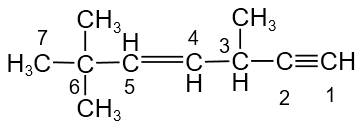
is in the sequence:
- sp, sp3, sp2 and sp3
- sp3, sp2, sp2 and sp
- sp, sp2, sp2 and sp3
- sp, sp2, sp3 and sp2
Show answer
Answer: (1) sp, sp3, sp2 and sp3
Q94 AIPMT 2009 Hybridisation
Show answer
Answer: (4)
Why: BF3 has three bonding pairs and no lone pair on boron, giving trigonal planar geometry and sp2 hybridisation. The nitrogen in NO2- has three electron regions (two bonding and one lone pair), which also gives sp2 hybridisation, whereas NH2- and H2O have four electron regions and are sp3.
Chemical Bonding and Molecular Structure NEET PYQ 2008 (3 questions)
Q95 AIPMT 2008 Types of Chemical Bond
- 1 sigma and 2 pi bonds
- 2 sigma and 2 pi bonds
- 1 sigma and 1 pi bonds
- 2 sigma and 1 pi bonds
Show answer
Answer: (4) 2 sigma and 1 pi bonds
Why: Ozone has a bent structure in which the two oxygen-oxygen connections are each one sigma bond, giving two sigma bonds in total. The remaining p electrons form a single pi bond delocalized over the three oxygen atoms, so the correct option is 2 sigma and 1 pi bonds.
Q96 AIPMT 2008 V.S.E.P.R & V.B.T
- NO₂⁻ < NO₂⁺ < NO₂
- NO₂⁻ < NO₂ < NO₂⁺
- NO₂⁺ < NO₂ < NO₂⁻
- NO₂⁺ < NO₂⁻ < NO₂
Show answer
Answer: (2) NO₂⁻ < NO₂ < NO₂⁺
Why: The O-N-O angle depends on the electron pairs around nitrogen. NO2⁻ has an extra electron on nitrogen, so its lone pair repels the bonding pairs most strongly and its angle is smallest. NO2 has a single unpaired electron, which causes weaker repulsion and a larger angle. NO2⁺ has no lone pair on nitrogen and is linear, so it has the largest angle, giving the order NO2⁻ < NO2 < NO2⁺.
Q97 AIPMT 2008 M.O.T
- O₂⁻ < NO < C₂²⁻ < He₂⁺
- NO < C₂²⁻ < O₂⁻ < He₂⁺
- C₂²⁻ < He₂⁺ < NO < O₂⁻
- He₂⁺ < O₂⁻ < NO < C₂²⁻
Show answer
Answer: (4) He₂⁺ < O₂⁻ < NO < C₂²⁻
Why: Bond order is half the difference between the number of electrons in bonding and antibonding molecular orbitals. He2⁺ has the fewest net bonding electrons, O2⁻ has a fractional bond order above that, NO lies between double and triple, and C2²⁻ has the highest bond order, close to a triple bond. This gives the order He2⁺ < O2⁻ < NO < C2²⁻.
Chemical Bonding and Molecular Structure NEET PYQ 2007 (2 questions)
Q98 AIPMT 2007 Types of Chemical Bond
- CO₂ < CO₃²⁻ < CO
- CO < CO₃²⁻ < CO₂
- CO₃²⁻ < CO₂ < CO
- CO < CO₂ < CO₃²⁻
Show answer
Answer: (4) CO < CO₂ < CO₃²⁻
Why: Bond length decreases as bond order increases. CO has a triple bond and is the shortest, CO2 has two equivalent double bonds with intermediate length, and the carbonate ion has resonance-delocalised C-O bonds with fractional bond order around one and a third, making it the longest. This gives the increasing order CO < CO2 < CO3^2-, which is the option that lists CO first, CO2 second and carbonate last.
Q99 AIPMT 2007 Hybridisation
- SF₄ and XeF₄
- SO₃²⁻ and NO₃⁻
- BF₃ and NF₃
- BrO₃⁻ and XeO₃
Show answer
Answer: (4) BrO₃⁻ and XeO₃
Why: BrO3- and XeO3 both have a central atom carrying three bonding pairs and one lone pair, giving the same trigonal pyramidal geometry and the same hybridisation pattern. Therefore they are isostructural, whereas the other pairs differ in lone pair count or geometry.
Chemical Bonding and Molecular Structure NEET PYQ 2006 (6 questions)
Q100 AIPMT 2006 V.S.E.P.R & V.B.T
Which of the following is not a correct statement?
- The electron-deficient molecules can act as Lewis acids.
- The canonical structures have no real existence.
- Every AB5 molecule does in fact have a square pyramidal structure.
- Multiple bonds are always shorter than corresponding single bonds.
Show answer
Answer: (3) Every AB5 molecule does in fact have a square pyramidal structure.
Why: The statement that every AB5 molecule has a square pyramidal structure is incorrect, because AB5 molecules such as PF5 adopt a trigonal bipyramidal geometry while only some (like BrF5) are square pyramidal. The other statements are correct: electron-deficient species accept electron pairs as Lewis acids, canonical structures are only imaginary contributors to resonance, and multiple bonds are shorter than single bonds between the same atoms.
Q101 AIPMT 2006 M.O.T
- 2
- 3
- 4
- 1
Show answer
Answer: (1) 2
Why: Sulphur (atomic number 16) has its valence electrons in the 3s and 3p orbitals, and in the paramagnetic S2 molecule, as in O2-type molecular orbital filling, two electrons occupy the degenerate antibonding pi-star orbitals with parallel spins. This gives two unpaired electrons, which is the option stated as 2.
Q102 AIPMT 2006 Hybridisation
Find the molecule in which not all the bonds are equal.
- ClF3
- BF3
- AlF3
- NF3
Show answer
Answer: (1) ClF3
Why: ClF3 has a T-shaped structure in which the two axial Cl-F bonds are longer than the equatorial Cl-F bond, so its bonds are not all equal. BF3, AlF3 and NF3 each have all their bonds of equal length, as their symmetric geometries require.
Q103 AIPMT 2006 Hybridisation
Show answer
Answer: (3)
Why: NO2+ has a central nitrogen with no lone pair and two double bonds to the oxygen atoms, so it is sp hybridised and linear. NO2-, SO2 and O3 each have a lone pair on the central atom, which gives a bent shape.
Q104 AIPMT 2006 Acidic, Basic Character & Fajan's Rule
Show answer
Answer: (3)
Why: Basicity of oxides increases down a group as metallic character increases, so the heaviest metal oxide is most basic. Bi2O3 is strongly basic, whereas Al2O3 and Sb2O3 are amphoteric and SeO2 is acidic.
Q105 AIPMT 2006 V.S.E.P.R & V.B.T
- SCl₄
- SO₄²⁻
- PO₄³⁻
- NH₄⁺
Show answer
Answer: (1) SCl₄
Why: SiCl4 is tetrahedral with no lone pair on the central atom. SCl4 has a lone pair on sulfur, which gives a see-saw shape, so it is not isostructural with SiCl4, whereas SO4 2-, PO4 3- and NH4+ are all tetrahedral.
Frequently asked questions
How many Chemical Bonding and Molecular Structure questions have been asked in NEET?
This archive holds 105 Chemical Bonding and Molecular Structure questions from 33 of 33 official NEET and AIPMT papers, 2006–2026. It counts every paper held here, including re-exam and regional papers.
Which topics of Chemical Bonding and Molecular Structure are asked most often?
By topic tag: M.O.T (29), Hybridisation (26), V.S.E.P.R & V.B.T (25), Polarity (11) and Types of Chemical Bond (9).
When was Chemical Bonding and Molecular Structure last asked?
The most recent paper in this archive with a question from this chapter is Re-NEET 2026.
Where do the answers come from?
Each answer is the option recorded as correct in the official answer key for that paper. Where a short explanation is shown, it was written separately and checked against the key; it is not part of the official paper. Questions marked NEET 2026 (3 May, cancelled) are from the cancelled first sitting: NTA issued no final key for it, so their answers are the key on record and have not been matched to an official key.
More Chemistry chapter-wise PYQs
← Classification of Elements and Periodicity in Properties States of Matter →
Class 11
- Some Basic Concepts of Chemistry (48)
- Structure of Atom (55)
- Classification of Elements and Periodicity in Properties (39)
- Thermodynamics (60)
- Equilibrium (96)
- Redox Reactions (29)
- The p-Block Elements (Class 11) (35)
- Organic Chemistry: Some Basic Principles and Techniques (80)
- Hydrocarbons (72)
Old syllabus (archive)
- States of Matter (32)
- Hydrogen (12)
- The s-Block Elements (38)
- Environmental Chemistry (16)
- The Solid State (43)
- Surface Chemistry (26)
- General Principles and Processes of Isolation of Elements (26)
- Polymers (29)
- Chemistry in Everyday Life (22)
Class 12
- Solutions (49)
- Electrochemistry (65)
- Chemical Kinetics (69)
- The p-Block Elements (Class 12) (48)
- The d and f Block Elements (79)
- Coordination Compounds (85)
- Haloalkanes and Haloarenes (36)
- Alcohols, Phenols and Ethers (54)
- Aldehydes, Ketones and Carboxylic Acids (85)
- Amines (55)
- Biomolecules (48)
Other
- Reaction Mechanism (Organic Chemistry) (11)
- Salt Analysis (10)
Want more than past papers? Practise all 1,434 Chemical Bonding and Molecular Structure questions on NEETprep.